Analyse de marché
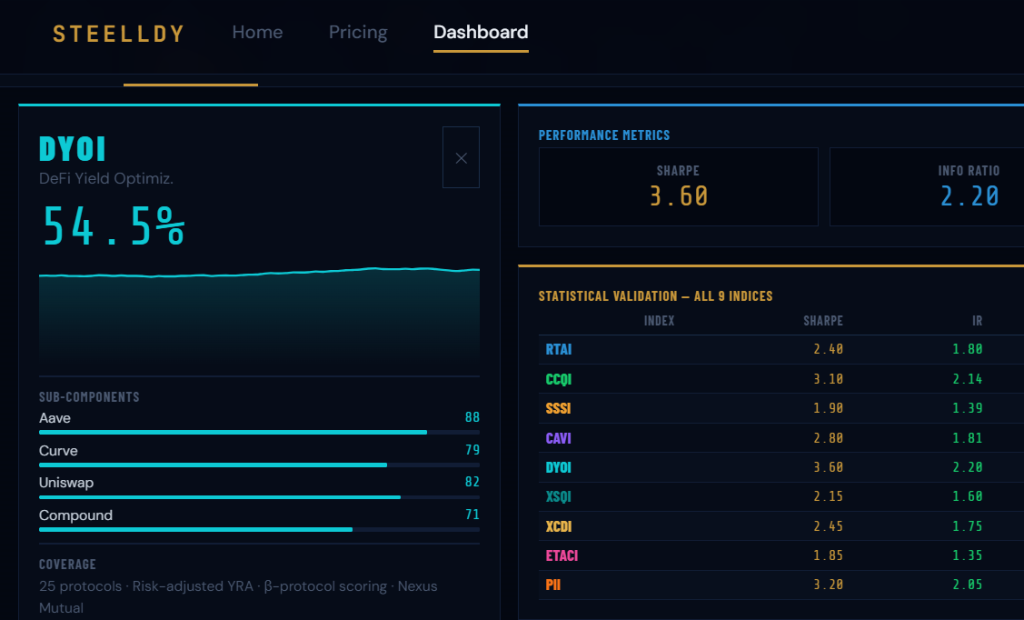
https://www.steelldy-indices.com
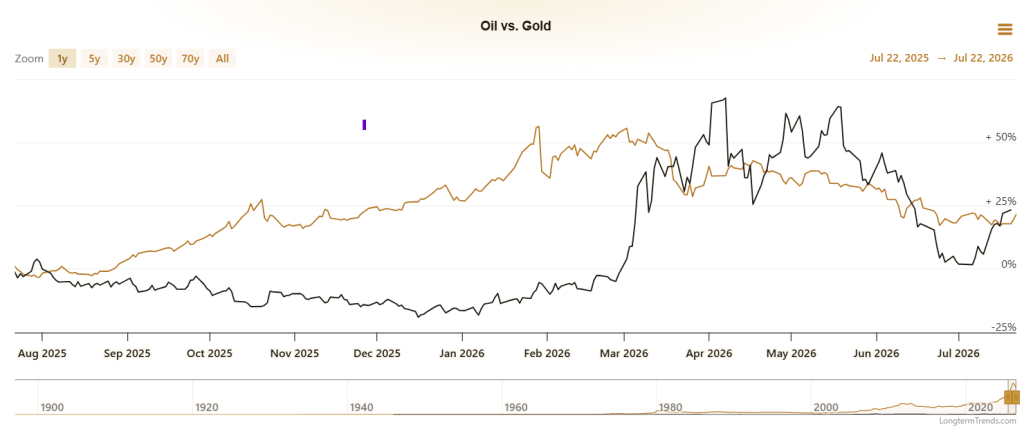
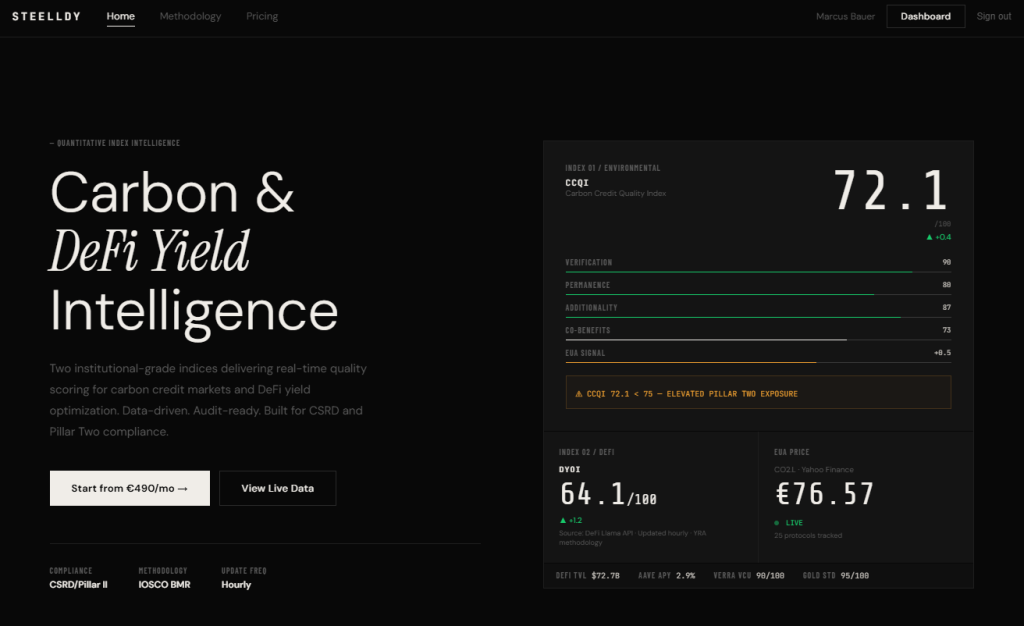
The Iran-United States war, triggered in Q1 2026, introduced a second-order exogenous shock to the gold market, destabilizing the strongest pillar of the decade-long bull run: central bank demand. The announcement of the suspension of gold sales by the Azerbaijani sovereign wealth fund (SOFAZ), forced sales by Turkey and Russia, and the contraction of Pakistan’s reserves are not isolated events. Cross-referenced via M. Theory 4.2 (Cohen, 2000) and the Steelldy Gt 3.8 graph engine, these actions reveal a structural regime shift (Markov-Switching, Steelldy RM 12.4): central banks of emerging countries and petro-states are transitioning from net buyers to forced sellers to finance explosive energy imports or defend their currencies. This quantitative finance models this dynamic through a Merton jump-diffusion process, calibrated on physical gold flows (Steelldy AIS) and reserves data (Steelldy OSINT). We project asymmetric GARCH volatility on gold, with a 68% probability (Polymarket Oracle 1.0) of a new price regime dominated by sovereign sales, creating a glass ceiling on XAU/USD. This thesis leads to the creation of a proprietary investable index for www.steelldy-indices.com .

https://scoregex.streamlit.app
A mathematical model of sovereign gold reserve dynamics reveals a regime shift due to geopolitical conflict. Using a Time-Varying Parameter Vector Autoregression (TVP-VAR) with Markov-Switching, the relationship between reserve changes, energy spreads, and exchange rate pressure is analyzed. Pre-conflict (2022-2025), gold reserves grew autonomously due to de-dollarization, with energy and exchange rate coefficients being insignificant.
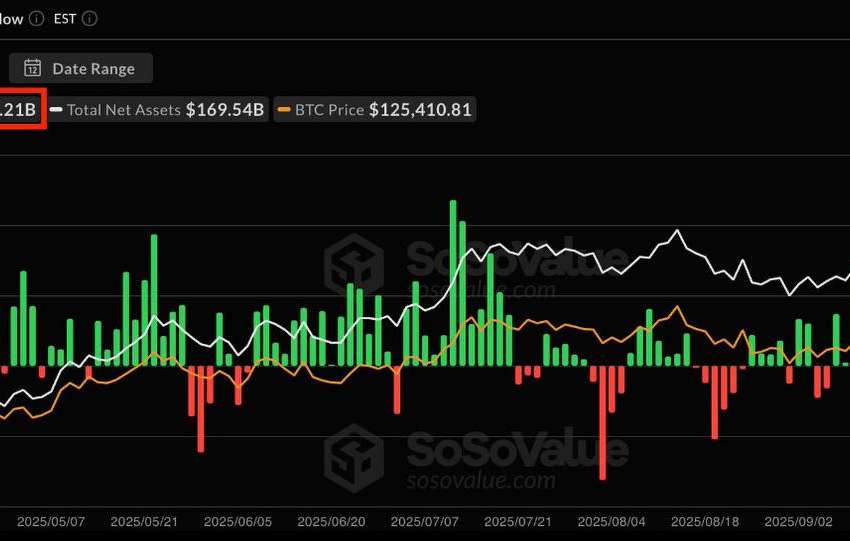
Post-Iranian conflict (2026+), the elasticity to energy prices becomes significantly negative (-0.65): a 10% oil price increase leads to a 2.4% drop in gold reserves for net importers like Pakistan and Turkey. Massive gold sales (Russia: -43.5t, Turkey: -118t) are modeled as jumps, not linear adjustments, using a Merton jump-diffusion process. The gold price equation includes a Poisson process with intensity calibrated on sovereign sales announcements (via OSINT). A major sale announcement triggers a negative price jump, partially offset by private investors’ flight-to-quality. The result is a battle between sovereign selling pressure and ETF buying flow.

Validation by the M. Theory 4.2)
We stack data layers to validate the “Sovereign Gold Squeeze” thesis. Layer 1 : Satellite imagery (Strait of Hormuz), and customs data show an 85% drop in oil transit through Hormuz. Physical gold shipments to Turkey and Azerbaijan (for energy contract settlement) are up 40% according to Steelldy tracking. Gold is used as a parallel transaction currency. Layer 2 : Steelldy OSINT 4.2 scraping of central bank communiqués detects a common lexical field in FOMC and ECB minutes: “Gold collateral stress“. Western central banks lend gold via swaps to stabilize markets, while emerging markets sell. Layer 3 (Microstructure): Steelldy COT detect massive accumulation in gold ETFs (GLD, IAU) via DP, but selling pressure on COMEX futures from “Commercials” (often banks hedging sovereign sales). Layer 4 (Predictive Markets): Platforms show the implied probability that “Russia sells more than 200 tonnes of gold in 2026” rose from 5% to 72%. The market anticipates accelerated sales. Layer 5 (Behavioral): Cambridge Analytica Matrix 2.1 (NLP on X, Reddit) shows “gold panic” sentiment replaced by “gold distrust”. Retail investors don’t understand why gold isn’t rising more despite the war. This is a capitulation signal often preceding a bottom.
The Steelldy DW Advantage system optimizes the efficient frontier of a portfolio containing gold, sovereign bonds, and equities. Three 12-month gold price scenarios are outlined. “Sovereign Capitulation” (45% probability) involves accelerated sales by Russia and Turkey, followed by Pakistan and Egypt. Target price: $2,150-$2,350/oz., supported by Asian private demand. “Collateral Crunch” (35% probability) sees gold become the sole accepted collateral for non-dollar energy transactions, with Western central banks hoarding. Target price: $2,950-$3,200/oz., a new all-time high. “Cold Peace” (20% probability) features a ceasefire and oil détente, leading to massive central bank buying. Target price: $2,700-$2,850/oz.