Skip to content Skip to sidebar Skip to footer

Site icon Climate

Carbon Credit Market, Credit Carbon Platforms, ESG data services, CSRD Pillar Two Compliance Tools, DeFi Institutional

Category image

Climate

Carbon Credit Market, Credit Carbon Platforms, ESG data services, CSRD Pillar Two Compliance Tools, DeFi Institutional

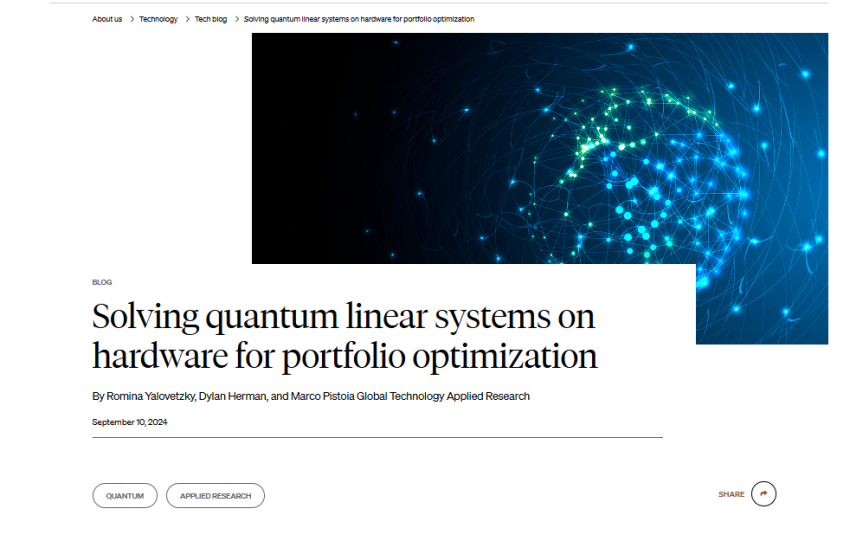
Quantum-Classical Hybrid Optimization framework for after-tax portfolio allocation under regime constraints

The Quantum-Classical Hybrid Optimization framework for after-tax portfolio allocation under regime constraints integrates quantum variational algorithms (e.g., QAOA, VQE, Hybrid HHL++) with classical solvers (convex optimization, MPC) to solve high-dimensional, non-convex problems involving tax-aware objectives, Markov-switching regimes (market, volatility, regulatory/tax), counterparty/basis risks, and fiscal uncertainty in synthetic carbon credit tokens. This hybrid approach addresses the…

Read more

Smoke rising from factory chimneys at sunrise, symbolizing pollution and environmental impact.

Synthetic carbon credit tokens: A new frontier in tax uncertainty for climate-savvy investors

Synthetic carbon credit tokens, as derivative instruments replicating reference indices (ICE EUA, voluntary composites) via futures, total return swaps (TRS), or oracle-based smart contracts, diverge fundamentally from physical credits in fiscal characterization. Physical credits are generally treated as intangible property (capital assets under IRC analogies or inventory), while synthetics lean toward Section 1256 contracts (mark-to-market,…

Read more

Aerial view of illuminated night-time city highways with dynamic light trails and bustling traffic.

Transition Risks and Fuel Demand Reduction: Attribution to 15-Minute Smart Cities, Localized Smart Digitalized & Decarbonized Economies

Executive Summary Reduction in refined fuel demand (gasoline/diesel) is primarily driven by electrification (EV penetration ~25% global new sales 2025, displacing ~1.2 mb/d oil equivalent), efficiency gains (MPG improvements offsetting VMT growth), and behavioral shifts, not dominantly by 15-minute city models. The 15-minute city (proximity-based urbanism) and smart digitalized local economies contribute secondarily via…

Read more

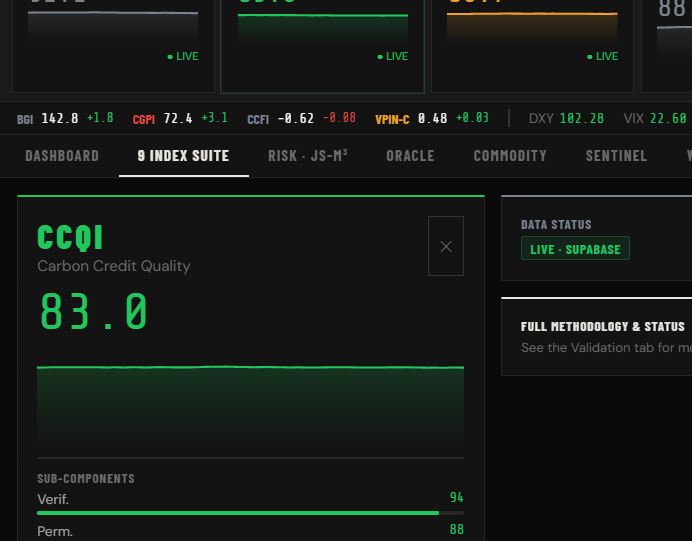
The STEELLDY CCQI Index: Methodology and Function as a Fiscal Barometer. (a) Climate Credit Quality Index (CCQI) Architecture

1.1 Proprietary Multidimensional Benchmark Evaluating the Integrity, Durability, and Liquidity of Carbon Credits The Climate Credit Quality Index (CCQI) developed by STEELLDY is a next-generation proprietary benchmark specifically designed to address the transparency and standardization gaps characterizing the voluntary carbon credit market. Unlike traditional indices, which are limited to price aggregations or transaction volumes, the…

Read more

Synthetic Tokens : Stochastic Modeling of the Impact of Pillar Two (OECD) on Tax Engineering and the Valuation of Tokenized Carbon Investments

1.1 Replicating Carbon Price Exposure Without Physical Holding of Credits Synthetic tokens offer exposure to carbon credit prices without requiring the physical holding of the underlying credits, by using derivative mechanisms such as futures contracts, total return swaps, or price oracles that replicate the performance of a carbon market benchmark index. This structure offers advantages…

Read more

Pool Tokens: Stochastic Modeling of the Impact of Pillar Two (OECD) on Tax Engineering and the Valuation of Tokenized Carbon Investments

1.1 Collective Structuring and Pooling of Heterogeneous Quality Carbon Credits Pool tokens represent a stake in a collective portfolio of carbon credits with heterogeneous characteristics, structured as a mutual fund or a collective investment vehicle. This form of tokenization allows for the pooling of risks specific to each carbon credit and offers increased liquidity compared…

Read more

Taxonomy and Characterization of Carbon Credit Tokens (CCTs)

1.1 Direct Ownership Tokens 1.1.1 On-chain Representation of Carbon Credits Held in Custody by the Investor Direct ownership tokens constitute the most fundamental form of carbon credit tokenization, representing a digital claim on a physical carbon credit held in custody by an accredited custodian. This structure ensures a one-to-one correspondence between the issued token and…

Read more

Specific Implications for Intangible Assets : Regulatory Fundamentals and Architecture of Pillar Two in France

1.1 Exclusion of Tokenized Carbon Credits from the Substance-Based Carve-Out (SBCO) The Substance-Based Carve-Out (SBCO), also referred to as the Substance-Based Income Exclusion (SBIE), is one of Pillar Two's key mechanisms for preserving the attractiveness of productive investments. It allows a portion of the GloBE income subject to tax to be excluded from the calculation,…

Read more

Core Carbon Principles (CCP) and Quality Premium

The Core Carbon Principles (CCP), established by the Integrity Council for the Voluntary Carbon Market (ICVCM), constitute the most stringent quality benchmark in the carbon market. CCP-qualified credits must satisfy three fundamental criteria: additionality (the emission reductions would not have occurred without the financial incentive of the carbon credit), permanence (the reductions are irreversible over…

Read more