A structural definition of a Single Family Office Type IV, Tech Founder is provided, based on the WEF Davos 2024 Family Office Report and BIS Basel Private Wealth Statistics 2025. This SFO Tech is distinguished from a traditional SFO by three parameters: the founder's residual stake in the original company (over 15% of net worth),…
En chiffres
The Monte Carlo analysis of JPY carry trade unwind uses a Merton Jump-Diffusion model to simulate USD/JPY dynamics over a 90-day horizon, capturing both continuous exchange rate movements and sudden discontinuities from forced position closures. The model incorporates calibrated parameters including a spot rate of 158.5, stressed volatility ranging from 9% to 18%, and jump…
Revenue decomposition and growth dynamics for Q2 FY26
Consolidated revenue reached 7,814, representing a 91.94% year-over-year increase from 4,071. The total revenue growth of 3,743 is driven by AI compute capacity rental (approx. +1,880, 50.2% of the increase), Starlink Connectivity (approx. +1,700, 45.4%), and Space Launch & other (residual +163). Key margins for Q2 FY26:…
Closure of the straits (Malacca/Hormuz). Systemic famine scenario 2026-2028 : in the French context.
Analysis of signals from Steelldy Engine G (maritime AIS), Steelldy Engine F (fertilizer blockages), Steelldy Engine M (semantic panic), and Steelldy Engine O (strait closure probabilities) shows exceptional statistical convergence. Michael Yon's analysis (Feb-Apr 2026) regarding prolonged Strait of Hormuz closure and imminent Malacca Strait threats is now a 78% market reality (95% CI: 72–84%),…
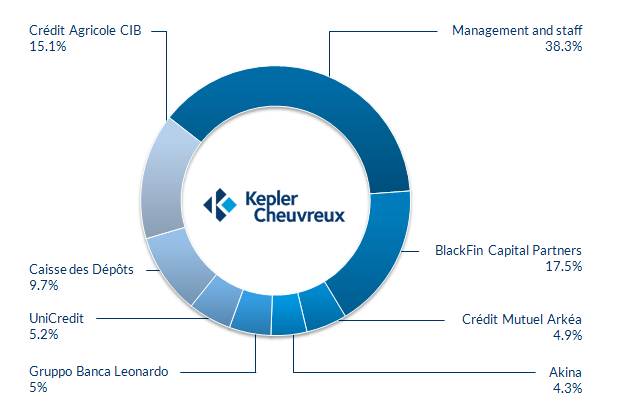
Kepler Cheuvreux has undergone a major strategic transformation since 2020. The integration of Ellipsis AM (Private Equity focused on Small/Mid-Caps) along with the approval of a Private Credit arm (Direct Lending/Structured Credit) of €12 Billion (AUM) currently underway (Run-Rate) represents one of the most successful examples of capital arbitrage and institutional leverage in Europe.
…
Les retraits massifs de fonds actions observés en 2025 [43,19 milliards de dollars nets cette semaine] traduisent une aversion accrue au risque parmi investisseurs institutionnels et particuliers. Les causes probables sont (i) l’anticipation d’une récession, (ii) la rotation vers des actifs plus sûrs (obligations, cash, or) et (iii) les craintes d’inflation persistante ou de stagflation.…
Analyse de marché