https://www.steelldy-indices.com
JPMorgan's note from July 9, 2026 identifies a structural threat to Bitcoin and public cryptocurrencies: the rapid expansion of private and permissioned blockchains driven by commercial banks (Kinexys, JPM Coin, tokenized deposits, CBDCs). This trend, supported by settlement volumes exceeding $4 trillion on Kinexys, could siphon institutional demand for public digital assets by offering…
As of July 2, 2026, the |...| strategy started in May remains valid, with all four assets declining. Current returns for a |...|x short range from -185% to -297%:
- STXUSDT: -23.3% to -29.7% decline, ROI -233% to -297%; - LINKUSDT: -6.5% to -18.5% decline, ROI -65% to -185%; - AVAXUSDT: -25.8% to…
Uniswap’s UNI token (current price ~$3.00–3.40 post-surge, market cap ~$1.9–2.1B) experienced a +25%+ daily move on Standard Chartered’s initiation coverage with a $100 target by 2030 (from ~$2.50–2.70 base, implying ~35–40x upside). The thesis centers on tokenized Real-World Assets (RWAs) migrating on-chain, driving DeFi TVL to ~$2.7T (37x expansion) and Uniswap capturing dominant DEX liquidity/trading…
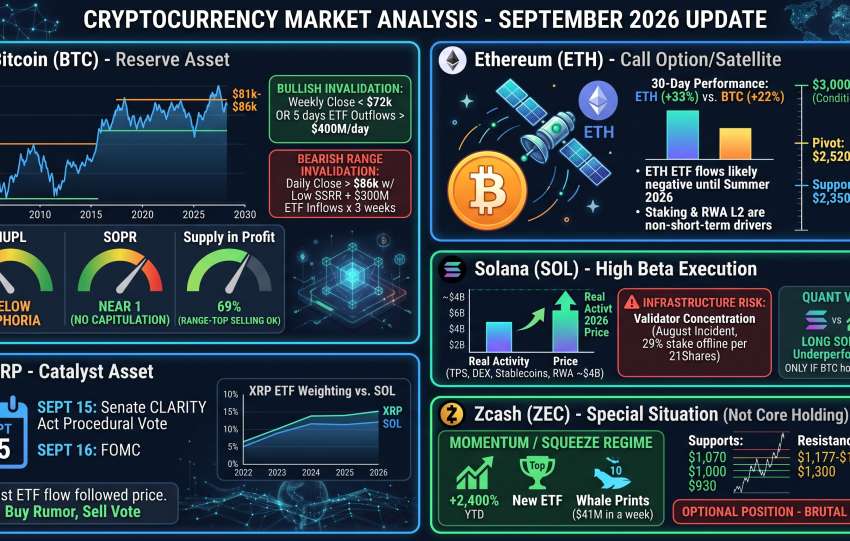
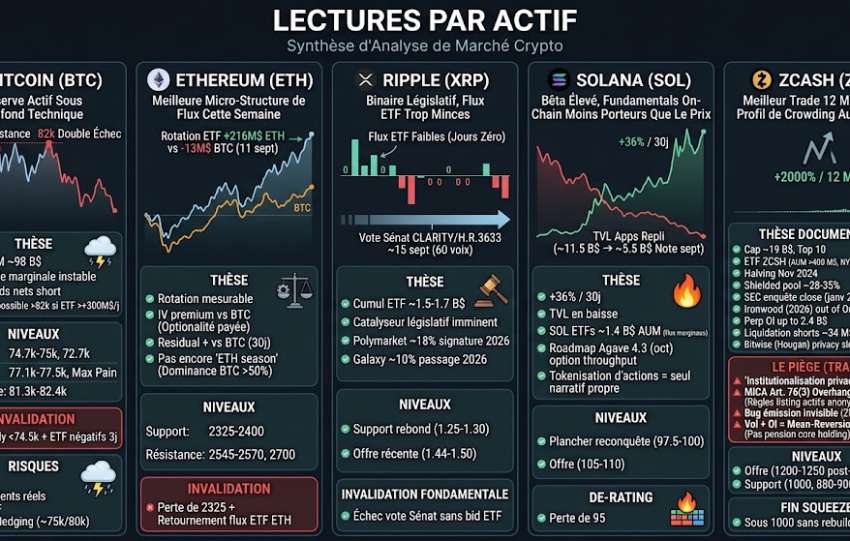
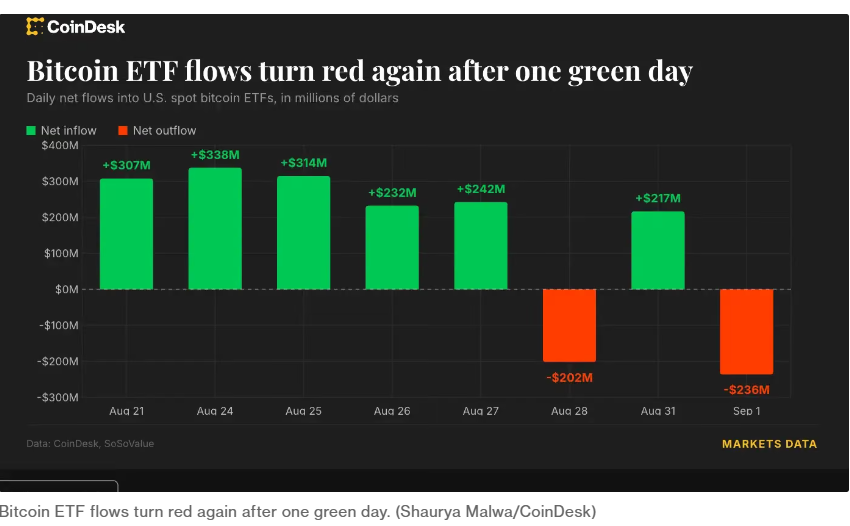
While the BoJ’s 25 bps hike to 1.0% (highest since 1995) keeps the yen carry transmission channel active but damped, real risks to BTC increasingly reside elsewhere: a maturing macro slowdown (US Q1 2026 GDP +1.6% annualized, Eurozone ~0.8% projected for 2026), volatile Bitcoin ETF flows (recent outflows amid cumulative ~$54B+ inflows since launch but…
The transmission mechanism Yen strength → USD/JPY depreciation → yen carry trade deleveraging → global liquidity contraction → BTC risk-asset beta spike (~2–3x) remains empirically robust. However, it is significantly attenuated following the BoJ’s fully delivered and well-telegraphed 25 bps hike to 1.0% (highest since 1995) on 16 June 2026.
Speculative net-short JPY positions elevated…
Bitcoin (BTCUSDT) trades at approximately $65,400–66,000, down ~0.8% in the observed session, within a recent consolidation range post a relief bounce from sub-$60k lows earlier in June 2026. The provided chart confirms a 1H/4H structure with MA5/10/20 clustering near $66,200–66,300, recent rejection at $67,255 highs, and downside probe the Fair Value Gap (FVG) zone around…
This study details an advanced quantitative modeling of a conditional hedge for a crypto-exposed portfolio, employing Micro E-mini Nasdaq-100 (MNQ) futures contracts as the hedging instrument. The calibration is based on a dynamic conditional beta of BTC/Nasdaq at 0.45, estimated using a multivariate DCC-GARCH(1,1) model with Markov regime switching. Key Findings:
¤ Minimum Variance Hedge…
Gold is considered a tactical long-term asset, but Bitcoin is currently undervalued. ReSolve Asset Management's portfolio manager, Richard Latimer, notes that gold's current price consolidation is expected after its early-year surge. Despite strategically remaining bullish on gold for its structural bull market, ReSolve has become tactically neutral in the short term, having taken profits and…
Hedge funds are increasingly adopting new digital currencies, primarily stablecoins, due to enhanced capital efficiency, regulatory clarity, and new yield-generating strategies. 1| Capital Efficiency Unlike traditional prime brokerage where collateral is largely immobilized, stablecoins acting as collateral can simultaneously secure derivative positions (perpetuals, options, futures) and generate yield from underlying assets like T-bills. This "working…
We are not in a classic crypto cycle; we are witnessing the commoditization of the settlement layer. Bretton Woods I (1944) used a gold-pegged dollar settled via correspondent banks (SWIFT/CHIPS). The current regime (post-1971) relies on the petrodollar and sovereign debt. Bretton Woods 2.0 is based on a Dual Pillar Regime:
1. Physical Pillar…