The 2024-2026 cycle has transformed compliance from a cost center into a competitive moat. In Europe, the crypto market has become license-only (the end of MiCA grandfathering on July 1, 2026); in the United States, the securities/commodities boundary is being defined by the CLARITY Act (§10505, Senate vote on September 15, 2026). For DAOs, the…

2025–2026 is the point at which programmable money moved from experimentation to regulated infrastructure. Three layers are converging: private stablecoins (GENIUS Act/MiCA), wholesale CBDCs (Agora, mBridge), and a common data grammar (ISO 20022 as the exclusive standard since November 2025). The dollar is being “privatized and programmed” abroad while Europe is building regulatory monetary sovereignty:…
Christopher Whalen, who has spent more than 40 years analyzing bank balance sheets and is a former employee of the Federal Reserve Bank of New York, sold all his bank stocks in late September and opened short positions in consumer lending companies. The head of Whalen Global Advisors and editor of The Institutional Risk Analyst,…
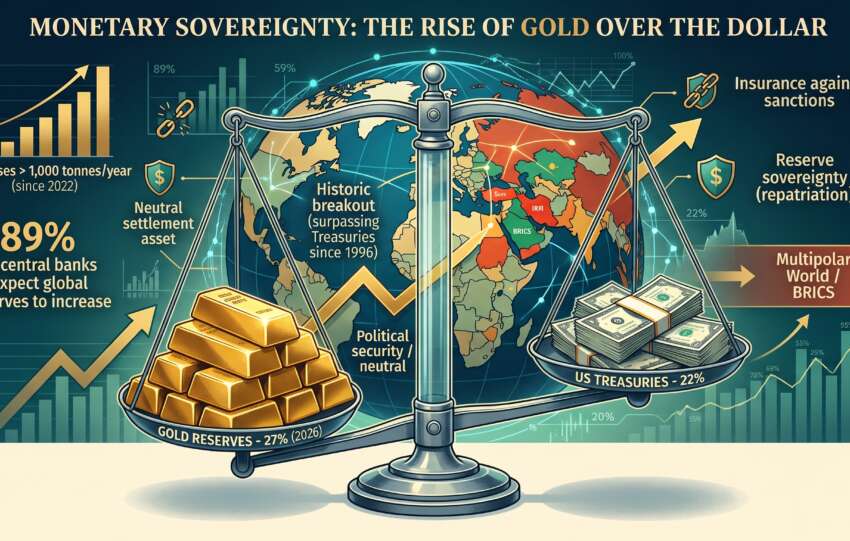
Central banks’ accumulation of gold reflects a structural shift in the monetary system: gold is becoming a strategic reserve and settlement asset, beyond its traditional hedging function. According to the World Gold Council, 89% of central banks expect global gold reserves to increase over the next 12 months, and 45% plan to increase their own…
Technological revolutions are not equal as investment themes; they are equal as cost curves. Three curves are collapsing simultaneously in 2026-2030, the cost of AI inference, the cost of physical action (humanoid robotics and logistics), and the cost of biological reading/writing (sequencing, synthesis), and their intersection is creating the markets of the decade: instrumented smart…
Paradoxical but verifiable: European regulation (MiCA fully applicable, transition completed in 2026; CSRD/ESG taxonomy under development) is not a burden but the competitive moat of the European crypto ecosystem, and a scoring market in its own right. The EU tokenized market is estimated at €2,000 billion by 2028; CASP authorization costs €500k–€1M; barriers to entry…
Traditional real estate valuation methods, including hedonic OLS regression and aggregated spatial medians, suffer from structural methodological weaknesses when applied to tokenized real-world assets (RWA) and Yield Trusts. Under Shapiro-Varian's Information Rules theory, reproducible raw transaction data available at zero marginal cost, such as France's DVF database, converges toward zero market value. Moreover, raw DVF…
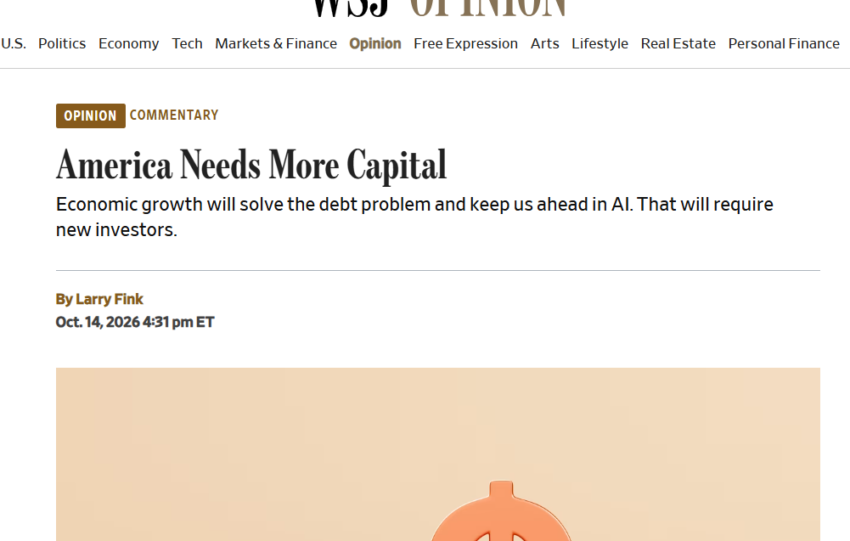
The restructuring of the global economy to finance the AI capital shortfall rests on recycling Asian savings, mobilizing new investors, and transforming cash flows into investable assets.
First, the AI boom generates liquidity in South Korea and Taiwan, part of which flows into dollar-denominated assets and indirectly supports investment by US hyperscalers. Taiwan’s current…
2026 is the year of the monetary bifurcation: the United States has chosen regulated private stablecoins (GENIUS Act, with an explicit ban on a Fed-issued retail CBDC), Europe is building the public digital euro (Parliament vote in February 2026, ECB Governing Council decision on October 30, 2025, possible pilot in mid-2027, first issuance envisioned in…
The tokenization of real-world assets changed nature in 2026: it is no longer a speculative resale market but an automated cash flow market. A RWA's value is now reflected in its distributions (interest, rent), mechanically analogous to private credit and traditional fixed income, with an added layer of programmability. Key data. On-chain RWA (excluding stablecoins):…
Analyse de marché
Carbon Credit Market