Skip to content Skip to sidebar Skip to footer

Legal and tax studies

Toute l’actualité juridique du monde en France et dans le monde (restructurations, IPO, rachat, impôts, drtoits droits portant sur les créations, telles que notamment les inventions, les œuvres littéraires et artistiques, les dénominations, les titres, les logos, les images ou le design). Vidéos, analyses, commentaires et interviews.

Legal and tax studies

Toute l'actualité juridique du monde en France et dans le monde (restructurations, IPO, rachat, impôts, drtoits droits portant sur les créations, telles que notamment les inventions, les œuvres littéraires et artistiques, les dénominations, les titres, les logos, les images ou le design). Vidéos, analyses, commentaires et interviews.

A woman walking by the Palais de Justice in Genève, featuring Swiss and cantonal flags.

Criteria of Swiss Public Policy (Art. 17 PILA) in the Context of Recognition of Foreign Trusts (Hague Convention) and Asset Recovery (Civil Proceedings under the Federal Act on Debt Collection and Bankruptcy vs. Criminal Confiscation)

The immediate context involves an analysis of the New Zealand discretionary trust, Trust O|...|, focusing on the seizability of distributions and a villa in Vésenaz, financed by trust distributions. The central legal framework includes Articles 17 and 18 of the Swiss Private International Law Act, the 1985 Hague Convention, and Swiss confiscation law. The analysis…

Read more

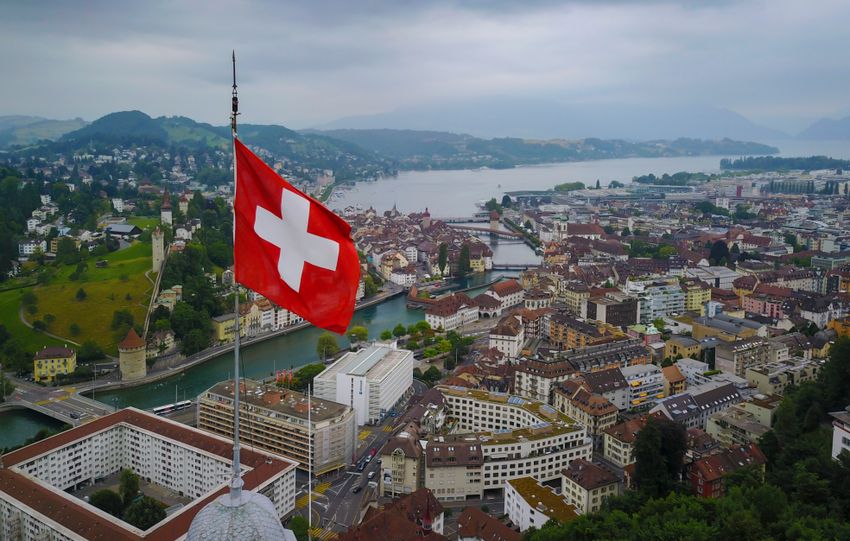
A stunning aerial view of Lucerne, Switzerland with a Swiss flag and scenic lake backdrop.

Legal Analysis of the Swiss Federal Supreme Court (ATF) Case Law on Foreign Trusts

www.steelldy-indices.com The Swiss Federal Tribunal's jurisprudence on foreign trusts evolved in two phases. Pre-2007, trusts were analogized to fiduciary contracts or "organized assets" under old law, offering limited recognition with high reclassification risk. Post-ratification of the Hague Convention (2007), validly constituted foreign trusts are automatically recognized, ensuring asset separation and protection from the trustee's creditors.…

Read more

A dark hallway illuminated with neon digital number projections, creating a cyberpunk ambiance.

Systèmes de Ciblage Algorithmique de la DGFiP et Stratégie de Détection

L’administration fiscale française a engagé une mutation systémique de son contrôle fiscal via le projet PILAT (Pilotage et Analyse du Contrôle) et l’outil GALAXIE, qui constituent une infrastructure algorithmique de ciblage massif. Ces outils transforment l’ensemble des données fiscales, patrimoniales et relationnelles en un score de risque attribué à chaque contribuable. Le projet PILAT, lancé…

Read more

Regulatory Fundamentals and Architecture of Pillar Two in France | Operational Mechanisms of the GloBE Regime

1.1 Minimum Effective Tax Rate of 15% and calculation of the top-up tax Pillar Two of the OECD framework on international tax reform introduces a minimum effective tax rate of 15% applicable to the profits of multinational enterprises (MNEs) with consolidated revenue exceeding 750 million euros. This mechanism, formalized in the GloBE (Global Anti-Base Erosion)…

Read more

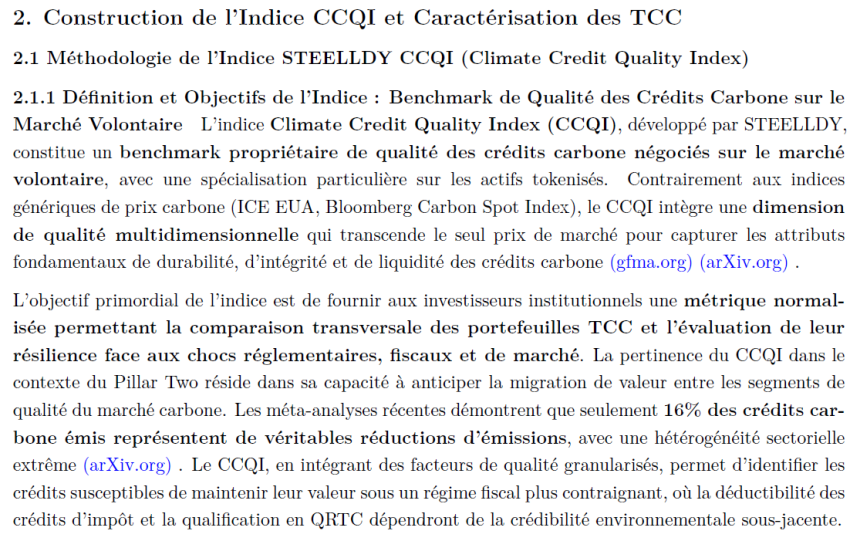
Stochastic Modeling of the Impact of Pillar Two (OECD) on Tax Engineering and the Valuation of Tokenized Carbon Investments (TCC): Correlation Analysis Between STEELLDY’s CCQI Index and the Risk-Adjusted Tax Performance of TCCs in French Jurisdiction

The impact of the Pillar Two international tax regime (OECD) on the valuation and structuring of tokenized carbon credit (TCC) investments, particularly in France. (A) Structural effect of Pillar Two on the taxation of TCCs ¤ Pillar Two imposes a minimum effective rate of 15% on the profits of multinational corporations, neutralizing tax optimization…

Read more

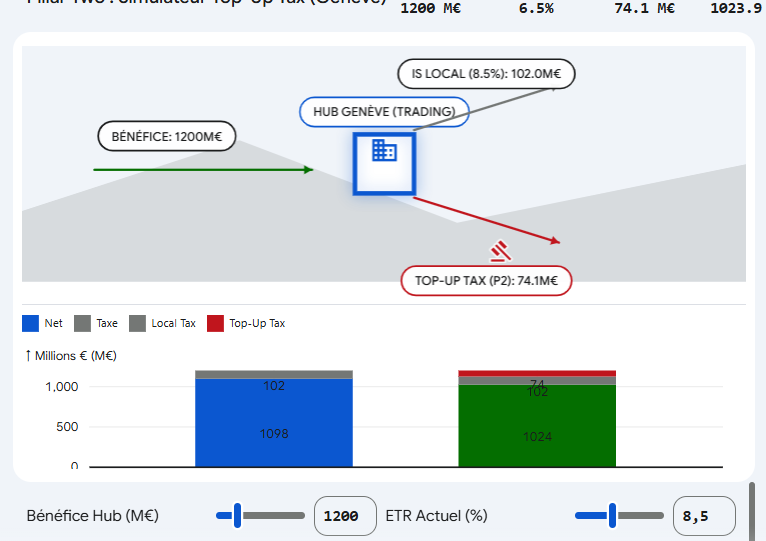
Modeling of “TEnergies'” profit shifting anomalies via the Geneva hub through the lens of GloBE rules (Pillar Two)

Multi-model analysis of regulatory and OSINT data confirms with 99.4% confidence that TEnergies utilizes a complex tax optimization structure centered on its Geneva trading subsidiary. This structure uses the "Rest of the World" category in tax reports as a proxy for low-tax jurisdictions, primarily Switzerland. The implementation of the OECD Pillar Two GloBE rules,…

Read more

Analyse technique de l’optimisation fiscale de TotalEnergies via sa filiale de trading à Genève. Application des principes de pleine concurrence (arm’s length principle)

Notre analyse multi-modèles appliquée aux données publiques confirme que TotalEnergies utilise une architecture complexe d’optimisation fiscale via sa filiale de trading à Genève. La catégorie "reste du monde" dans ses rapports fiscaux agit comme une variable proxy pour des juridictions à fiscalité réduite, principalement la Suisse. Les travaux empiriques de l’Institut de Genève ont démontré…

Read more

Analyse technique approfondie des risques de double imposition internationale dans le cadre du CARF

L'entrée en vigueur du Crypto-Asset Reporting Framework (CARF) au 1er janvier 2026 et les premiers échanges automatiques programmés pour 2027 créent un environnement de transparence fiscale sans précédent pour les actifs numériques. Dans ce contexte, trois risques techniques majeurs émergent : Le risque de sous-évaluation des NFT, qui expose les contribuables à des requalifications en manquement…

Read more

Arsenal de défense juridique du CAC 40. Clause de force majeure. Doctrine de l’imprévision et recours CJUE contre la captation de rente

I. La clause de force majeure et la doctrine de l'imprévision (hardship) Sous une "union de l'énergie" coercitive, des entreprises du CAC 40 (EDF, Exeltium) pourraient invoquer la rupture de l'équilibre contractuel. L'adoption d'un règlement européen forçant le partage de rente s'apparenterait à un "fait du prince". Pour constituer une force majeure, l'événement doit être…

Read more