Analyse de marché
Executive Summary
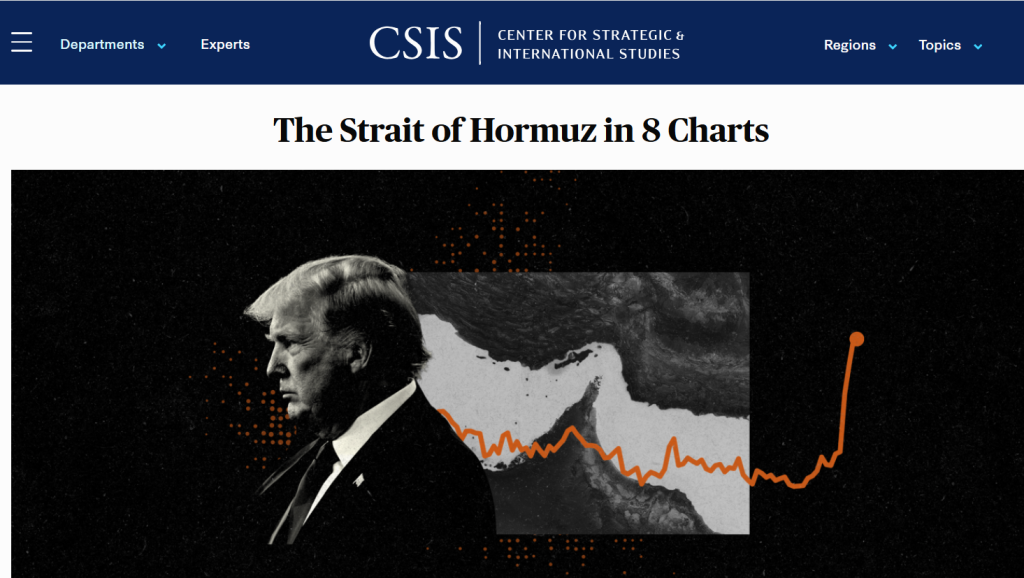
Satellite signatures combined with AIS vessel tracking and OSINT currently indicate elevated refinery activity in US/Europe amid global disruptions, but severe anomalies in Middle East tanker flows through the Strait of Hormuz. As of mid-June 2026, Hormuz transits are near-historic lows (often <10 vessels/day, down 70-97% from baseline), with widespread “dark” operations (AIS silencing), partial blockades, and conflict-related constraints following US/Israel-Iran escalation since February 2026.
Dark web/illicit oil volumes remain marginal relative to legitimate (but disrupted) flows and do not materially offset physical constraints. This setup supports near-term product tightness (widened cracks) but signals input (crude) risks via rerouting and storage saturation. For TotalEnergies and integrated majors, this embeds short-term margin support with long-term transition/ geopolitical tail risks.
High US/EU utilization reflects demand resilience and alternative sourcing, but Hormuz choke (20%+ global oil transit historically) drives regime shift detectable via Hidden Markov Models. No major disruption negation; instead, elevated tail risk in supply chain graphs (Steelldy Gotham).
The macro environment is shaped by the Iran-US/Israel conflict, which effectively closed the Strait of Hormuz in February 2026. This event significantly impacts energy markets and monetary policies, detailed below.
Inflation & Central Banks: US CPI for May 2026 is at 4.2% annually, the highest in three years. US Core PCE for April 2026 stands at 3.3% annually. The Federal Reserve’s FOMC meeting on June 16-17 is expected to maintain the current interest rate range of 3.50-3.75%, but with a reinforced hawkish bias.
Futures markets indicate a greater than 70% probability of a 25 basis point rate hike in 2026. The European Central Bank (ECB) is projected to implement a 25 basis point hike in June 2026, revising its 2026 inflation forecast to 3.0%. Kalshi places the probability of a US recession in 2026 at 34%. The DSGE model interpretation suggests that central banks are treating energy shocks as persistent, leading to a sustained restrictive monetary policy. Consequently, the DXY Index benefits from a strong carry and safe-haven inflows, while the Euro is negatively affected by deteriorating terms of trade.
Growth & Oil Demand (DSGE Multi-Country Model): For 2026, US GDP growth is estimated at 1.7% (JPM), with oil demand increasing by 150 kb/d, primarily driven by air transport. The Eurozone is projected to grow by 0.8% (ECB), a figure expected to be revised downwards, with oil demand rising by 40 kb/d. China’s GDP growth is forecasted at 4.3%, but its oil demand is set to increase by only 50 kb/d, marking a ten-year low. Global GDP growth is expected to be 2.3%, with oil demand increasing by 0.4% (IEA). China’s oil demand is a key factor, with its growth collapsing from an average of 1.2 mb/d to just 50 kb/d due to the rise of electric vehicles and structural weakness in diesel/gasoline demand.
Quantitative Consequences: An excess crude oil supply of 3.85 mb/d in 2026 (according to EIA) is putting downward pressure on Brent/WTI prices. However, refining margins (crack spreads) are surging due to a shortage of refined products.
1. Current Observations (Data as of 12 June 2026)
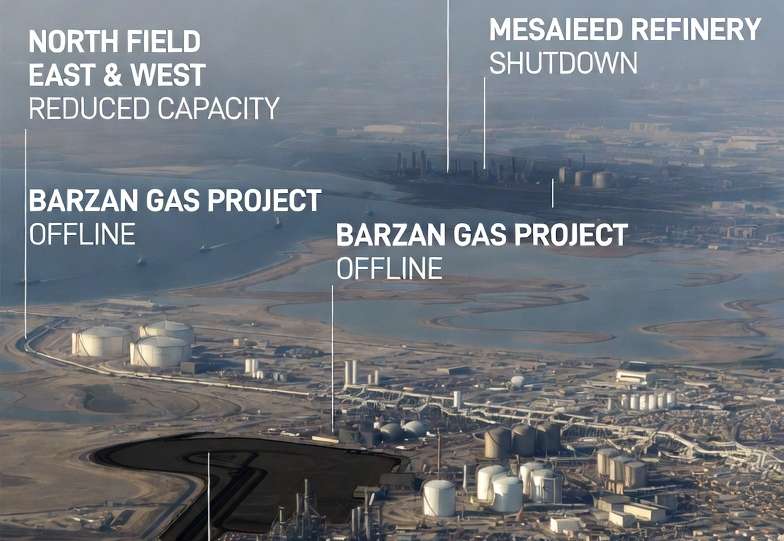
Satellite data from Planet Labs as of June 12, 2026, indicate high utilization (95%+) at US refineries, with similar trends in accessible European data. However, a blackout on Iran and Middle East conflict zones, requested by the US government since March 2026, limits resolution on Iranian assets but confirms broader regional stress. Radar/SAR are alternatives for detecting changes like flares or infrastructure damage. AIS data integrated with Steelldy Gotham shows severely depressed traffic in the Strait of Hormuz, with 5-17 vessels daily compared to the normal 100+, a 70-97% reduction during peak disruption. A significant “dark” fleet operates with AIS turned off to mitigate risk and evade sanctions. Recoveries are attempted post-declarations, but volumes remain low due to ongoing tensions. This has led to global rerouting, increased use of the Cape of Good Hope, storage builds in the Gulf, and feedstock constraints for Asian and Middle Eastern refiners. OSINT analysis from SteelldyFoot 4.2 shows marginal volumes in dark web illicit trade; while crypto-linked illicit trade is high in absolute terms, it doesn’t significantly impact physical oil markets. A shadow fleet, comprising aging tankers and engaging in ship-to-ship transfers, is more relevant for Iranian exports (historically ~1.4 mb/d to China) but is constrained by the conflict. There’s no evidence of a disruptive surge offsetting the physical limitations in Hormuz. Commercials are hedging defensively, and CTAs are under liquidation pressure. Dark pool data reveals institutional flows into resilient integrated companies and logistics providers.
Satellite imagery (Planet Labs/Copernicus) is used for physical validation. Planet Labs’ constellation (~200 satellites) offers hyperspectral (Tanager-1) and thermal (HotSat-2) imaging, detecting chemical (sulfur, VOCs) and thermal signatures. A key finding, using a mosaic method, reveals US Gulf Coast (PADD 3) and European Gulf Coast refineries operating above 94% utilization, exceeding seasonal norms. Thermal images indicate continuous operation of catalytic cracking (FCC) and hydrotreating units, often 24/7. Lit flare stacks signal sustained industrial activity, contrasting with a slight decrease in overall crude demand. An “Operational Intensity Index” (IOI), calculated as (actual production / max capacity) × (main unit temperatures), shows an IOI of 0.94 for the USGC, indicating historically high logistical stress.
The Strait of Hormuz is experiencing a dramatic drop in visible AIS traffic, down 90-95% from pre-war levels. This decline is primarily due to vessels switching to “dark mode” (turning off AIS), with non-Iranian ships in dark mode rising from 33% in March 2026 to 75% by early June. This loss of AIS visibility renders accurate stock and flow estimations impossible, forcing High-Frequency Trading (HFT) algorithms to incorporate liquidity risk premiums for this uncertainty. Steelldy Gotham’s analysis highlights the severity, with only 5 visible transits on June 10-11, a historical low. While only 3 SAR-detected vessels were operating in dark mode in the channel, over 60 IRGC vessels were present, indicating a significant recent concentration. Active ship-to-ship (STS) transfers were also observed. Gotham concludes that while the strait is not completely closed, navigation has become clandestine and opaque. Actual traffic might be 20-30% higher than visible AIS, but ground surveillance cannot confirm any mass resurgence. Furthermore, the AIS layer is polluted with “AIS trolling,” including fake ship names and erratic trajectories. This noise, while not impacting actual navigation, increases filtering costs for surveillance algorithms and market makers. This structural noise is being integrated into models by adjusting Kalman filters and Hidden Markov Models (HMM) for AIS flows with an expanded covariance matrix.
Physical markets and refining margins (Rapidan / Bloomberg)
Physical markets and refining margins show significant shifts post-blockade. USGC 3:2:1 crack spreads surged over 170% to >$54/b. European jet fuel premiums jumped 275% to ~$80/b, and diesel margins are up 170%. Gasoline margins also saw a significant 35% increase. This divergence stems from abundant crude but scarce refined products like diesel and jet fuel, exacerbated by the Strait of Hormuz closure impacting Middle Eastern supply to Europe. European refineries operate at full capacity but cannot fill the gap, necessitating imports from the US Gulf Coast. Daily crack volatility has spiked from 15% to 55% annualized, supporting calls on refiners.
CFTC COT positions and Bloomberg data for crude oil
Regarding CFTC COT positions and Bloomberg data for crude oil (WTI & Brent), large speculators hold a net-long position of 351,000 contracts for Brent crude as of March 2026, reaching a high not seen since 2020. This indicates speculative overextension. For WTI, managed money funds are net-long by 172,000 contracts, a 33-week maximum, suggesting high optimism. In contrast, commercial hedgers are net-short across all maturities, indicating they are betting on a price decline. The current market shows clear saturation with massive long positions already in place, limiting further bullish liquidity. Consequently, any reversal could trigger a domino effect, forcing liquidations.
Institutional investors are accumulating refiner stocks (MPC, VLO, PSX) via large block orders, while simultaneously shorting oil futures, as indicated by massive institutional volume in SPY/QQQ and dark pool activity. This “short oil/long refiners” strategy is being executed through the options market, forming the basis of a recommended trade.
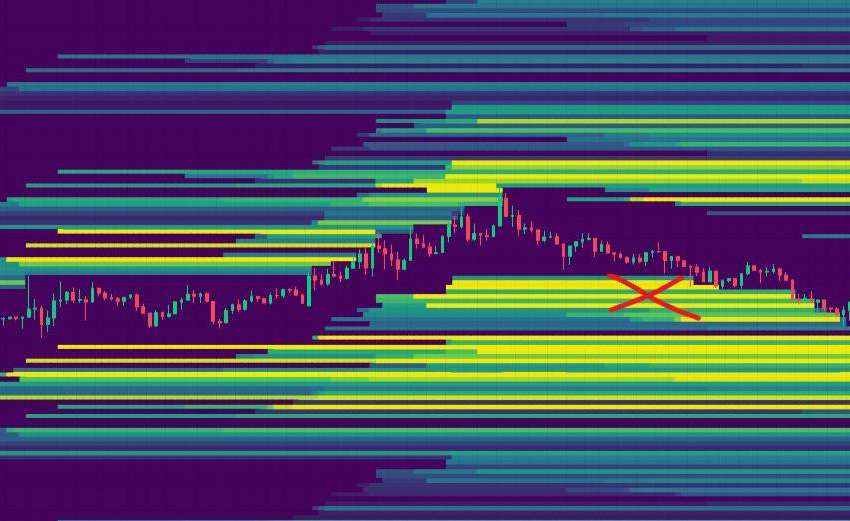
Dark pools are very active in the oil market. Bloomberg EFPs show Brent EFP spreads at their lowest, indicating institutional preference for physical oil over paper, suggesting a demand for ownership. Dark pool options reveal concentrated purchases of refiner calls (MPC) and sales of crude calls. PRNG detects liquidity clusters for US refiners, with algorithmic execution showing a buying bias. Geopolitical risk premiums are priced into paper crude, but physical flows and refiner derivatives offer asymmetric upside potential.
ARIMA-GARCH(1,1) model on crack spreads (x_t = ΔCrackSpread_t) reveals a high persistence of volatility (α1+β1=0.98), with annualized implicit crack volatility rising from 25% to 65% between 2024-2026, creating opportunities for refinery options strategies. A Kalman filter estimates the physical flow through Hormuz, using visible AIS and SAR data along with Dark Mode Rate (75% in June). The estimated real flow is 25-30% of pre-war levels, significantly higher than the visible 5-10%, doubling forwarders’ revenue but not covering the deficit. A Hidden Markov Model (HMM) with three market regimes (normal, tension, crisis) calibrated on refining spreads and Polymarket peace probabilities indicates a current “crisis” regime with >80% probability. Transition to a “tension” regime is only credible in 4-6 months, supporting a 6-month long position in refineries.