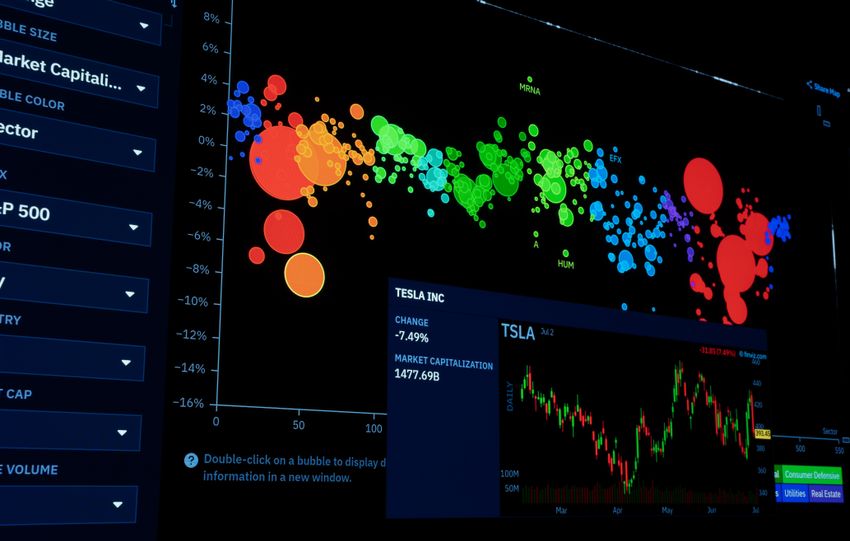
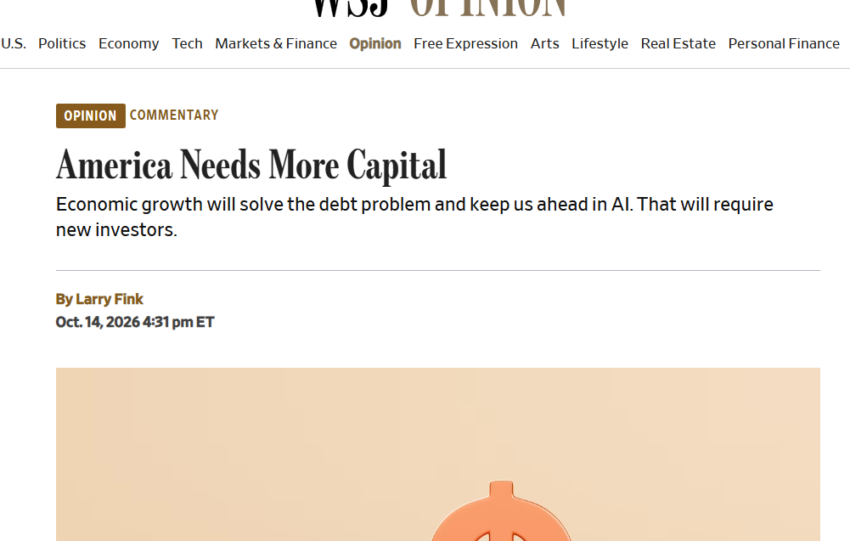
The restructuring of the global economy to finance the AI capital shortfall rests on recycling Asian savings, mobilizing new investors, and transforming cash flows into investable assets.
First, the AI boom generates liquidity in South Korea and Taiwan, part of which flows into dollar-denominated assets and indirectly supports investment by US hyperscalers. Taiwan’s current…
Le Pilier 2 de l’OCDE instaure un taux minimum mondial d’imposition de 15 % pour les groupes multinationaux, transposé en France par la Loi de finances 2026 conformément à la directive (UE) 2022/2523. Le traitement des véhicules d’investissement immobilier, notamment les REITs et les foncières, fait l’objet de discussions spécifiques, tandis que des simplifications sont…
Le "rent gap" (Smith, 1979) désigne l’écart entre la rente foncière capitalisée, correspondant au rendement économique actuel d’un site, et la rente potentielle, réalisable après réaménagement ou repositionnement. Central dans l’analyse de Christophers sur Blackstone, ce concept constitue un indicateur d’arbitrage pour ScoreGex.com : un écart important signale une pression à la rentification future. …
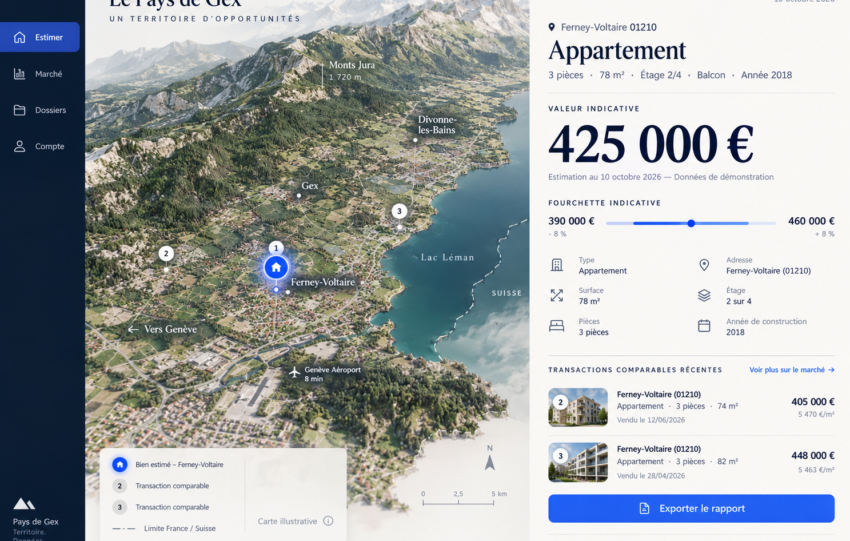
ScoreGex.com est une plateforme algorithmique d'évaluation immobilière quantitative, déployée initialement sur le Pays de Gex (8 communes, Ain, France), à destination des frontaliers travaillant à Genève et des institutions financières (banques, fonds d'investissement, assureurs). Elle constitue la première AVM (Automated Valuation Model) multi-modale à intégrer explicitement la dimension frontalière Suisse-France dans son moteur de pricing.…
No more "speculative NFTs": tokenized assets are becoming income generating instruments , rents, interest, coupons distributed via smart contracts.
Analysis of a paradigm shift that brings RWA closer to private credit and fixed income. Tokenization was first framed as a story of appreciation: buy a token, wait for it to rise. The story of…
AI capex has become an infrastructure cycle of utility-like scale , comparable to railroads or the electrical grid , with a readable value chain: semiconductors (the cluster of megacaps that the market now groups under acronyms like "MANBRIC": Microsoft, Apple, Nvidia, Broadcom, and others), data centers, energy, and now physical robotics. Biotech remains the pocket…
Thesis ESG enters its accounting phase: the European taxonomy, CSRD and carbon markets are transforming extra,financial data into quantifiable data , and therefore into allocation signals. Smart cities represent the physical application ground: sensor-driven buildings, mobility, energy and water, whose flows (and savings) become financeable assets.
Facts. Voluntary carbon market: ~$2 billion today, commonly…
For two decades, digital finance sold a promise of appreciation: buy an asset today to resell it for more tomorrow. In 2026, a quieter but structural transformation is underway: the value of an asset is no longer defined by its expected future price, but by the cash flow it generates and distributes automatically.
The…
L'analyse financière pour la structuration d'investissements en Smart Cities identifie trois instruments clés. |a| L'iShares Smart City Infrastructure UCITS ETF de BlackRock affiche une performance de 57,35 % sur 5 ans avec une volatilité de 14,48 % et un TER de 0,40 %. |b| Le Fonds infrastructure smart city de Vanguard et |c| Blackstone Infrastructure…
Facts and structure. The European ESG taxonomy (CSRD + Green Taxonomy) is transforming investment flows into constrained flows: a poorly scored asset loses its place in the investable universe. On the carbon side: the voluntary market is currently ~$2 billion, with a trajectory toward ~$100 billion by 2030 (market consensus referenced on your homepage); tokenization…
ESG Data Services