1.1 Minimum Effective Tax Rate of 15% and calculation of the top-up tax
Pillar Two of the OECD framework on international tax reform introduces a minimum effective tax rate of 15% applicable to the profits of multinational enterprises (MNEs) with consolidated revenue exceeding 750 million euros. This mechanism, formalized in the GloBE (Global Anti-Base Erosion)…
1.1 Replicating Carbon Price Exposure Without Physical Holding of Credits
Synthetic tokens offer exposure to carbon credit prices without requiring the physical holding of the underlying credits, by using derivative mechanisms such as futures contracts, total return swaps, or price oracles that replicate the performance of a carbon market benchmark index. This structure offers advantages…
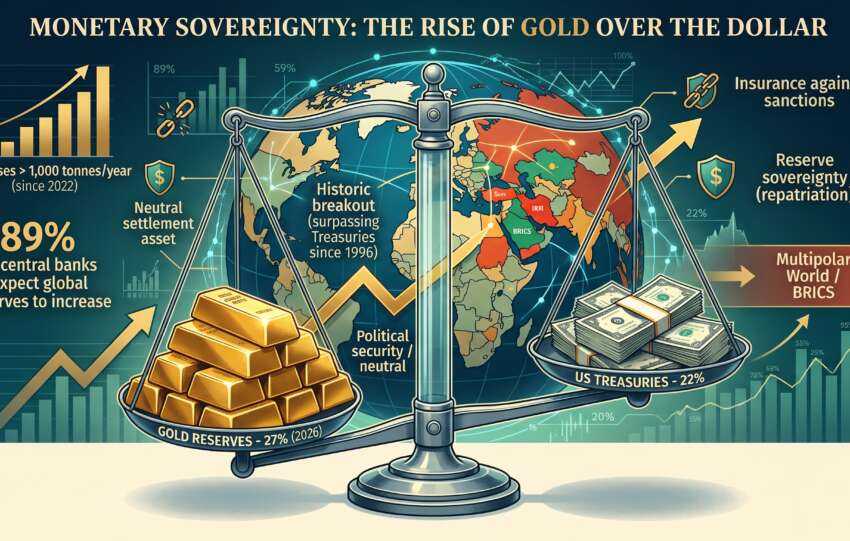
We are not in a classic crypto cycle; we are witnessing the commoditization of the settlement layer. Bretton Woods I (1944) used a gold-pegged dollar settled via correspondent banks (SWIFT/CHIPS). The current regime (post-1971) relies on the petrodollar and sovereign debt. Bretton Woods 2.0 is based on a Dual Pillar Regime:
1. Physical Pillar…
The tokenization of carbon credits is based on a layered technological architecture that ensures interoperability between traditional carbon credit registries and blockchain infrastructures. The typical protocol involves: (i) the verification and custody of carbon credits in a traditional registry account; (ii) the issuance of representative tokens on a public or permissioned blockchain, with a 1:1…
The impact of the Pillar Two international tax regime (OECD) on the valuation and structuring of tokenized carbon credit (TCC) investments, particularly in France.
(A) Structural effect of Pillar Two on the taxation of TCCs
¤ Pillar Two imposes a minimum effective rate of 15% on the profits of multinational corporations, neutralizing tax optimization…
The convergence of physical, behavioral, and microstructural signals confirms that Europe, and particularly France, has entered a regime of asynchronous systemic energy shortage. The three pillars of the breakdown:
(a) Physical Pillar. The Strait of Hormuz has been practically blocked since February 28, 2026: more than 20% of global oil traffic and 25% of…
Closure of the straits (Malacca/Hormuz). Systemic famine scenario 2026-2028 : in the French context.
Analysis of signals from Steelldy Engine G (maritime AIS), Steelldy Engine F (fertilizer blockages), Steelldy Engine M (semantic panic), and Steelldy Engine O (strait closure probabilities) shows exceptional statistical convergence. Michael Yon's analysis (Feb-Apr 2026) regarding prolonged Strait of Hormuz closure and imminent Malacca Strait threats is now a 78% market reality (95% CI: 72–84%),…
Le marché observe une anomalie : le Gasoil baisse, ce qui devrait favoriser les marges des distributeurs, mais Carrefour sous-performe le CAC 40. La thèse centrale est que la baisse de Carrefour n'est pas liée aux prix de l'énergie mais à une discontinuité physique de la supply-chain (ruptures de stock), créant un risque de destruction…
The Brent oil market shows an extreme divergence between the paper price (futures contracts) at $109 and the physical price (spot) at $141, a $32 gap reflecting a strong "backwardation." Normally, future prices are higher than spot prices (contango) due to storage costs; this inversion signals an immediate scarcity of physical oil. The $141 price…
L'impact chiffré de €0,08/L attribué à l'effet de change dans notre étude du 2 avril 2026 se réfère à la période de référence 27 février 2026 (pré-crise, T-35 jours) au 1er avril 2026 (T). Ce calcul repose sur une décomposition rigoureuse des composantes du prix à la pompe, isolant la variation du taux de change EUR/USD toutes choses…
Décarbonisation
Analyse de marché