Skip to content Skip to sidebar Skip to footer

Tag: US

Oil Market Faces Billion-Barrel Deficit Amid Strait Crisis, Reserves Struggle to Compensate

Estimated losses in the oil market reached 800 million barrels in March-April, growing to 1 billion barrels by mid-May, according to the IEA. This compares to a cumulative intervention of 400 million barrels, including the US. Before the conflict, global observable reserves in February stood at 8,185 million barrels; however, a significant portion is operational,…

Read more

Ray Dalio Ups Gold Allocation Forecast Amid Dollar Devaluation and Global Crisis Fears

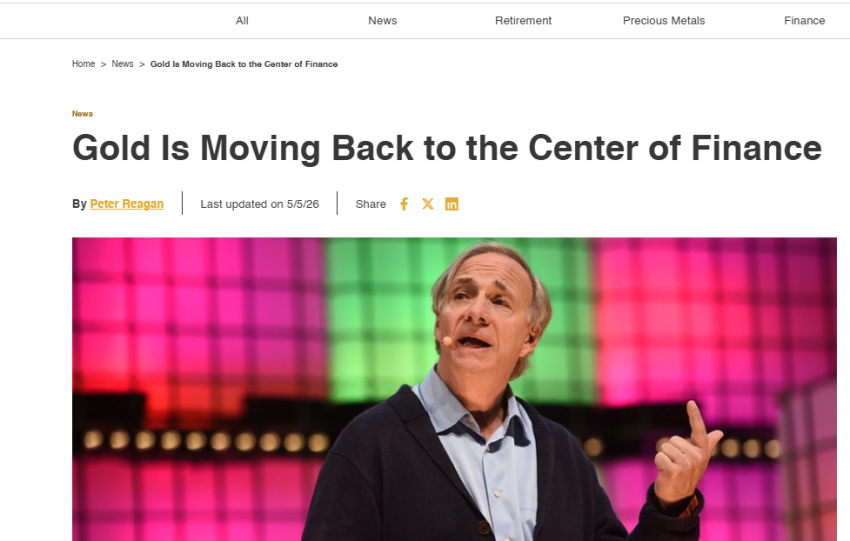
Gold Is Moving Back to the Center of Finance By Peter Reagan Gold is reasserting itself in finance, moving from an "alternative asset" category to a core holding, driven by recent economic instability. Historically, institutional investors focused mainly on corporate profits and debt, viewing gold skeptically. However, the pandemic-era lockdowns, subsequent inflation, and the significant…

Read more

The convergence of physical, behavioral, and microstructural signals confirms that Europe, and particularly France, has entered a regime of asynchronous systemic energy shortage

The convergence of physical, behavioral, and microstructural signals confirms that Europe, and particularly France, has entered a regime of asynchronous systemic energy shortage. The three pillars of the breakdown: (a) Physical Pillar. The Strait of Hormuz has been practically blocked since February 28, 2026: more than 20% of global oil traffic and 25% of…

Read more

Closure of the straits (Malacca/Hormuz). Systemic famine scenario 2026-2028 : in the French context.

Analysis of signals from Steelldy Engine G (maritime AIS), Steelldy Engine F (fertilizer blockages), Steelldy Engine M (semantic panic), and Steelldy Engine O (strait closure probabilities) shows exceptional statistical convergence. Michael Yon's analysis (Feb-Apr 2026) regarding prolonged Strait of Hormuz closure and imminent Malacca Strait threats is now a 78% market reality (95% CI: 72–84%),…

Read more

Strait of Hormuz Showdown: Vahidi’s IRGC Undermines Diplomatic Overtures to US

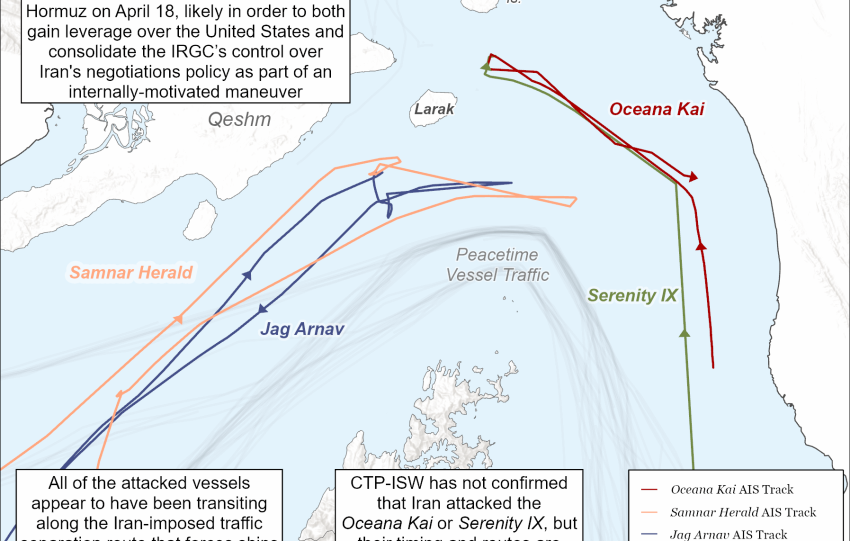
Islamic Revolutionary Guards Corps (IRGC) Commander Major General Ahmad Vahidi and his inner circle appear to have recently consolidated control over Iran's military response and negotiating strategy concerning the United States, evidenced by the IRGC Navy attacking commercial vessels in the Strait of Hormuz on April 18 and declaring it closed to all traffic. …

Read more

Morgan Stanley Warning: The U.S. Could Face a Major Power Shortage by 2028

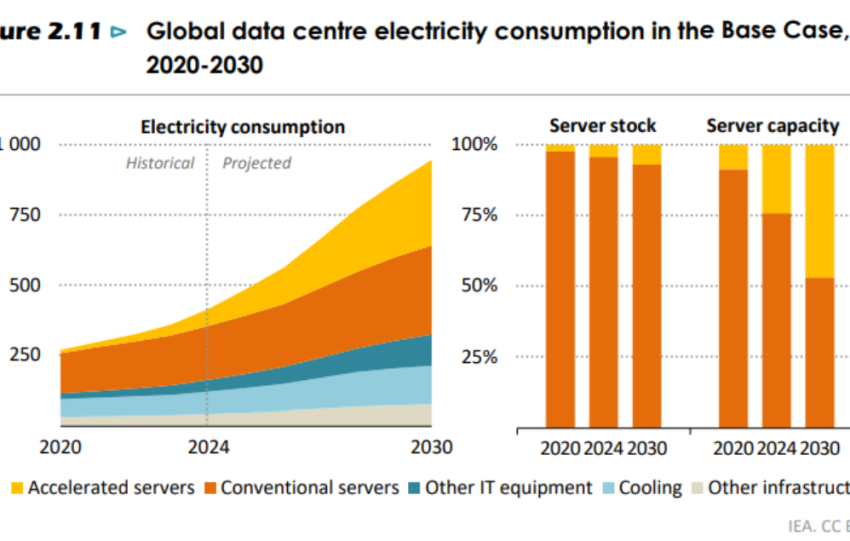
Morgan Stanley warns that accelerating global AI adoption is fueling an unprecedented demand for electricity, potentially leading to a 20% U.S. power shortfall by 2028 if supply doesn't match the exponential growth. Massive U.S. data centers, driven by major tech investments exceeding $400 billion by companies like Microsoft, Google, Amazon, and Meta for compute capacity…

Read more

The FSB 2026 report in question is « Vulnerabilities in Government Bond-backed Repo Markets, » published by the Financial Stability Board (FSB) on February 4, 2026

It forms part of the FSB’s broader work on non-bank financial intermediation (NBFI) resilience and assesses structural risks in the repo (repurchase agreement) markets backed by government bonds—the dominant segment of the global repo market. Market Size and Composition (as of end-2024) Government bond-backed repo outstanding totaled approximately $16 trillion, representing roughly 80% of…

Read more

Récession synchronisée globale 2026. Décalages macro-économiques, choc de productivité par l’IA et revalorisation de l’exposition aux actifs réels

Courte analyse de l'article de Laurent Maurel sur la montée du prix de l'or dans le contexte du ralentissement économique mondial. L'année 2026 sera marquée par une récession synchrone des blocs économiques majeurs (US, Chine, Europe), détectée par nos modèles Steelldy, caractérisée par une contraction de la demande finale et une augmentation du risque de…

Read more

Compétitivité économique de l’Union Européenne face à la transition énergétique accélérée (2025-2040)

L'analyse des données de l'AIE (2025-2027) indique que l'Europe traverse une refonte structurelle de son coût du capital, plutôt qu'un déclin inéluctable. L'UE est engagée dans une transition "à haute volatilité", marquée par la réduction rapide des combustibles fossiles (Gaz : -6,1 % CAGR, Charbon : -8,8 % CAGR) et une dépendance croissante aux énergies…

Read more

Cadre quantitatif géopolitique et des matières premières de l’Arctique

SYNTHÈSE EXÉCUTIVE Métrique cléValeurSeuil critiqueStatutSurface glace arctique hiver 202514,24 M km²15,0 M km²record basValeur actifs Groenland NPV-10 %1 180 Md$800 Md$...CAPEX global 2026-35 (scénario Tech[...]te)480 Md$350 Md$...Beta géopolitique US-RU-CN1,471,00...Score Tec[...]te-Implementation0,730,50... probable Conclusion exécutive Les informations satellitaires (NSIDC), les mouvements de capitaux (Bloomberg NEF) et l'ajustement des contrats OTC sur les terres rares (CME/SGX) suggèrent une…

Read more