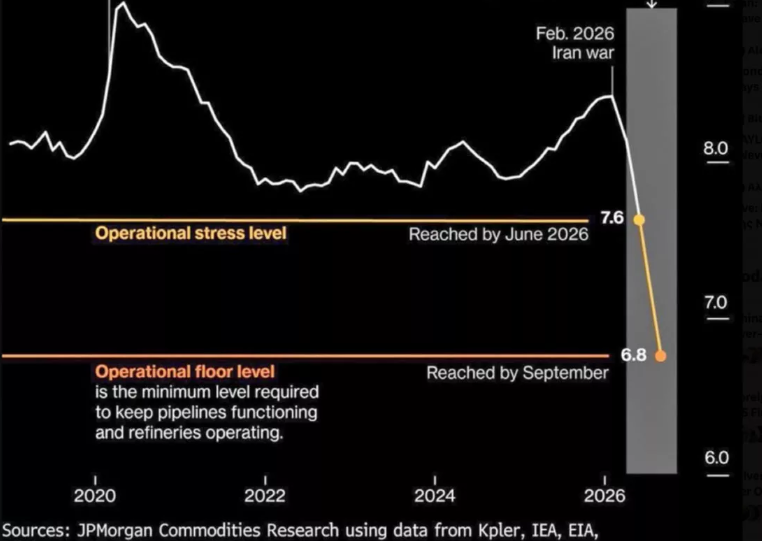
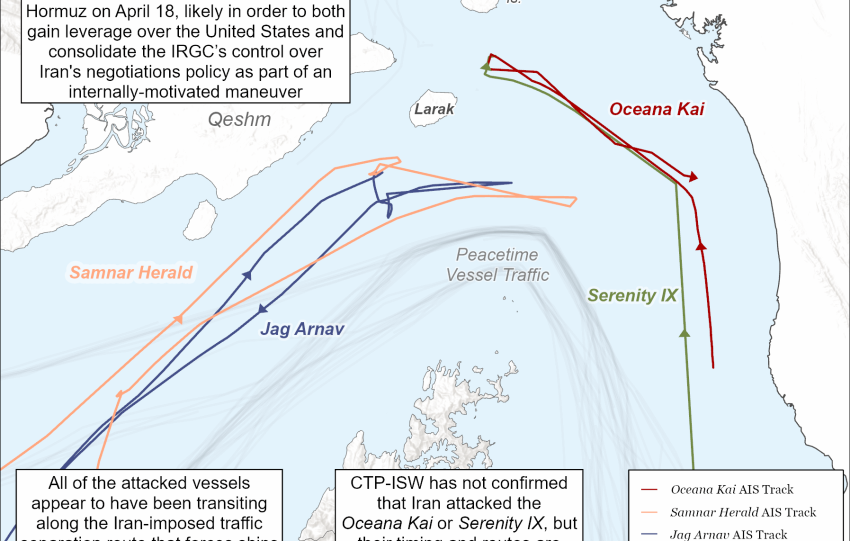
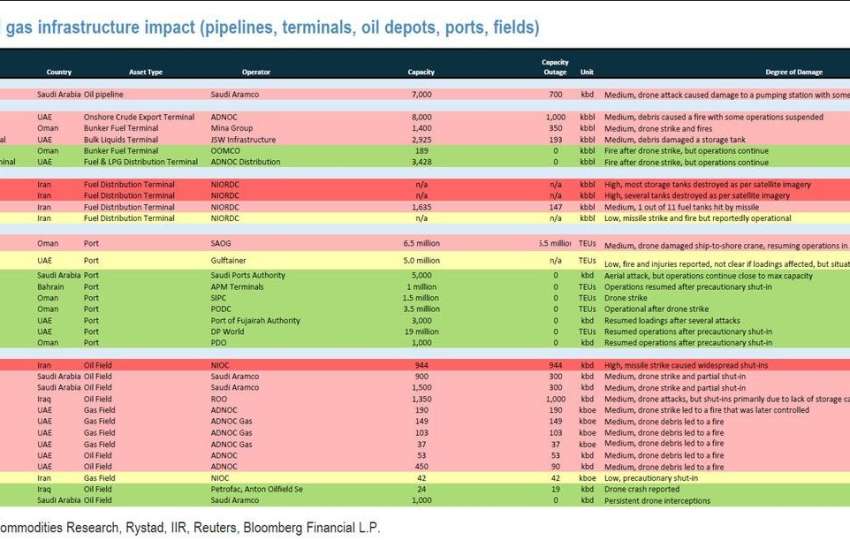
A JP Morgan Commodities Research table listing specific oil and gas assets hit across the Middle East, including pipelines, terminals, ports, depots, and fields in Saudi Arabia, UAE, Iran, Iraq, and Oman. The table details drone strikes, missile attacks, and fires causing capacity outages, with examples like partial shutdowns at Saudi East-West pipeline, full disruptions…
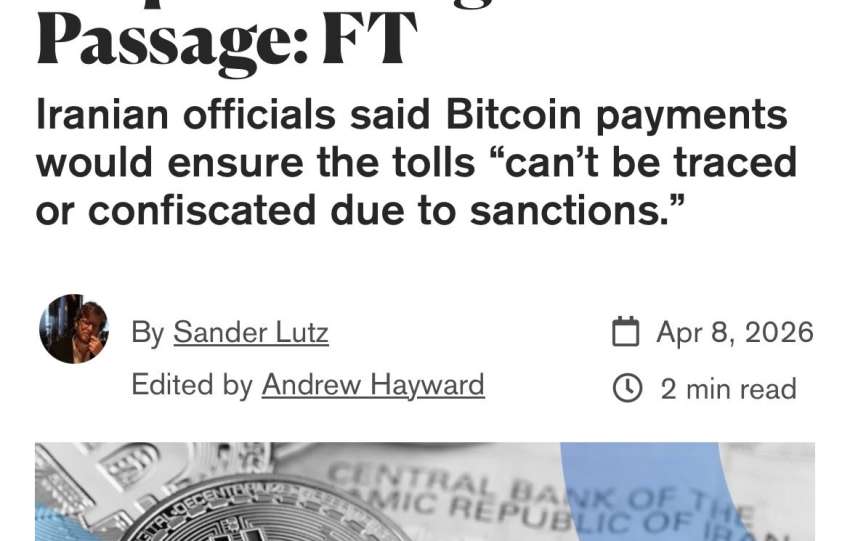
The information, factually confirmed by multi-source convergence (including the Financial Times of April 8, 2026), establishes that Iran now demands payments in cryptocurrencies (BTC, stablecoins) and in Yuan for oil transit through the Strait of Hormuz, completely bypassing SWIFT.
This mechanism, controlled by the IRGC, sets a rate of $1 per barrel, creating an…
The Brent oil market shows an extreme divergence between the paper price (futures contracts) at $109 and the physical price (spot) at $141, a $32 gap reflecting a strong "backwardation." Normally, future prices are higher than spot prices (contango) due to storage costs; this inversion signals an immediate scarcity of physical oil. The $141 price…
Multi-engine analysis suggests that the closure of the Strait of Hormuz, leading to a supply shock of 20 Mb/d (20% of world consumption), has established a regime of "structural energy constraint." This regime is characterized by a high conditional probability of activating restrictive measures on mobility ("energy lockdown"), estimated at 81.3% for 03/31/26, according to…
The integration of our analytical data and market signals into our Steelldy-Gotham architecture reveals an imminent regime shift. The US ground intervention in Iran, following the failure of negotiations (March 23-28, 2026), is not a simple military event. It is the final detonator that:
(a) Permanently closes the Iranian “Shadow Loop”: Iranian energy credits…
The U.S. Treasury's General License U (issued March 20, 2026) is explicitly designed to exert downward pressure on oil prices by flooding the market with additional supply at a time when prices have surged over 50% since the U.S.-Israeli conflict with Iran began in late February.
Why It Targets Prices
The license authorizes the…
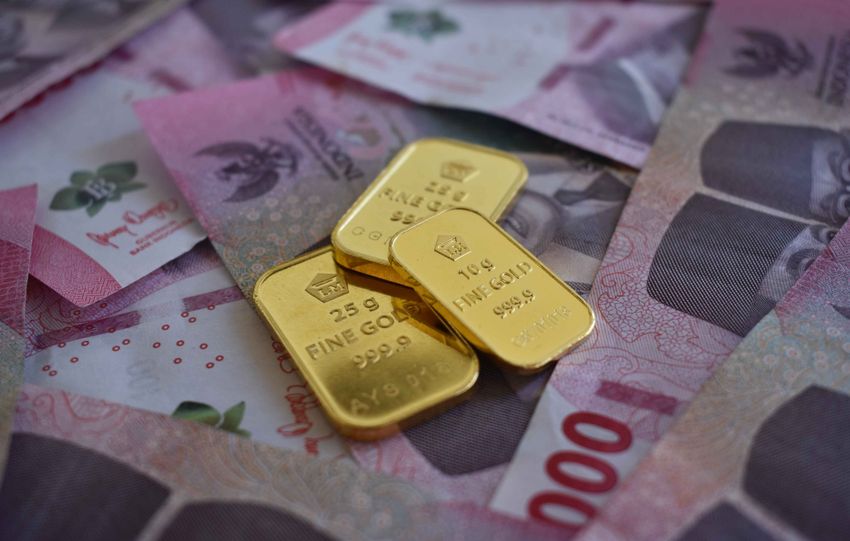
The drop in gold to $4,575 (the sharpest daily decline since 2020) does not invalidate the "Gold/Wheat = Twin Survival Assets" thesis. It represents a tactical decoupling induced by a sudden shift in monetary regime. Multi-engine analysis reveals the following sequence:
Monetary Shock: The Fed adopts an unexpectedly hawkish tone, pushing rate cuts to 2027.…
The US Treasury issued a temporary waiver on restrictions for certain stranded Russian oil shipments, announced around March 12-13, 2026, to address global supply disruptions amid escalating tensions with Iran.
This 30-day exemption allows countries to purchase and transport Russian crude and petroleum products that were loaded onto ships as of March 12, 2026, with…
The current outperformance of gold (XAU) and mining stocks over the rest of the market (especially technology) is not a temporary anomaly. It results from the "double commoditization" of AI and software, which is destroying the monetization model of intellectual capital. As intelligence becomes a cheap and widely available commodity, the physical resources needed to…
Analyse de marché