Analyse de marché
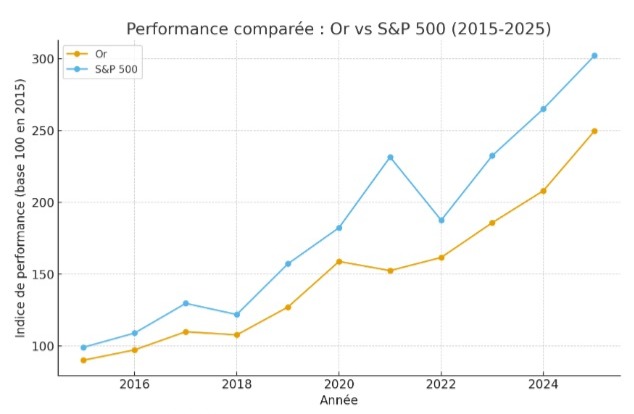
UBS has lowered its 2026 gold price target to $5,500 from $5,900, citing higher Treasury yields and a stronger dollar. Analysts Dominic Schnider and Wayne Gordon at UBS noted that “alternative costs” are becoming more significant as real interest rates remain high, making non-yielding assets like gold less attractive. However, the core reasons for a bullish outlook on gold remain unchanged: sovereign debt, budget deficits, and central banks diversifying their reserves.
Despite the revised target, UBS’s new price still implies a 22% increase from gold’s approximate current price of $4,496. Institutional investors are paying close attention to UBS’s forecasts, as the bank manages over $6 trillion in assets. The downward revision by UBS is seen as a reaction to current market conditions rather than a fundamental shift. UBS has a history of adjusting its targets based on market movements; it had previously raised its 2026 forecasts as gold prices increased. This adjustment reflects expectations of sustained higher yields in the third quarter. Historically, similar target reductions have not always signaled a sell-off.
For instance, in April 2013, Goldman Sachs lowered its gold target, but the underlying bullish factors for gold persisted, and the metal eventually recovered significantly. Current data supports the long-term bullish case for gold. Central banks continue to be net buyers, with 244 tons purchased in Q1 2026, a 3% year-over-year increase, even at near-historic price highs. Institutions like the People’s Bank of China and reserve managers in Eastern Europe and the Middle East are committed to diversifying away from dollar-denominated assets, unaffected by quarterly analyst notes.
The US national debt has surpassed $39 trillion, with the Congressional Budget Office projecting a $1.9 trillion deficit for fiscal year 2026. These fiscal realities are seen as long-term tailwinds for gold. While higher yields present a potential headwind, the US’s substantial debt burden and the resulting interest payments ($1 trillion annually) place pressure on the Federal Reserve. This “fiscal dominance” could limit the practical ceiling for interest rates, suggesting that when rates eventually fall, gold may not start from zero.
The fact that gold has held above $4,500 since March suggests institutional buyers are absorbing selling pressure, reinforcing its role as a hedge against inflation and debasement.
Other major banks also forecast significant upside for gold:
- Goldman Sachs: $5,400 by end of 2026 (approx. 20% increase)
- JPMorgan: $6,300 by end of 2026 (approx. 40% increase). Even with UBS’s lowered target, the consensus among major banks is for substantial gold price appreciation. The sustained trading above $4,500 indicates strong institutional demand, supporting the argument for gold as a store of value.