The U.S. labor market – a facade of stability
https://www.steelldy-indices.com
To grasp the scale of the problem, between February 2025 (Trump taking office) and June 2026, the average monthly job creation in the U.S. was only 42,000 (4.5 times below normal), with the private sector adding 53,000 jobs and the public sector shedding an average…

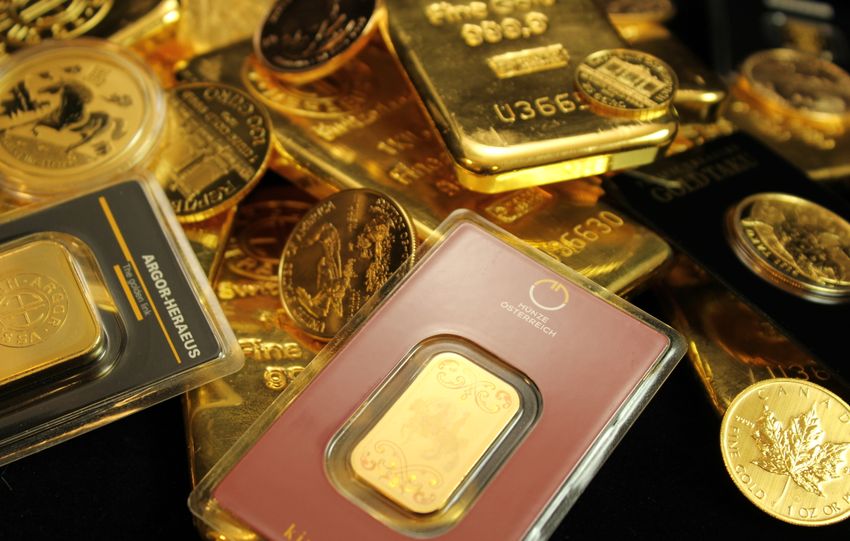
According to precious metals market analysts at Heraeus, gold and silver prices are expected to rise soon due to declining oil prices, which ease inflation expectations and reduce bond yields, while developments in the Pacific region suggest a potential shift of the gold market's center of gravity to the East. In their latest review, analysts…
Bank of America suggests gold could potentially reach $6,000, but not in the near term, due to significant headwinds from the Federal Reserve's tightening monetary policy. The bank was previously optimistic during gold's rally last year, expecting prices to hit $6,000 by spring. However, a recent correction has led its metals research team, led by…
The tightening of monetary policy by the Federal Reserve continues to negatively impact the gold market, with many analysts expecting prices to retest support around $4,000. However, one bank offers investors simple advice: "buy on the dip."
In anticipation of the third quarter, Société Générale's market strategists updated their multi-asset portfolio, recommending investors maintain…
Gold prices have plummeted, trading near $4,078.00, down 4.26%, and silver near $63.605, down 2.66%, following Wednesday's trading close. This decline is attributed to a higher-than-expected May inflation report, rising Treasury yields, and escalating US-Iran tensions, which have overshadowed demand for safe-haven assets. US consumer prices rose 0.5% in May and 4.2% year-on-year, with core…
UBS has lowered its 2026 gold price target to $5,500 from $5,900, citing higher Treasury yields and a stronger dollar. Analysts Dominic Schnider and Wayne Gordon at UBS noted that "alternative costs" are becoming more significant as real interest rates remain high, making non-yielding assets like gold less attractive. However, the core reasons for a…
Abstract
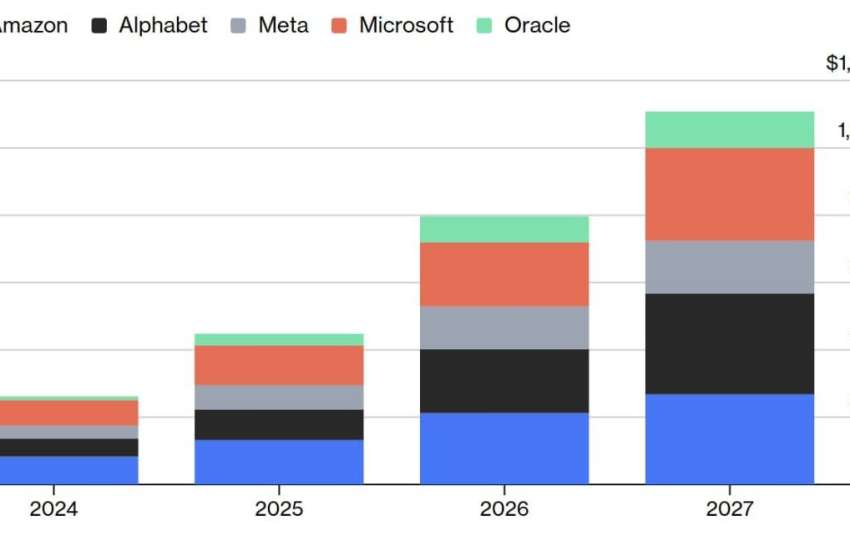
The emergence of artificial intelligence as a transformative economic force has catalyzed an unprecedented surge in demand for semiconductor components, creating a phenomenon economists are beginning to term "chipflation." This technical analysis examines the multifaceted impact of AI-driven chip demand on global inflation, market dynamics, and investment opportunities across the semiconductor ecosystem. Through quantitative…
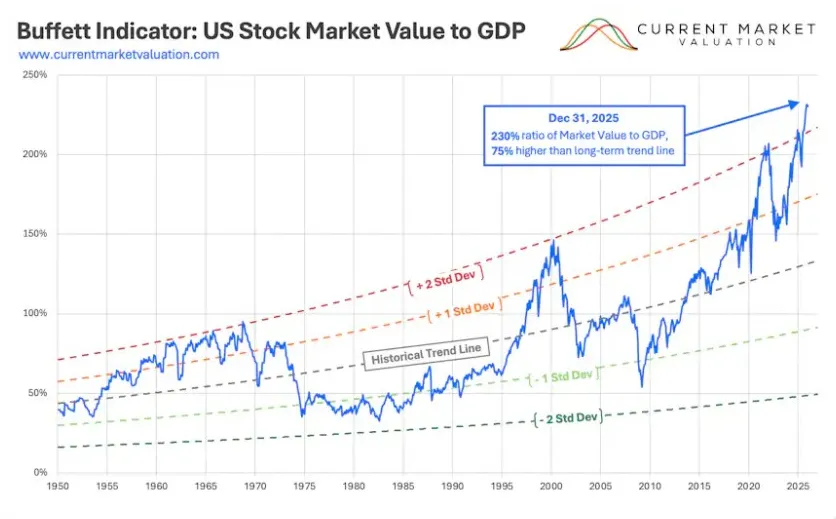
As of April 30, 2026, the Buffett Ratio (Wilshire 5000 / annualized nominal GDP) reached 227%, with a peak high of 232.6% in March. Paul Tudor Jones uses an expanded measure (total market capitalization / GDP) amounting to approximately 252%, incorporating foreign companies listed in the US and tokenized real assets. This ratio, adjusted for…
The current outperformance of gold (XAU) and mining stocks over the rest of the market (especially technology) is not a temporary anomaly. It results from the "double commoditization" of AI and software, which is destroying the monetization model of intellectual capital. As intelligence becomes a cheap and widely available commodity, the physical resources needed to…
La dette totale des cartes de crédit américaines s'élève à 1,209 trillion de dollars au deuxième trimestre 2025 (selon le rapport de Federal Reserve Bank of New York), et la part actuelle de la dette de cartes de crédit en retard de paiement atteint des niveaux observés lors de la crise financière mondiale de 2008,…
Analyse de marché