Skip to content Skip to sidebar Skip to footer

Tag: Commodities

Detailed close-up of Polish grosz coins shining with a golden hue symbolizing wealth and finance.

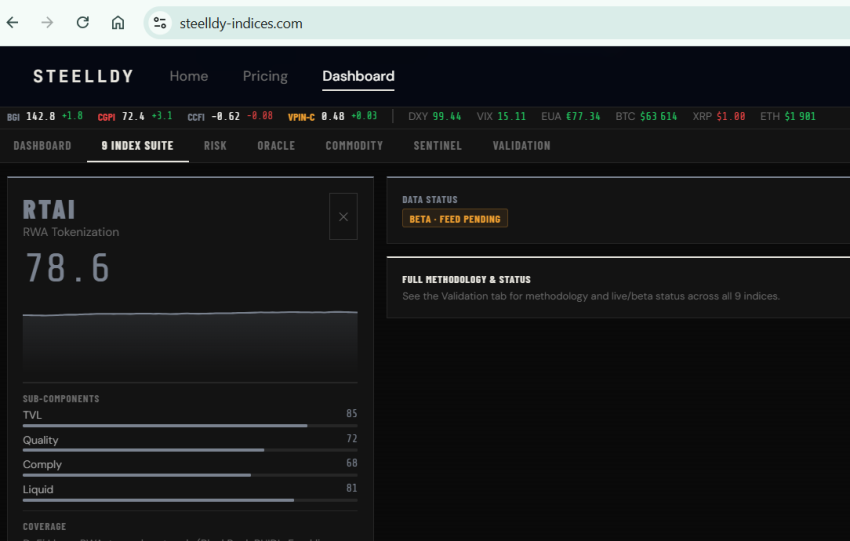
RWA & TOKENIZATION × COMMODITIES: The Structural Migration of the Balance Sheet to Programmable Rails

The tokenization of real-world assets has moved beyond the experimental stage and entered its mass-distribution phase. The market is no longer managed by TVL but by holders: growth now comes from access (distribution), not just scale (AUM). The tokenized asset has become a programmable fixed-income instrument, not a speculative vehicle. Key data (August 21–27,…

Read more

Detailed view of brown coffee beans being roasted in a steel machine, capturing the industrial process.

Commodities & ESG taxonomy: real returns in a world of real assets

Thesis. Raw materials are regaining a core portfolio role (hedging a multipolar world and AI electrification), while European ESG shifts from an obligation-based regime to a market-driven one, less reporting, more pricing. Key Data. January 2026 records: gold ~$5,405/oz (2025 annual average: $3,431, +44%), silver >$121/oz, LME copper $13,238/t. Citi scenarios (Q3 2026): Brent…

Read more

The $16 Trillion Question: Who Measures Tokenization?

The numbers, first. Tokenized real-world assets crossed $30 billion in early 2026, a 300% year-on-year increase : US Treasury debt ($10.7bn), commodities ($5.1bn), private credit ($2.9bn), institutional alternative funds ($2.2bn) leading the mix. Measured against what is coming, $30bn is a rounding error. The 2030 forecasts, by institution: Source2030+ forecastScope noteMcKinsey~$2tnExcludes crypto, stablecoins, deposits,…

Read more

Detailed view of modern skyscrapers with a pedestrian walkway in an urban cityscape.

Federal Reserve Rate Hikes Fuel Gold Volatility, But SocGen Sees Record Highs by 2027

The tightening of monetary policy by the Federal Reserve continues to negatively impact the gold market, with many analysts expecting prices to retest support around $4,000. However, one bank offers investors simple advice: "buy on the dip." In anticipation of the third quarter, Société Générale's market strategists updated their multi-asset portfolio, recommending investors maintain…

Read more

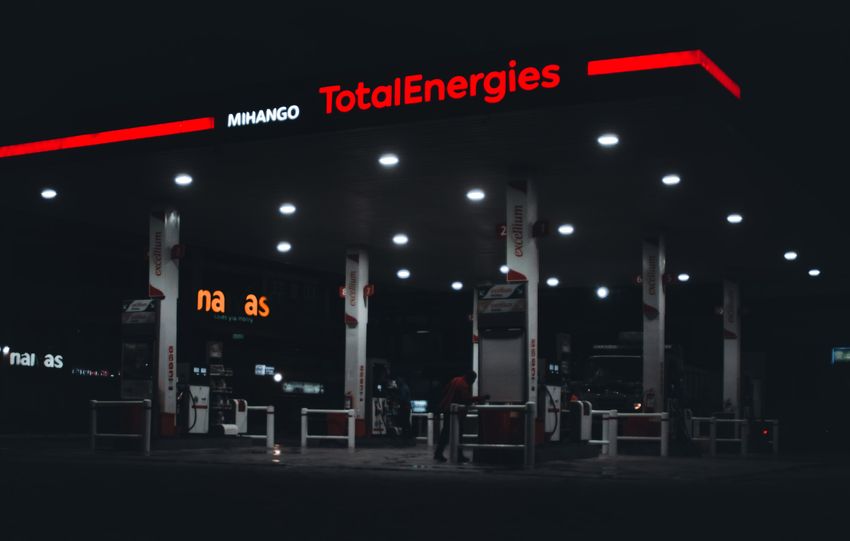
A dimly lit TotalEnergies gas station at night in Nairobi, Kenya, featuring prominent signage.

Refiner Margin Squeeze and the 3:2:1 Crack Spread Signal: Technical Analysis with Focus on TotalEnergies (as of mid-June 2026)

Executive Summary The 3:2:1 crack spread serves as a primary proxy for gross refining margins, calculated as: 3:2:1 Crack Spread=2×PGasoline (bbl)+1×PDistillate/Heating Oil (bbl)−3×PCrude (bbl)3\text{3:2:1 Crack Spread} = \frac{2 \times P_{\text{Gasoline (bbl)}} + 1 \times P_{\text{Distillate/Heating Oil (bbl)}} - 3 \times P_{\text{Crude (bbl)}}}{3} where prices are typically futures-settled (e.g., WTI/RBOB/NYH HO for USGC benchmarks; Brent equivalents or regional baskets for Europe).…

Read more

Close-up of gold bars on a dark background, representing wealth and investment opportunities.

Gold’s New Era: Strategist Predicts Long-Term Bull Market Fueled by Central Banks and Geopolitics

Doug Moglia, a strategist at Rockefeller Global Investment Management, identifies gold as the anchor of a new commodity cycle, projecting its long-term bull market to persist despite recent volatility. Commodities are regaining traction for diversification as structural demand outpaces constrained supply. While broader commodity trends are shaped by electrification, AI, reshoring, energy security, and underinvestment,…

Read more

Interoperable Tokens (XRP/QNT/COTI), RWA Tokenization, and Gold-Backed Stablecoins

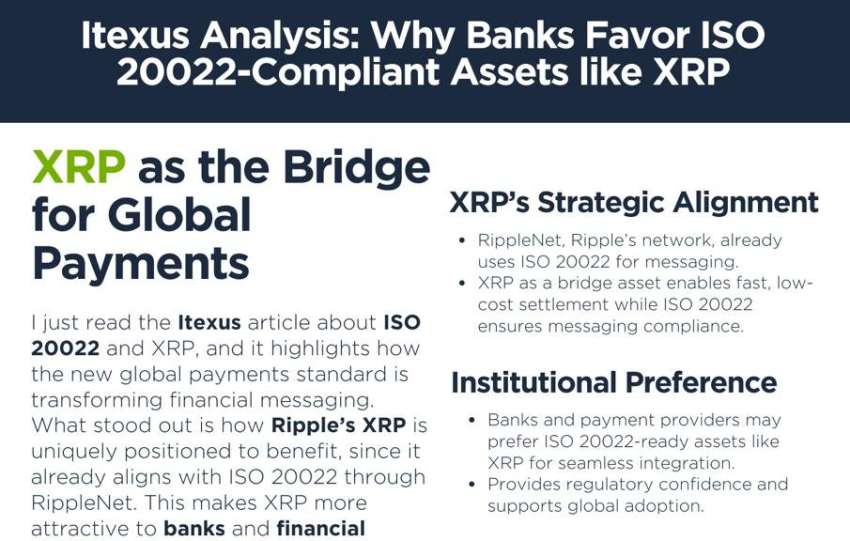
(1) XRP — Settlement Layer and Liquidity Bridge XRP serves as a neutral liquidity bridge between different fiat currencies and tokenized assets. The arrival of seven US spot XRP ETFs (approximately $1 billion in AUM) signals progressive institutionalization. Demand for XRP structurally stems from the volume of transactional flows, which creates continuous buying pressure…

Read more

“Militarisation des systèmes de paiement” (comme alternatives à SWIFT et mBridge) pour mesurer la rapidité de dé-dollarisation/dé-euroisation déclenchée

La militarisation de SWIFT et l'usage des réserves souveraines transforment la finance mondiale en zone de conflit. Nous identifions un basculement systémique : l'efficacité du coût (hégémonie USD) cède la place à la sécurité de souveraineté (fragmentation multipolaire). La dédollarisation suit une courbe exponentielle, soutenue par mBridge (Multi-CBDC) et le renforcement du CIPS chinois. …

Read more