Doug Moglia, a strategist at Rockefeller Global Investment Management, identifies gold as the anchor of a new commodity cycle, projecting its long-term bull market to persist despite recent volatility. Commodities are regaining traction for diversification as structural demand outpaces constrained supply. While broader commodity trends are shaped by electrification, AI, reshoring, energy security, and underinvestment,…
UBS has lowered its 2026 gold price target to $5,500 from $5,900, citing higher Treasury yields and a stronger dollar. Analysts Dominic Schnider and Wayne Gordon at UBS noted that "alternative costs" are becoming more significant as real interest rates remain high, making non-yielding assets like gold less attractive. However, the core reasons for a…
Hedge funds are increasingly adopting new digital currencies, primarily stablecoins, due to enhanced capital efficiency, regulatory clarity, and new yield-generating strategies. 1| Capital Efficiency Unlike traditional prime brokerage where collateral is largely immobilized, stablecoins acting as collateral can simultaneously secure derivative positions (perpetuals, options, futures) and generate yield from underlying assets like T-bills. This "working…
The GENIUS Act mandates stablecoin issuers to hold 100% reserves in cash or T-bills with maturity ≤ 93 days. This creates a mechanical demand for T-bills, making them the collateral commodity for the new system.
By mid-2025, Tether and Circle held $160 billion in T-bills, exceeding most sovereign nations' holdings, which mechanically compresses short-term…
We are not in a classic crypto cycle; we are witnessing the commoditization of the settlement layer. Bretton Woods I (1944) used a gold-pegged dollar settled via correspondent banks (SWIFT/CHIPS). The current regime (post-1971) relies on the petrodollar and sovereign debt. Bretton Woods 2.0 is based on a Dual Pillar Regime:
1. Physical Pillar…
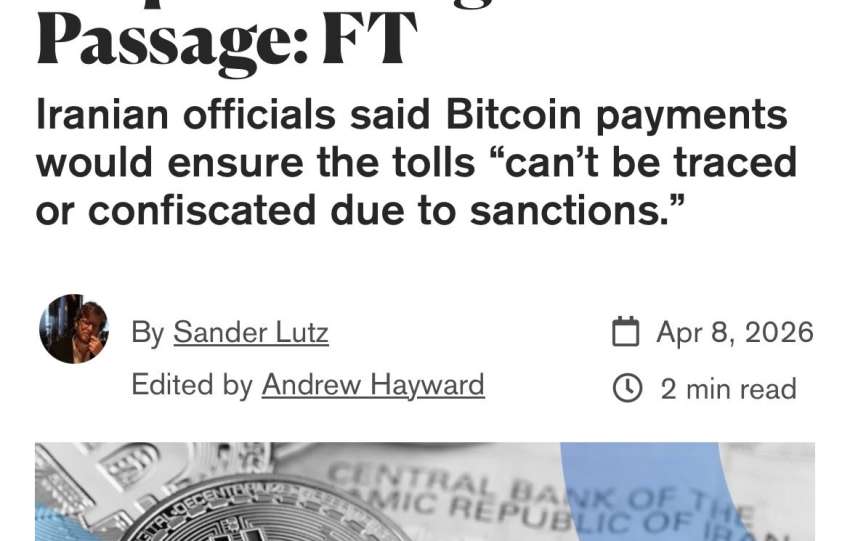
The information, factually confirmed by multi-source convergence (including the Financial Times of April 8, 2026), establishes that Iran now demands payments in cryptocurrencies (BTC, stablecoins) and in Yuan for oil transit through the Strait of Hormuz, completely bypassing SWIFT.
This mechanism, controlled by the IRGC, sets a rate of $1 per barrel, creating an…
L’escalade militaire entre les États-Unis et l’Iran, initiée fin février 2026, a déclenché une reconfiguration structurelle du système financier mondial. L’Iran a monétisé le détroit d’Ormuz en imposant un péage de $2 millions par passage de pétrolier, payable exclusivement en yuans chinois ou en USDT sur le réseau Tron . Cette décision transforme un conflit régional en arme de destruction massive contre le système…
1. Cadre conceptuel. L’interopérabilité stablecoins-RWA comme condition sine qua non du scaling de la finance parallèle
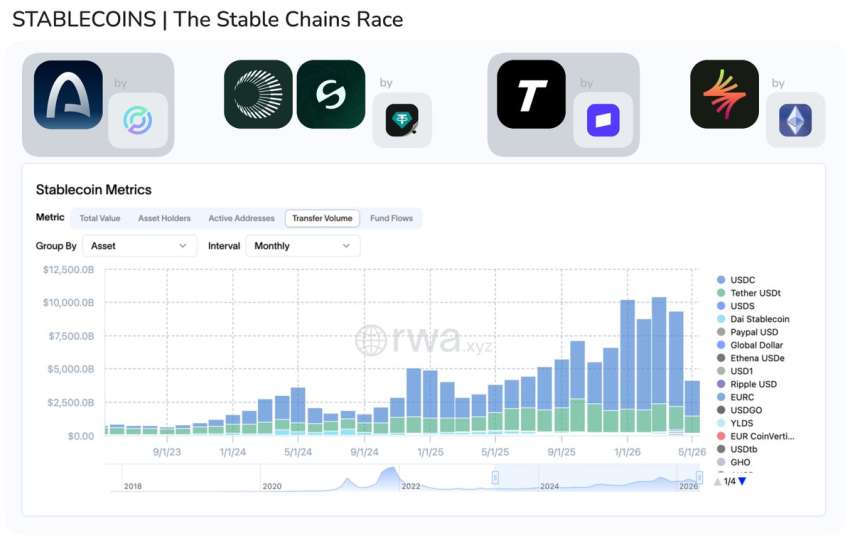
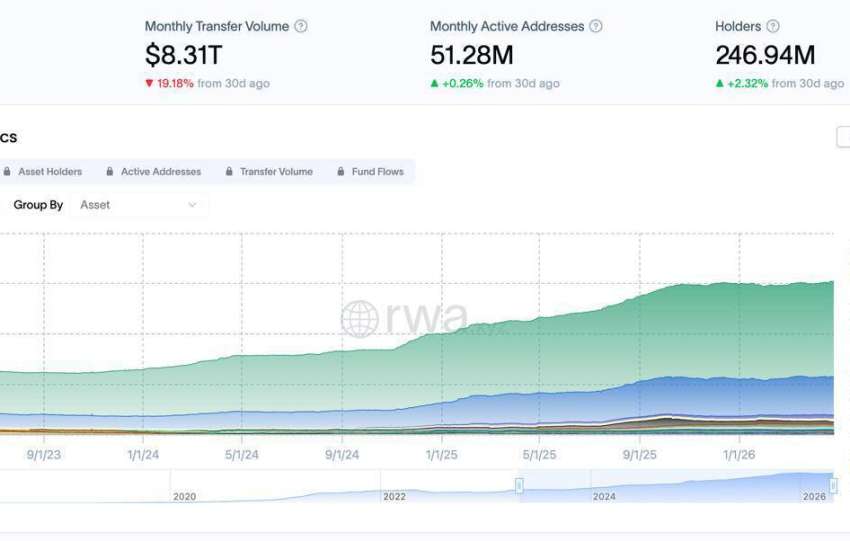
L’interopérabilité entre stablecoins (USDT/USDC dominance >85 % du marché, MC ~300 Md$ au 27/03/2026) et RWA tokenisés (TVL distribuée ~26,63 Md$ ex-stablecoins, rwa.xyz) constitue le pont programmable entre liquidité fiat-native et actifs réels fractionnables. Elle transforme les stablecoins…
UBS analysts forecast a significant increase in gold prices, predicting a rise of 20% to reach $6,200 per ounce by the end of 2026, up from current levels. This projection persists despite gold's subdued performance following the conflict with Iran, where it failed to act as a strong safe-haven asset, contrasting with its 65% surge…
The integrated analysis of the Steelldy Risk Engine and Steelldy Gotham confirms that the USDC stablecoin has become the preferred vehicle for massive capital flight from the United Arab Emirates (UAE) due to three critical factors: the real estate collapse (a 31% drop), operational failures of local banks, and the regulatory superiority of USDC over…
Analyse de marché