Dollar-backed stablecoins have become a dual-use instrument of U.S. economic power, extending the dollar’s reach into markets where correspondent banking is weak or blocked while giving Washington new control points over issuers, reserves, and token freezes. Key data shows 90-98% of the stablecoin market is dollar-denominated, with Tether holding ~$141 billion in U.S. Treasury exposure, making it one of the largest non-sovereign holders.
The GENIUS Act (July 2025, with key prohibitions expected by January 2027) mandates 1:1 backing with cash, T-bills ≤93 days, repos, and safe assets. Stablecoins account for 84-95% of illicit crypto volume, with flows to sanctioned entities estimated at $141 billion in 2025. Tether froze over $130 million linked to Iranian wallets in 2026. An energy constraint emerges from industrial reshoring and explosive AI data center growth, facing physical bottlenecks: interconnection queues >2 TW, 4-5 year delays, transformer lead times of 4 years, and concentrated demand in Northern Virginia, Texas, Ohio, and Arizona.
The central thesis posits that the 2026 crypto market operates within a neo-mercantilist regime where stablecoins serve as a transmission channel between U.S. fiscal policy (buybacks, GENIUS Act), sanctions strategy, and geopolitical fragmentation. Digital assets (BTC, ETH, XRP, SOL) are options on this regime: their valuation depends on Washington’s ability to maintain tokenized dollar dominance without accelerating fragmentation.
The theoretical framework describes a shift from globalization to neo-mercantilism, where the US dismantles its global system in favor of active market intervention to protect national capital, reshore factories, and control resources using tariffs, regulations, and sanctions. This breaks the traditional correlation between asset classes, now factoring in geopolitical risk from monetary system fragmentation. Stablecoins are framed as state instruments, functioning as a US-licensed offshore banking system. They extend dollar reach in countries with weak banking (e.g., Argentina, Turkey, Nigeria), create demand for US debt via T-bill backing, and enable sanctions enforcement through token freezing.
The GENIUS Act mandates that authorized payment stablecoins be backed 1:1 by cash, short-term Treasury bills (≤93 days), repos, or equivalent safe assets. This creates a structured demand for T-bills, calculated as the sum of each issuer’s stablecoin supply multiplied by the fraction of reserves held in T-bills. With a total stablecoin market capitalization exceeding $200 billion and projected growth of 20–30% by 2028, this demand could significantly impact yields. The resulting compression of short-term yields, akin to a disguised quantitative easing, is modeled by a regression on 2023–2026 data: Δy(3M) = -0.02 bps per billion dollars of issuance + 0.85 times changes in Fed Funds + error term (R²=0.72). This implies that massive stablecoin issuance (under GENIUS compliance) could reduce US debt financing costs by 10–20 bps by 2027–2028. Michael Every highlights a fiscal paradox: foreigners hold dollar-denominated claims as tokens, while reserves remain in US assets, representing a modern form of seigniorage. The US exports debt as tokens, funding deficits without classic Fed balance sheet expansion. However, a redemption run could force T-bill sales, with a 5–10% probability over 12 months based on prediction markets and stress models.
Stablecoins serve as a sanctions tool: issuers can freeze tokens on OFAC request. Tether froze over $130M tied to Iranian wallets in 2026; Circle operates under stricter U.S. legal constraints. The freeze function depends on OFAC lists, jurisdiction, and AML compliance. A structural contradiction exists: stablecoins account for 84–95% of illicit crypto volume but are also the most freezable. This benefits Washington; illicit actors using stablecoins expose flows to freezing, but using unhosted wallets and offshore rails erodes control. Estimated illicit flows to sanctioned entities reached $141B in 2025. Geopolitical fragmentation is driven by competing architectures like e-CNY, mBridge (China), A7A5 (Russia), and BRICS payment initiatives, aiming to reduce dollar exposure. Yet many “de-dollarization” trades still settle in USD tokens. Fragmentation is modeled as a function of sanctions, CBDC adoption, and stablecoin dominance. Projection: fragmentation will accelerate after 2027 as GENIUS Act prohibitions take effect and rival CBDCs reach critical mass.
Fed, Treasury, Congress, Issuers, and Rival Powers
In the game theory framework, the Federal Reserve (Fed) aims for price stability, with a hawkish stance if PCE exceeds 3.5%. The Treasury seeks debt financing via buybacks and stablecoin promotion. Congress focuses on reelection and crypto innovation through acts like GENIUS. Issuers like Tether and Circle maximize profits via OFAC compliance and offshore expansion. Rival powers like China and Russia reduce dollar dependence through CBDCs and alternative rails. The current equilibrium is an imperfect Nash equilibrium: the Treasury and issuers cooperate on T-bill demand, the Fed remains independent and hawkish, and rivals slowly develop alternatives. A simplified payoff matrix shows optimal outcomes: the US promotes regulated stablecoins while rivals develop CBDCs and use stablecoins for residual transactions.
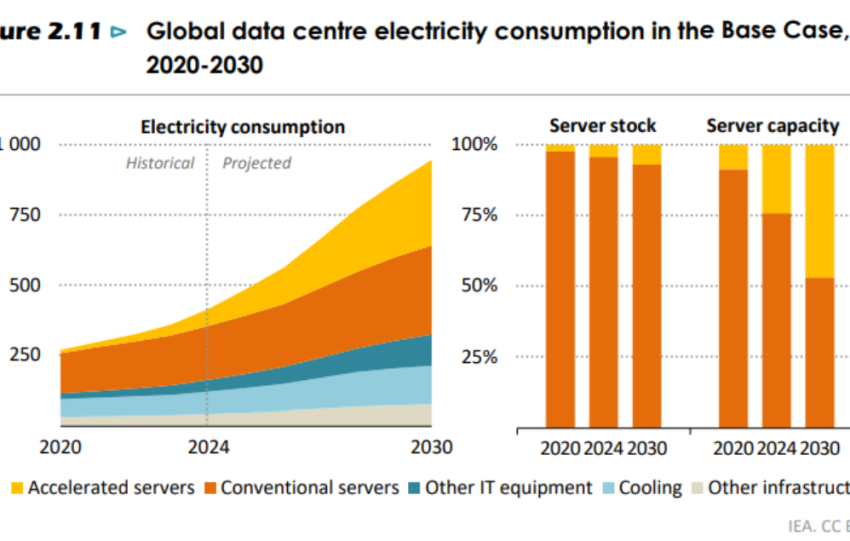
Reshoring and AI demand are colliding with energy constraints. Data centers are projected to consume 945-1000 TWh by 2030 (3% of global electricity). In the US, this represents 9.5-15% of national demand (~650 TWh in a median scenario). There is over 2 TW of generation and storage awaiting interconnection, with average delays of 4-5 years and transformer lead times of 4 years. Demand is concentrated in Virginia, Texas, Ohio, and Arizona. Electricity price is becoming the binding constraint for new factories, not just primary energy. Competitiveness is a function of productivity divided by electricity price plus the ratio of interconnection delay to asset lifespan. Industrial electricity prices in Germany are ~2.4 times those in the US. Both reshoring and AI increase infrastructure demand, driving up copper needs for grids, favoring small modular reactors for data centers, and putting upward pressure on energy commodities. This reinforces the role of the US dollar and stablecoins as financing instruments for this transition. Since 2024, the rolling 90-day correlation between Bitcoin and copper prices has risen from ~0.1 to ~0.45.
A quantitative forecasting framework and stablecoin flow projections for the period 2023-2026
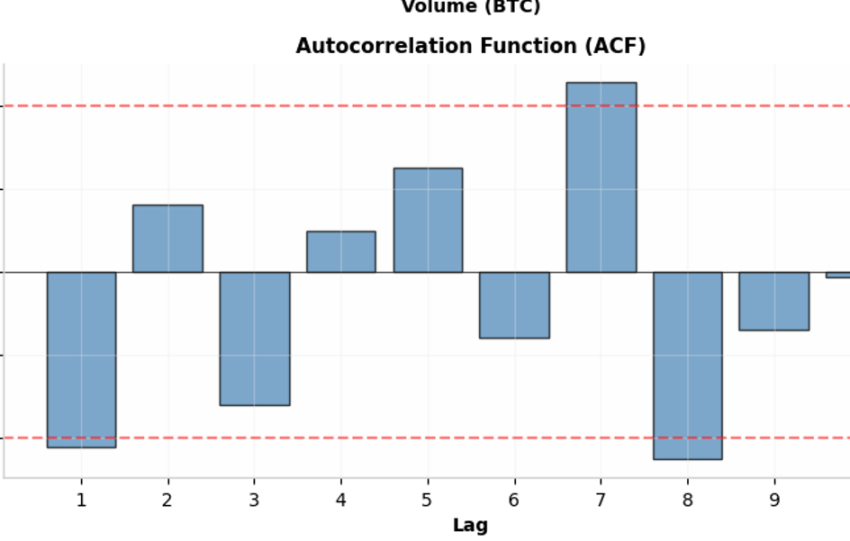
The GARCH-X model includes BTC, ETH, XRP, SOL, DXY, and 2-year UST, with exogenous variables (ETF flows, Fed rate expectations, DXY volatility) and a forward guidance shock dummy. Volatility persistence is high (β>0.80 for all assets), with asymmetric leverage effects present only for BTC and ETH. A two-state Markov model identifies Risk-on (92% persistence) and Risk-off (88% persistence) regimes, with the current state (August 2026) being Risk-on (65% probability). Monte Carlo simulations (100,000 paths, 30-day horizon) based on high annualized volatilities (BTC 55%, ETH 70%, XRP 85%, SOL 90%) and a 0.75 average correlation yield median projections: BTC $79,500 (90% CI: $68k-$92k), ETH $2,500 ($2k-$3.1k), XRP $1.42 ($1.10-$1.85), SOL $105 ($82-$135). Three stablecoin growth scenarios are projected: rapid adoption (30% annual growth, adding $150B in T-bill demand, compressing 2-year yields by 15-25 bps), moderate growth (15% annual growth, 5-10 bps compression), and accelerated fragmentation (5% growth, limited impact due to rising non-USD stablecoin share).
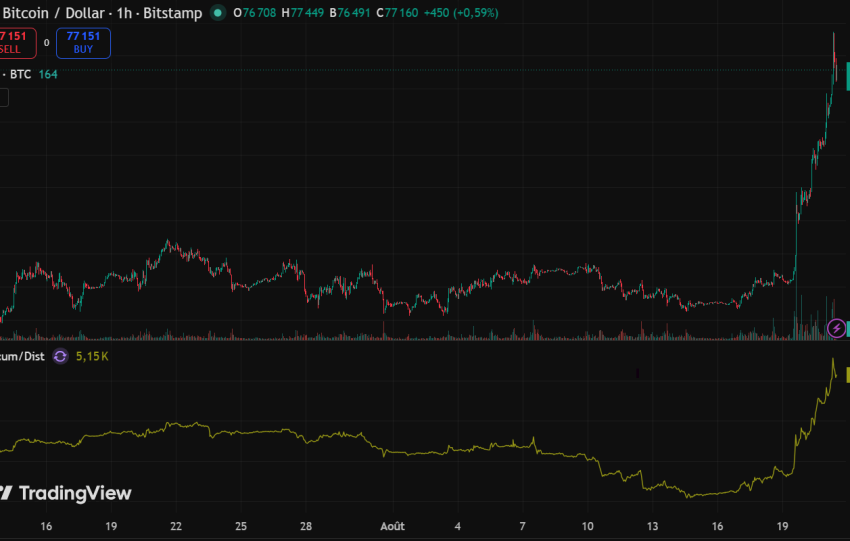
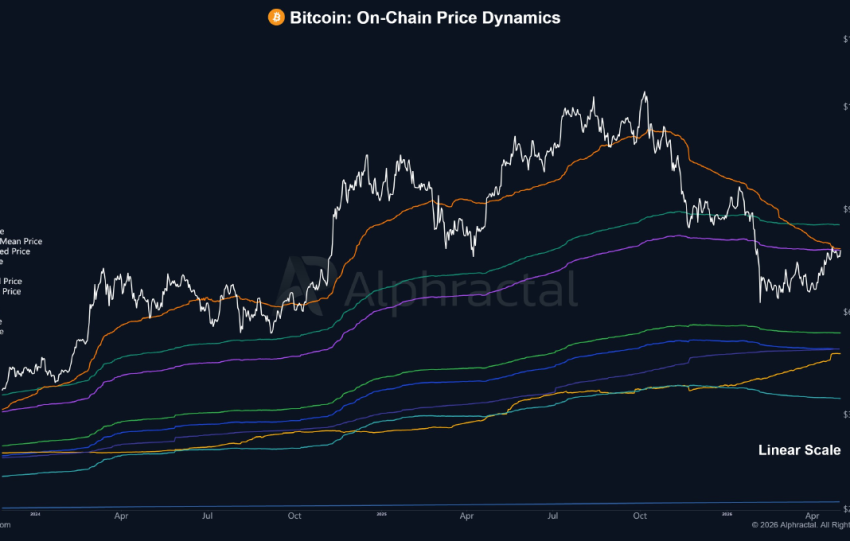
For Bitcoin, the fiscal channel has a moderately positive impact, as lower real yields reduce the opportunity cost of holding BTC. The sanctions channel is positive for its store of value narrative, as stablecoin freezes enhance BTC’s appeal as a non-freezable asset. Fragmentation could be positive if BTC is seen as a neutral asset, but negative if regulators tighten on/off ramps. Key levels: support at 72,000–74,000 and resistance at 81,000–83,000. Ethereum sees a positive impact from staking and RWA tokenization. The GENIUS Act favors regulated stablecoins like USDC on Ethereum, potentially boosting institutional DeFi adoption. A key risk is competition from alternative L1s like Solana for stablecoin volumes. Key levels: support at 2,250–2,300 and resistance at 2,550–2,650. XRP is most exposed to the regulatory channel via CLARITY and geopolitical fragmentation. Ripple’s MiCA license in Luxembourg positions it as a bridge between USD and EUR blocs. However, if CLARITY fails in 2026, its valuation multiple could compress. Key levels: support at 1.25–1.30 and resistance at 1.50–1.70. Solana is most vulnerable to energy factors due to high-performance proof-of-history data centers and rotation to alternative L1s. It has high beta and is vulnerable to market corrections. Key levels: support at 89–95 and resistance at 108–115.