Skip to content Skip to sidebar Skip to footer

Tag: Ethereum

Crypto Short Squeeze

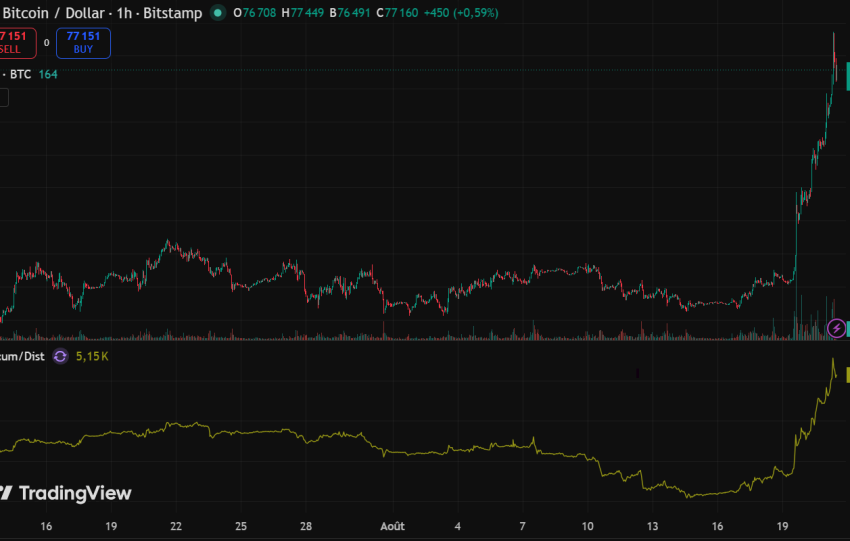
Bitcoin surged to $76,800-$77,600, gaining 6-8% in 24 hours and 20% for the week. The market saw over $4 billion in 24-hour liquidations, marking the most violent short squeeze of 2026. Combined BTC/ETH ETF inflows exceeded $800 million, indicating massive institutional entries. The funding rate shifted from negative to positive, signaling a return of long…

Read more

ScoreGex. De l’AVM local à l’oracle de rente institutionnel

"L'immobilier tokenisé est le segment le plus difficile à mesurer", c'est exactement le vide que ScoreGex peut remplir. Le marché RWA tokenisé a atteint 38,2 Md USD de valeur distribuée on-chain pour 345,3 Md USD d'actifs sous-jacents référencés. L'immobilier tokenisé représente moins de 6 % du total (~2 Md USD), alors que l'immobilier mondial pèse ~450 000 Md USD. Cette asymétrie n'est…

Read more

Close-up of two golden Bitcoin coins on a tablet screen displaying financial data.

Structural risk of private banking blockchains on Bitcoin and the crypto ecosystem

https://www.steelldy-indices.com JPMorgan's note from July 9, 2026 identifies a structural threat to Bitcoin and public cryptocurrencies: the rapid expansion of private and permissioned blockchains driven by commercial banks (Kinexys, JPM Coin, tokenized deposits, CBDCs). This trend, supported by settlement volumes exceeding $4 trillion on Kinexys, could siphon institutional demand for public digital assets by offering…

Read more

Formalization, calibration, and integration of PII 1.0 into a risk framework for stablecoin transparency, per BIS June 23, 2026 alert

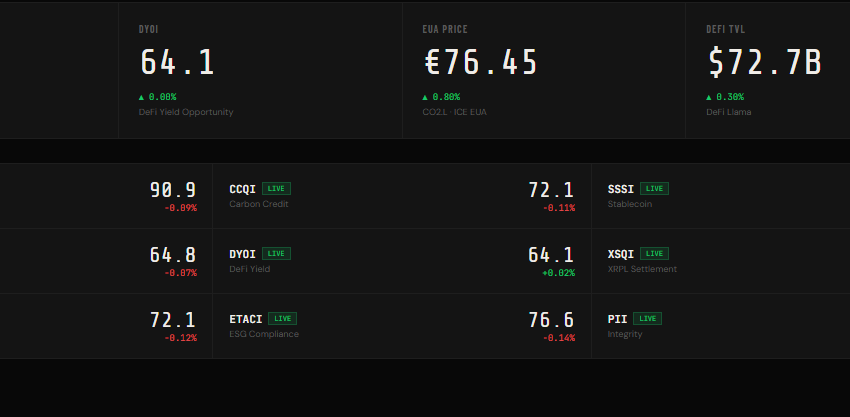
The press release from the Bank for International Settlements (BIS) acknowledges that the transparency of stablecoin ledgers exposes bank positions to the entire market, dismantling the historical information asymmetry. To quantify this phenomenon and guide investment decisions as well as technological deployment, we have constructed the Proprietary Integrity Index 1.0 (PII 1.0), a normalized composite…

Read more

Why are hedge funds adopting this new digital currency

Hedge funds are increasingly adopting new digital currencies, primarily stablecoins, due to enhanced capital efficiency, regulatory clarity, and new yield-generating strategies. 1| Capital Efficiency Unlike traditional prime brokerage where collateral is largely immobilized, stablecoins acting as collateral can simultaneously secure derivative positions (perpetuals, options, futures) and generate yield from underlying assets like T-bills. This "working…

Read more

Microstructure interne du ratio ETH/BTC

ETH/BTC est le prix relatif de deux systèmes distribués en concurrence. Ses déterminants principaux sont : Prime de contrat intelligent : capitalisation sur l’écosystème DeFi et les dApps. Concurrence des "ETH Killers" : Solana, Avalanche, Sui, Aptos, etc., qui érodent la part de marché d’Ethereum. Mécanisme de destruction EIP‑1559 et frais de gaz : l’activité réseau alimente l’accumulation…

Read more

Technical details on smart contracts for Ethereum-based repo tokenization pilots

Technical details on smart contracts for Ethereum-based repo tokenization pilots (e.g., Société Générale–Forge/Banque de France 2024 repo, UBS, Les Gardiennes collaborations, and related UBS uMINT/Project Guardian work) are not fully open-sourced or published in complete audited code form. These are institutional, regulated deployments focused on compliance, so details come from whitepapers, audits, press releases, and…

Read more

Ethereum-based repo (repurchase agreement) tokenization pilots

Ethereum-based repo (repurchase agreement) tokenization pilots are primarily led by major European and Swiss institutions, building on 2024 experiments and advancing into collaborative explorations and deployments by early 2026. These focus on using Ethereum's public blockchain for collateral (e.g., tokenized bonds or funds), with interoperability to central bank systems for CBDC settlement, aiming to automate…

Read more