https://www.steelldy-indices.com
The semiconductor memory industry (MU/Samsung/SK Hynix oligopoly controlling >95% of DRAM/HBM) is in a structural supercycle driven by AI data center demand (hyperscalers investing over $300 billion by 2026). Unlike past cycles (2001, 2008, 2013) dominated by PCs and smartphones, current demand is nonlinear, scaling with LLM size and dataset complexity. Sunk costs from…
https://www.steelldy-indices.com
The deficit in silver supply is expected to persist after 2026, though its intensity may gradually diminish. @METALOCUS forecasts a slow reduction of the imbalance, but warns that a return to a sustainable surplus would require an extremely rare combination of supply growth and demand decline.
Silver mining, which provides the vast majority of…
https://www.steelldy-indices.com
Executive Summary
The semiconductor memory sector has undergone a dramatic correction over the past eighteen months, wiping out more than $200 billion in total market capitalization. This massive erosion of valuations has been driven by a combination of macroeconomic factors, traditional cyclical fears, and growing doubts about the sustainability of artificial intelligence demand. However,…
Adam Sharp shared five charts that provide context for the current chaotic market and clarity on what might happen next. According to the expert, the world is at an exciting crossroads of markets, geopolitics, and finance. Semiconductor companies are celebrating like it's 1999.
https://www.steelldy-indices.com/
The index of US semiconductor stocks, including Nvidia, Micron, Intel,…
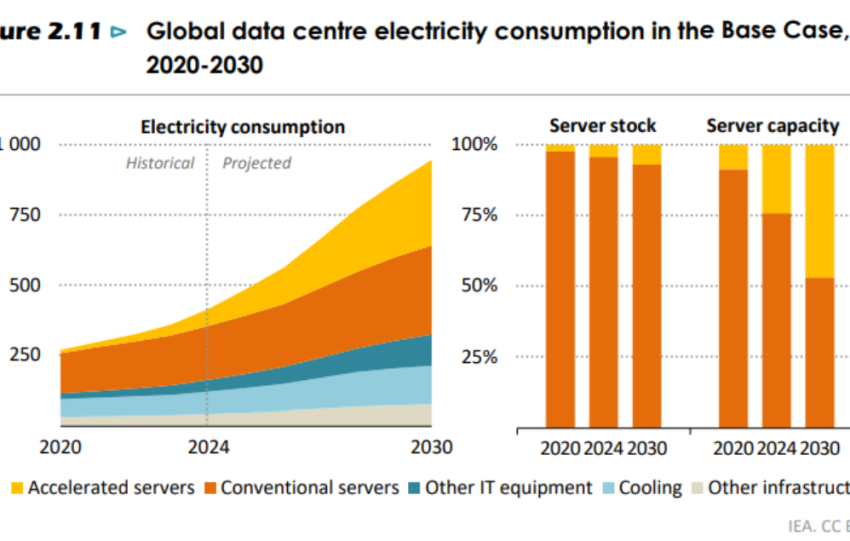
Morgan Stanley warns that accelerating global AI adoption is fueling an unprecedented demand for electricity, potentially leading to a 20% U.S. power shortfall by 2028 if supply doesn't match the exponential growth. Massive U.S. data centers, driven by major tech investments exceeding $400 billion by companies like Microsoft, Google, Amazon, and Meta for compute capacity…
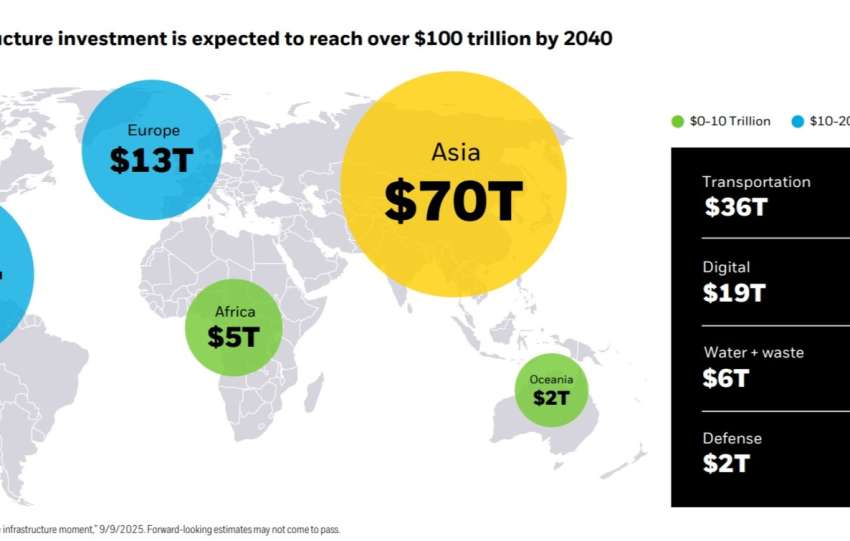
L'analyse de la période d'investissement 2025-2040, utilisant les projections de McKinsey et nos modèles Steelldy révèle une rupture structurelle dans l'allocation du capital mondial. Un besoin cumulé de 106 billions de dollars est identifié, traduisant une refonte majeure de l'outil productif global nécessaire pour soutenir la transition énergétique, l'essor de la demande numérique (IA) et…
IA 2024-2030 : le paradoxe de la bulle spéculative et de la révolution technologique séquentielle
L'IA est une bulle spéculative et une révolution technologique. Les valorisations des startups sont excessives, mais l'infrastructure essentielle (NVDA, etc.) ne l'est pas. Euphorie en 2024-2025, puis correction (2026-2027), avant création de valeur réelle (2028-2030). Privilégier les vendeurs d'infrastructures…
Voici une allocation détaillée et concrète d''un portefeuille type, avec 5 exemples précis par catégorie, sélectionnés selon des critères de qualité, liquidité, rendement et pertinence macro-économique (baisse des taux, inflation, transition énergétique, adoption crypto).
Ce profil est adapté à un investisseur équilibré, prudent mais ouvert à la croissance, souhaitant diversifier intelligemment en 2025–2026.
Liquide/sûr (30%):…
Se concentrant sur les choix d'allocation stratégiques, la gestion du risque macroéconomique, et l'intégration des classes d'actifs alternatives pour la préservation et la croissance du patrimoine multi-générationnel, l'allocation type (45-50% alternatifs, 25-30% en actions cotées, 20-25% en obligations/cash) reflète une stratégie de « rente Illiquide » et d'« optionalité macro ».
I. Le pilier…
Maintenant, nous sommes face au même carrefour, à la même situation. L’intelligence artificielle n’est pas une industrie, c’est une plateforme mondiale (le “nouveau Internet”), pour ainsi dire. Toutes les activités, du transport à la médecine, du marché boursier à la défense, fonctionneront exactement à partir de modèles, et chaque modèle consommera des calculs précis et…
Analyse de marché