Carbon Credit Market

Genesis and Legal Foundations of Pillar Two in the OECD/G20
Framework Pillar Two, the product of the OECD/G20 work on base erosion and profit shifting (BEPS 2.0), constitutes the most ambitious reform of international taxation since the OECD and UN model conventions. Its stated objective is to establish a minimum effective tax rate of 15% applicable to multinational enterprises (MNEs) with consolidated revenue exceeding €750 million, thereby targeting approximately 8,000 groups worldwide. This mechanism is formalized in the GloBE (Global Anti-Base Erosion) rules, a regulatory corpus of nearly 500 pages whose technical complexity has no equivalent in the history of international taxation, extending far beyond traditional CFC (Controlled Foreign Corporation) rules or the transfer pricing mechanisms of OECD Article 5.
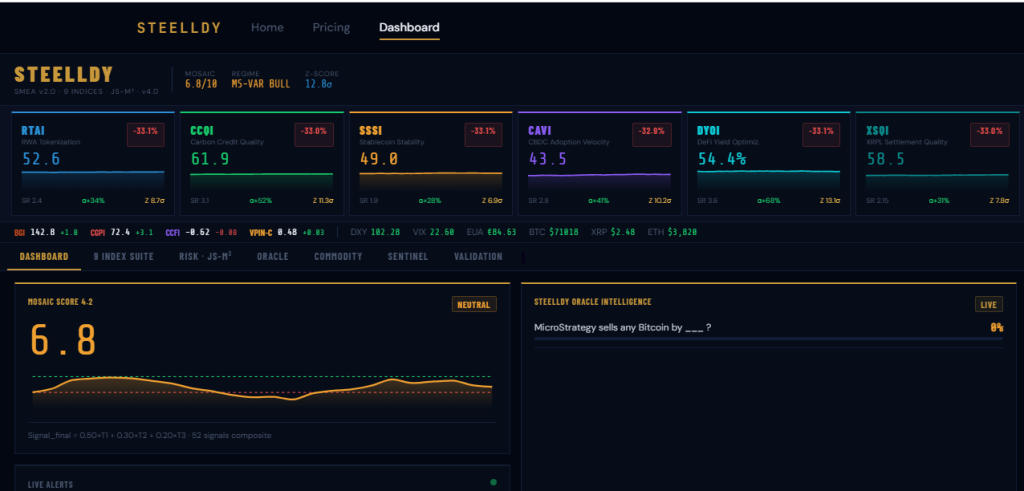
https://www.steelldy-indices.com
The architecture of Pillar Two is based on three interconnected pillars: the Income Inclusion Rule (IIR), which allows the parent jurisdiction to impose a top-up tax on the under-taxed profits of its foreign subsidiaries; the Subject to Tax Rule (STTR), which triggers a withholding tax on intra-group payments (royalties, interest, fees) to entities located in low-tax jurisdictions; and the Qualified Domestic Minimum Top-up Tax (QDMTT), which allows source jurisdictions to apply a domestic top-up tax before the IIR or STTR come into play. This normative hierarchy creates a system of tax preemption where the first jurisdiction to levy the top-up tax “wins” the right to taxation, generating competition among states to capture the tax base.
Effective Tax Rate Calculation Mechanism and Triggering of the Top-Up Tax
The calculation of the Effective Tax Rate (ETR) constitutes the core algorithmic operation of the GloBE regime. The ETR is defined by the following ratio: ETR_j = Adjusted Covered Taxes_j / GloBE Income or Loss_j, where the subscript j denotes the tax jurisdiction under consideration. Adjusted Covered Taxes include all taxes on profits actually paid, adjusted for certain excluded items (non-covered taxes, penalties, late payment interest). The GloBE Income is derived from the consolidated accounting profit, adjusted for certain operations (dividend exclusions, revaluations related to appraisal differences, treatment of deferred taxes). This architecture creates a fundamental asymmetry between financial accounting (IFRS/GAAP) and GloBE taxation, which practitioners must navigate with precision.
When the ETR_j is below the minimum threshold of 15%, a top-up tax is triggered. Its calculation occurs in two steps: first, determining the excess profit base by subtracting the Substance-Based Income Exclusion (SBIE) from the GloBE Income; second, applying the supplementary rate (15% – ETR_j) to this base. The general formula is: Top-Up Tax_j = (GloBE Income_j – SBIE_j) × max(0; 15% – ETR_j). For tokenized asset portfolios, and particularly carbon credit tokens (CCTs), this formula is of crucial relevance because the SBIE is structurally zero for intangible assets, exposing 100% of the income to the top-up tax mechanism.
Implications for tokenized assets: a structurally disadvantaged asset class
The application of Pillar Two to tokenized assets reveals a systematic asymmetry in treatment stemming from the very nature of these assets. Carbon credit tokens, as digital representations of intangible rights to emission reductions, are excluded from the benefits of the SBIE, whose initial mark-up rates are 8% for tangible assets and 10% for eligible payroll costs, with a gradual reduction over ten years to 5% for both components. This exclusion is not a legislative oversight but a deliberate classification of tokenized environmental assets as ineligible intangible assets, consistent with the logic of the GloBE rules, which specifically target mobile income disconnected from substantial economic activity.
This asymmetry creates a structural competitive advantage in favor of traditional industrial portfolios to the detriment of portfolios composed exclusively of CCTs. An industrial portfolio of €100 million could benefit from a reduction in its taxable base of 5 to 15% through the SBIE, while a CCT portfolio of the same nominal value sees 100% of its income exposed to the calculation of the effective tax rate and, where applicable, to the top-up tax. This distortion is all the more significant as it applies in a context of global regulatory convergence, where nearly 140 jurisdictions have already adopted or announced the adoption of the GloBE rules, gradually eliminating opportunities for inter-jurisdictional arbitrage.