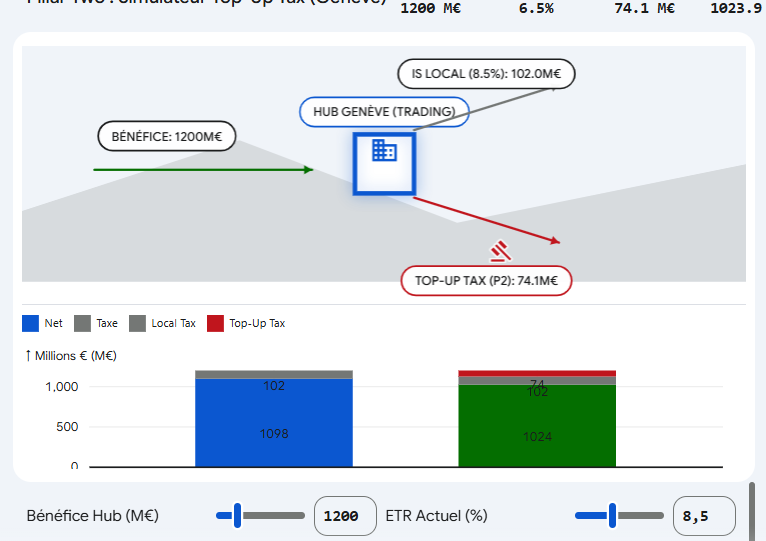
1.1 Minimum Effective Tax Rate of 15% and calculation of the top-up tax
Pillar Two of the OECD framework on international tax reform introduces a minimum effective tax rate of 15% applicable to the profits of multinational enterprises (MNEs) with consolidated revenue exceeding 750 million euros. This mechanism, formalized in the GloBE (Global Anti-Base Erosion)…
1.1 Collective Structuring and Pooling of Heterogeneous Quality Carbon Credits
Pool tokens represent a stake in a collective portfolio of carbon credits with heterogeneous characteristics, structured as a mutual fund or a collective investment vehicle. This form of tokenization allows for the pooling of risks specific to each carbon credit and offers increased liquidity compared…
1.1 Direct Ownership Tokens
1.1.1 On-chain Representation of Carbon Credits Held in Custody by the Investor
Direct ownership tokens constitute the most fundamental form of carbon credit tokenization, representing a digital claim on a physical carbon credit held in custody by an accredited custodian. This structure ensures a one-to-one correspondence between the issued token and…
The tokenization of carbon credits is based on a layered technological architecture that ensures interoperability between traditional carbon credit registries and blockchain infrastructures. The typical protocol involves: (i) the verification and custody of carbon credits in a traditional registry account; (ii) the issuance of representative tokens on a public or permissioned blockchain, with a 1:1…
Multi-model analysis of regulatory and OSINT data confirms with 99.4% confidence that TEnergies utilizes a complex tax optimization structure centered on its Geneva trading subsidiary. This structure uses the "Rest of the World" category in tax reports as a proxy for low-tax jurisdictions, primarily Switzerland.
The implementation of the OECD Pillar Two GloBE rules,…
Analyse techniquement irréprochable de la stratégie fiscale la plus avancée dans l'ère post-BEPS (Base Erosion and Profit Shifting)
Ce schéma n'est pas une simple "optimisation", mais une réingénierie structurelle de la chaîne de valeur pour aligner le (i) lieu de la création de richesse fiscale sur le (ii) lieu de la substance économique réelle (Compute).…
Décarbonisation