Analyse de marché

Thesis. 2025-2026 is the moment when programmable money shifted from experiment to regulated infrastructure. Three layers converge: private stablecoins (GENIUS Act/MiCA), wholesale CBDCs (Agora, mBridge), and a common data grammar (ISO 20022 exclusive since November 2025). The dollar is being “privatized-programmed” abroad while Europe builds regulatory monetary sovereignty: this is the monetary geopolitics of the decade.
Key data
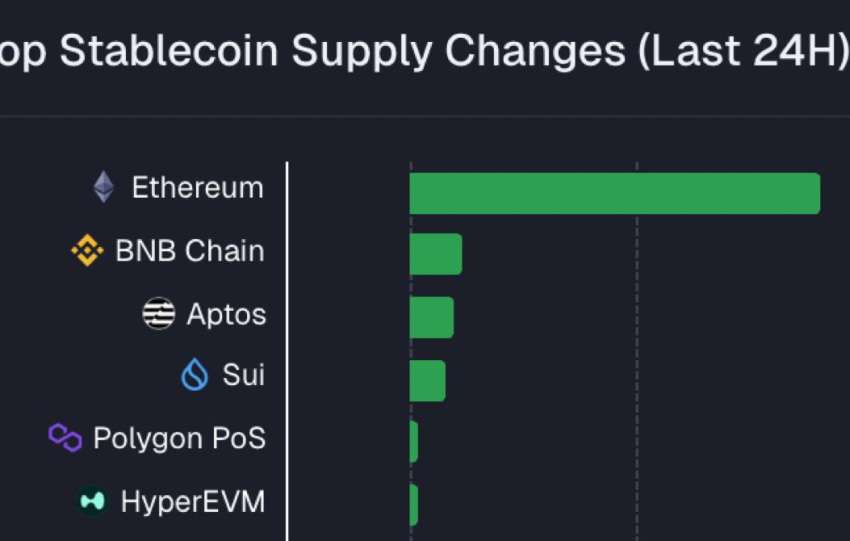
• Stablecoins: capitalization ~$315B (June 2026), USDT 59%; Tether: ~$141B in Treasury bills (≈77% of liabilities), ~$20B in gold, ~$7B in BTC, Q1 2026 net profit ~$1.04B; 12-month adjusted volume: $10,200B (Visa Onchain Analytics); Fed projection: $1,000-3,000B by end of decade.
• GENIUS Act (law of July 18, 2025): 1:1 reserves in HQLA, certified monthly disclosure, ban on algorithmic stablecoins and holder yields, dual federal OCC (>$10B) / state pathway; Treasury implementing rules published in August 2026 (60-day consultation), effective January 18, 2027.
• MiCA: full regime since December 30, 2024, complete end of grandfathering on July 1, 2026; licenses concentrated in France, Germany, Ireland, Netherlands, Luxembourg, Malta (Circle EMI and SG-Forge EURCV in France).
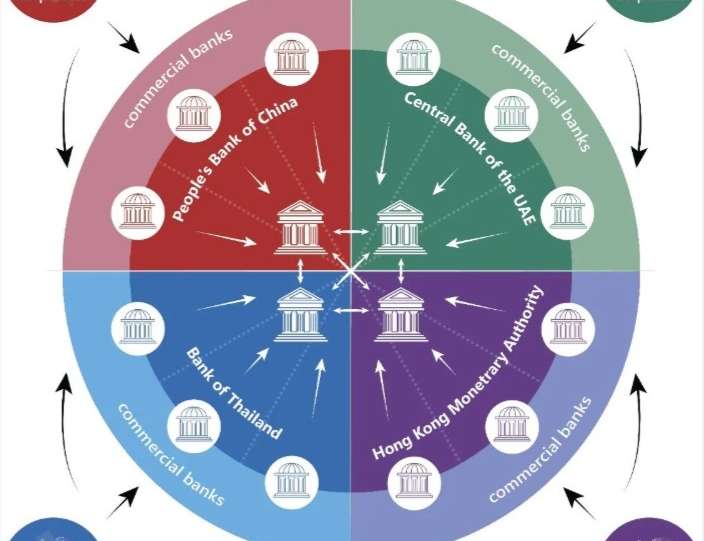
• CBDC: e-CNY > ¥16,700B cumulative ($2,300B, +800% vs 2023), 26 cities; digital euro: preparation phase closed in October 2025, go/no-go decision by the Governing Council expected end of 2026 (Parliament voted its support in February 2026), holding limit envisaged ~€3,000, launch no earlier than 2027-2028; mBridge (China, HK, Thailand, UAE, Saudi Arabia) operates real settlements; Agora (7 central banks) experiments with tokenized deposits × wholesale central bank money.
• ISO 20022: since November 2025, exclusive standard for cross-border payments (end of SWIFT MT); TARGET2/EURO1 fully migrated.
Quantitative framework
- Systemic footprint of reserves: ~$141 billion in T-bills held by Tether alone → the stablecoin sector already carries weight in determining the front end of the US yield curve (the BIS now measures this yield footprint). At $1,000–3,000 billion (Fed), stablecoins would rival the largest money market funds as marginal buyers of short-term paper.
- Velocity: ~$10,200 billion in adjusted volume against ~$315 billion in outstanding supply = annual velocity of ~32× — a settlement currency, not a store of value (US M2 stands at ~1.1×). A stablecoin’s value is reflected in its throughput, not its stock.
- Peg risk (Steelldy/SSSI measure): EWMA score of peg deviations + continuous sigmoid penalty + detection of informed flows (VPIN): historical depegs show that the distribution of deviations has fat tails (leptokurtosis), invalidating Gaussian thresholds; hence the use of continuous penalties rather than binary triggers.
- “Debasement” interpretation: with ~$40,000 billion in US federal debt and long-term yields at their highest since 2007, every basis point of yield not distributed by a stablecoin (GENIUS prohibition) migrates to tokenized money market funds — mechanically, stablecoin regulation amounts to a subsidy for Treasury tokenization.
Risks. Transatlantic fragmentation (GENIUS vs MiCA, issuer arbitrage — the USDT case, with no Treasury determination of “comparability” to date); indirect banking risk (deposit outflows to stablecoins during periods of stress); dependence of e-CNY/mBridge on geopolitical decisions; miscalibration of digital euro holding limits (bank deposit outflows).
Allocation implications. The “cash” component of a 2026 portfolio breaks down into three layers: insured bank deposits (regulatory optionality), tokenized money market funds (24/7 yield, instant settlement), and regulated stablecoins (a vehicle for transferring funds, not storing value). Direct exposure to wholesale CBDCs: not investable, but should be modeled as a basis shock across payment corridors (mBridge on China–Gulf flows).
KPIs to monitor. ECB decision in late 2026; Treasury determination on USDT comparability; share of euro-denominated EMTs in EU on-chain settlements; adoption of enhanced ISO 20022 (structured remittance) by the top 50 banks; yield spread between tokenized MMFs and deposits.