Analyse de marché
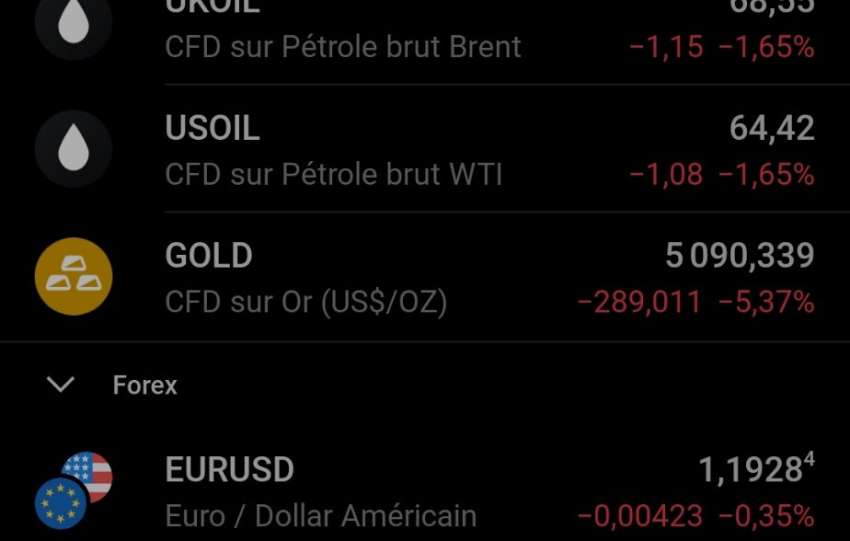
Gold and silver prices have experienced significant corrections, with gold falling 25% from its January peak of $5,600 to around $4,100, and silver dropping nearly 50% from over $120 to about $60. This volatility has led some investors to question their timing and whether to cut losses or wait for recovery. However, short-term price fluctuations, even substantial ones, do not undermine long-term investment strategies centered on precious metals.
Gold and silver serve purposes beyond capital appreciation, including portfolio diversification, inflation protection, currency hedging against dollar depreciation, crisis insurance as a safe haven, and long-term capital preservation across market cycles and generational transfers. For investors planning to hold these metals over five, ten, or several decades, temporary price dips do not negate their essential role in a diversified portfolio.
In fact, long-term investors often view price declines as opportunities to purchase additional metals at more favorable costs, thereby improving their average acquisition price. Eric Sepanek and John Carow discuss how dollar-cost averaging allows investors to transform price corrections into advantageous buying opportunities.
This strategy involves investing a fixed amount regularly regardless of price, automatically buying more ounces when prices are low and fewer when prices are high, which can lower the overall cost basis over time. Wall Street maintains an optimistic outlook on gold, citing persistent economic uncertainties, inflationary pressures, and geopolitical tensions that support demand for safe-haven assets.
Analysts note that while corrections are natural after parabolic rises, the structural drivers of gold’s bull market remain intact, including central bank buying, rising government debt levels, and real interest rate dynamics.
For silver, long-term fundamentals appear even more compelling due to its dual role as both a precious and industrial metal. Silver’s expanding applications in green technology, solar panels, electric vehicles, and electronics create growing industrial demand that increasingly outpaces mine supply. The supply-demand deficit in silver has been persistent in recent years, suggesting that price corrections may not fully reflect the metal’s tightening fundamentals.
Analysts believe that as industrial demand continues to grow, silver’s price floor may naturally rise, making current levels attractive for accumulation. Investors who purchased at peak prices may feel anxious, but historical patterns show that precious metals markets are cyclical, and significant corrections have occurred before during secular bull markets. The key is distinguishing between cyclical volatility and structural trend reversals. In this case, the fundamental drivers that prompted investment-diversification, inflation hedging, currency protection, and crisis insurance, remain unchanged.
The correction has not altered the global macroeconomic environment that makes gold and silver attractive portfolio components. For those committed to long-term holding, the current price environment presents a strategic opportunity rather than a reason for panic.
By maintaining a disciplined dollar-cost averaging approach, investors can benefit from lower prices, gradually reducing their average entry cost and positioning themselves favorably for potential appreciation when market sentiment shifts. Eric Sepanek emphasizes that successful precious metals investing requires patience, a long-term perspective, and the ability to ignore short-term noise in favor of enduring fundamentals.
The recent correction, while painful for recent buyers, may ultimately prove to be a beneficial development that allows more favorable entry points for those focused on wealth preservation and financial resilience over decades rather than days.
The cost averaging method: how to profit from price declines. Instead of trying to guess the perfect moment to buy at the market “bottom,” forward-thinking investors often use cost averaging to gradually reduce their overall costs of owning gold and silver.
This strategy is one of the best for long-term investors, as it involves buying more of an asset during price pullbacks, thereby lowering the average cost of holdings, rather than chasing absolute highs or lows.
For example, if you purchased gold at $5,000, and the price drops to $4,100, you can buy roughly 22% more gold for the same amount, simultaneously reducing your average purchase cost.
Beyond the economic rationale, many influential Wall Street players actively encourage investors to take advantage of these relatively low prices: @UBS ‘s main investment division recommends investors with insufficient exposure to use price declines to build a strategic position in a diversified portfolio.
@MorganStanley ‘s @AmyGower, head of metals and mining strategy, advises increasing gold allocations during pullbacks, noting, “In such moments, we would consider building up gold positions.”
TD Securities commodity strategists @BartMelek and Ryan McKay urge investors to consider buying during corrections, emphasizing that “any short-term decline in yellow metal prices should increasingly be viewed as a potential buying opportunity.”
This approach allows investors to benefit from market volatility without relying on precise timing.
Long-term fundamental factors supporting gold remain strong. Excessive focus on short-term price fluctuations can obscure deep macroeconomic and geopolitical factors driving structural demand for gold and silver.
Several key points indicate continued market resilience: Rising government debt: U.S. national debt has exceeded $40 trillion, with annual interest payments around $1 trillion. Persistent federal deficits and concerns about currency debasement continue to support gold’s long-term appeal.
Record central bank demand: Central bank demand has remained at historically high levels for several years, with official purchases exceeding 1,000 tons annually between 2022-2024 and reaching 863 tons in 2025, providing solid support for metal price dynamics.
Growing demand from China: China is actively increasing its gold reserves, with imports surpassing 1,000 tons in the first eight months of 2026, and its central bank has been purchasing for 23 consecutive months, leading among emerging economies.
Record gold holdings in ETFs: Global gold reserves in exchange-traded funds (ETFs) hit a record 4,189.2 tons in August, driven by billions in new investments. Notably, Western investors from North America and Europe are actively returning to this market.
Rising physical gold demand: Wealthy investors increasingly seek direct ownership of gold bars, straining private storage capacities in major financial centers. Together, these trends show that gold’s fundamental appeal persists despite short-term price fluctuations.