Skip to content Skip to sidebar Skip to footer

Tag: Brent

Aerial landscape shot of a coastal oil refinery with storage silos under cloudy skies.

BIS/WEF Context on Transition Risks Compressing Long-Term Refining Margins: Carbon Tracker-Style Analysis and Quantitative Projections for TotalEnergies

Executive Summary Transition risks under 2°C pathways (IEA NZE/APS equivalents) drive structural demand destruction for refined products, compressing refining margins via volume contraction, utilization drops, and policy/carbon cost overlays. Carbon Tracker’s foundational 2017 “Margin Call” analysis projected >50% EBITDA decline by 2035 for ~94% of global capacity under a 2D scenario (oil demand -23%…

Read more

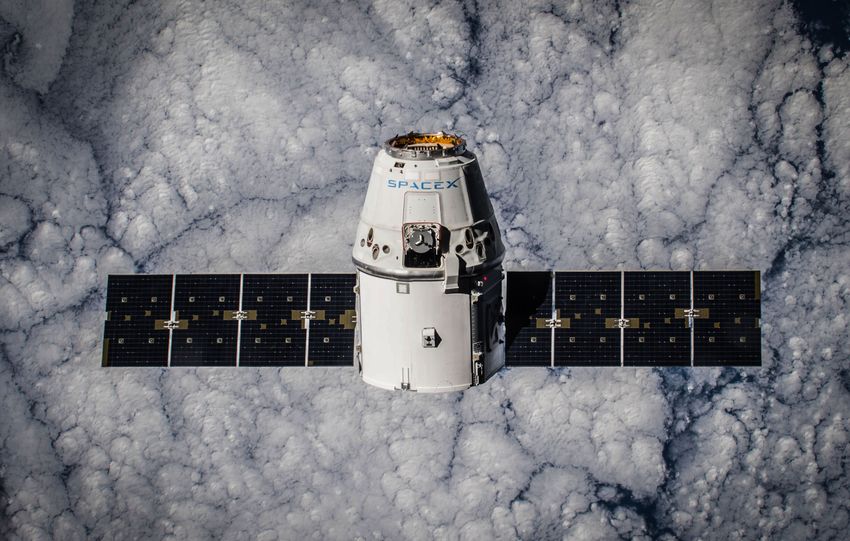
SpaceX Dragon spacecraft in orbit, highlighting advanced space technology with cloud backdrop.

Liquidity Trap Scenario : Gold < $4,150, Oil ~$88 Stabilization – Integration with SpaceX IPO Retail Influx and Systemic Market Crash Risks

Executive Summary The posited Liquidity Trap manifests as a regime where elevated nominal asset prices (gold near recent highs, equities at stretched valuations) coincide with forced liquidations driven by margin calls, collateral constraints, and retail FOMO entry, without corresponding real-economy liquidity expansion. Under conditions of gold stabilizing below $4,150/oz and WTI/Brent oil around $88/bbl (current…

Read more

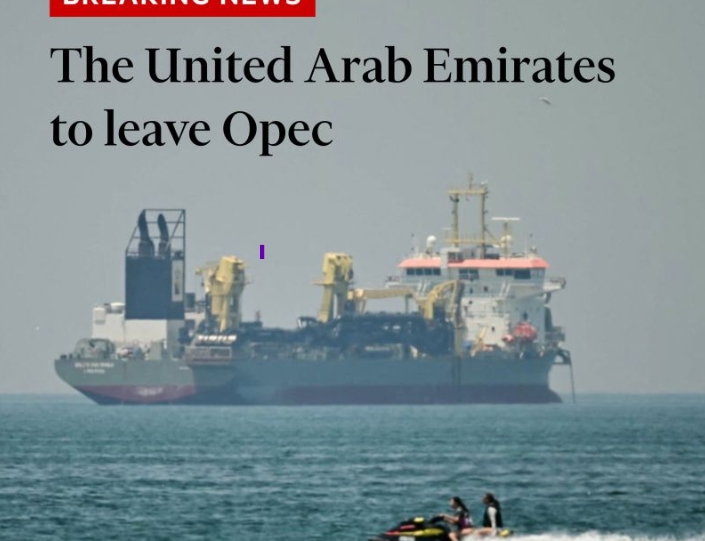
Cartel collapse and depressive supply shock. The withdrawal of Saudi Arabia and the UAE of OPEC/OPEC+

The simultaneous withdrawal declaration of Saudi Arabia and the United Arab Emirates from OPEC and OPEC+ (April 28-29, 2026) constitutes the most severe institutional rupture in the oil market since 1985-1986. This study demonstrates that this exit is not a purely bearish signal but rather the prelude to a two-speed structural dislocation: …

Read more

Risque systémique pour l’économie américaine et le dollar suite à l’escalade Iranienne

L’escalade militaire entre les États-Unis et l’Iran, initiée fin février 2026, a déclenché une reconfiguration structurelle du système financier mondial. L’Iran a monétisé le détroit d’Ormuz en imposant un péage de $2 millions par passage de pétrolier, payable exclusivement en yuans chinois ou en USDT sur le réseau Tron . Cette décision transforme un conflit régional en arme de destruction massive contre le système…

Read more

Modeling the Systemic Consequences of a U.S. Ground Intervention in Iran (Post-March 23-28, 2026)

The integration of our analytical data and market signals into our Steelldy-Gotham architecture reveals an imminent regime shift. The US ground intervention in Iran, following the failure of negotiations (March 23-28, 2026), is not a simple military event. It is the final detonator that: (a) Permanently closes the Iranian “Shadow Loop”: Iranian energy credits…

Read more

 Le pivot énergétique indo-américain et ses implications systémiques pour la Russie

Le commerce pétrolier russo-indien a connu une évolution spectaculaire. De marginal (0.1-0.3 mb/j en 2019-2021), il a bondi à 0.8 mb/j après l'invasion de 2022, atteignant un pic de 1.9 mb/j en 2023 (40% des exportations russes), se stabilisant à 2.1 mb/j en 2024 avant des réductions prévues (1.8 mb/j en 2025, effondrement à 0.3-0.5…

Read more

Anticipation des marchés et canaux de transmission d’un conflit USA-Iran. Analyse de la volatilité et implications pour la construction de portefeuille (Janvier 2026)

Fin janvier 2026, un point d'inflexion géopolitique et financier est marqué non par une attaque militaire, mais par un acte de guerre électronique asymétrique : le brouillage/spoofing généralisé du GPS/GNSS dans le golfe Persique par l'Iran, avec une possible implication russe. Cet acte crée une "coupure d'information stratégique", augmentant l'opacité de la zone et le…

Read more