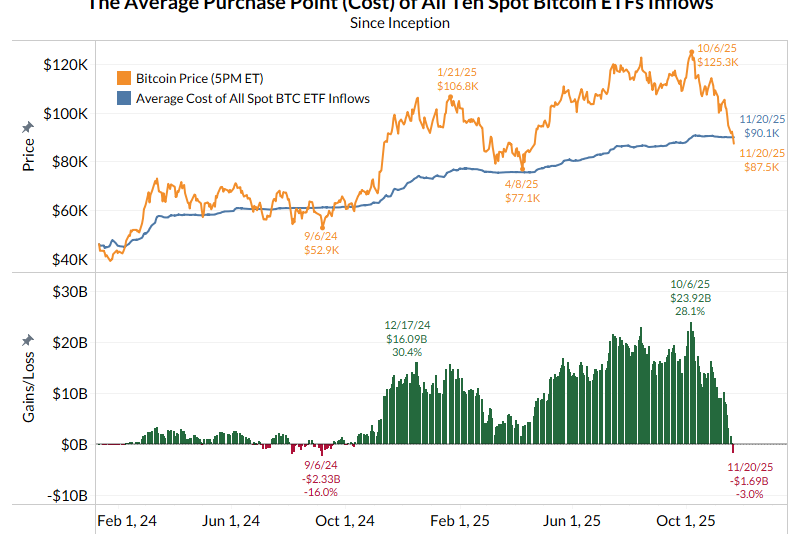
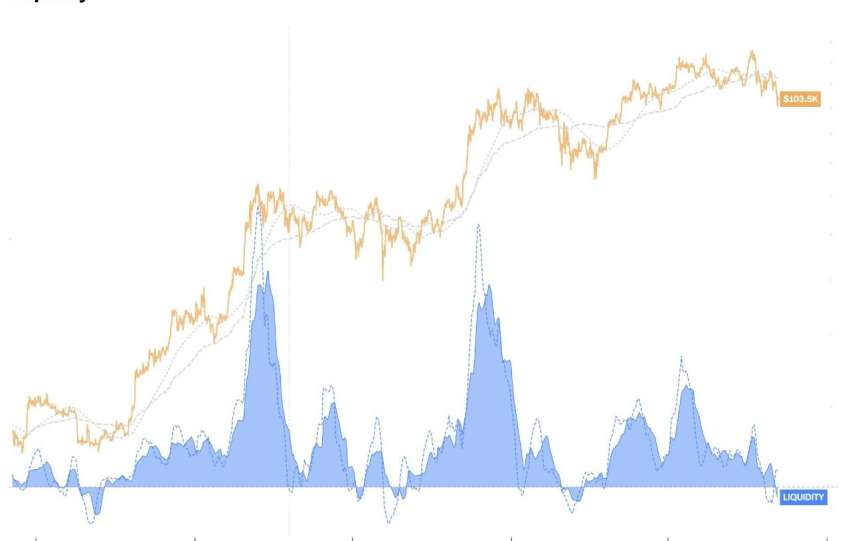
While the BoJ’s 25 bps hike to 1.0% (highest since 1995) keeps the yen carry transmission channel active but damped, real risks to BTC increasingly reside elsewhere: a maturing macro slowdown (US Q1 2026 GDP +1.6% annualized, Eurozone ~0.8% projected for 2026), volatile Bitcoin ETF flows (recent outflows amid cumulative ~$54B+ inflows since launch but streak reversals), and subdued global growth (IMF/World Bank ~2.5–3.1% for 2026 amid energy/geopolitical drags).
Institutional positioning via D. pools/ATS shows selective smart money accumulation at fear extremes (Fear & Greed ~22–25), but retail capitulation and ETF redemption pressure dominate near-term flows. On-chain (Glassnode/CryptoQuant) LTH supply elevated; ETF net flows mixed with recent negative streaks. Markov-switching regimes highlight transition risks from liquidity-driven to growth-constrained environment.
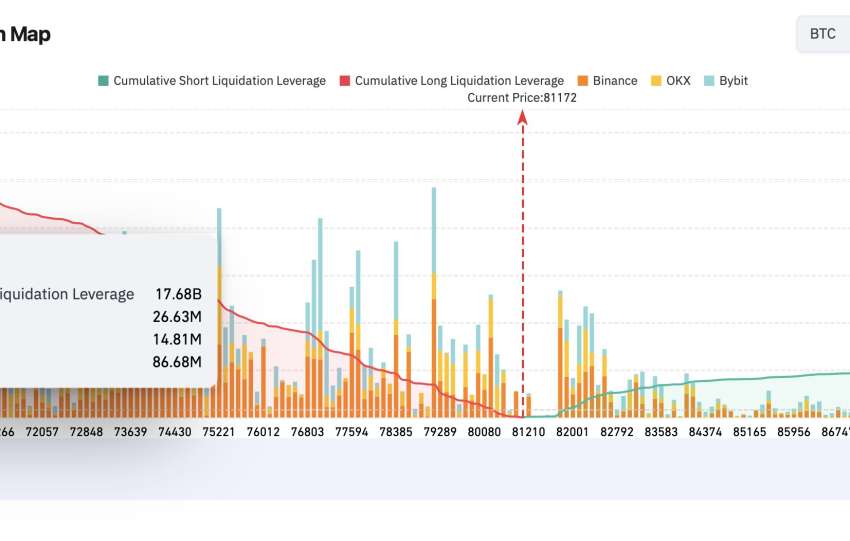
Base Regime (Soft Landing/Slowdown): Modest BTC consolidation/correction (5–15%) driven by ETF flows and growth deceleration; FVG ~$64k absorption likely.
Carry unwind is a secondary catalyst; primary risks stem from macro deceleration and institutional flow sensitivity. Constructive tactical positioning on weakness for structural bulls, with regime-aware hedges. Structural BTC narrative (digital gold/store of value) intact long-term but vulnerable to near-term growth/liquidity headwinds.
The three core risk vectors for BTC — maturing macro slowdown, volatile Bitcoin ETF flows, and subdued global growth — form a interconnected regime shift from liquidity-driven to growth-constrained dynamics. These dominate over the damped yen carry channel.
US Q1 2026 GDP at +1.6% annualized (BEA second estimate, revised down from 2.0%), Eurozone 2026 forecast ~0.8–1.1% (ECB/European Commission), cumulative US spot BTC ETF inflows ~$54B with recent multi-billion outflow streaks, and global growth 2.5–3.1% (World Bank/IMF) amid energy/geopolitical drags confirm a maturing slowdown regime. On-chain and d. pool signals show smart money selective accumulation amid retail/ETF redemption pressure.
These factors create near-term BTC vulnerability via risk premia compression and flow sensitivity, but offer tactical entry at fear extremes for cycle-resilient positioning.
1. Maturing Macro Slowdown: US & Eurozone Deep Dive
US Q1 2026 real GDP growth was revised down to 1.6% annualized, driven by weaker consumer spending and investment, though exports, investment, and government spending provided positive contributions. Current estimates for Q2 are around 2.8%, but leading indicators suggest ongoing fragility. Unemployment hovers between 4.3% and 4.5%, with persistent core inflation. While AI-driven capital expenditures offer some support, the fading effects of stimulus and post-boomer spending dynamics are concerns. The Eurozone faces a sluggish outlook, with GDP forecasts revised down to 0.8–1.1% for 2026. Q1 2026 saw only 0.1% quarter-on-quarter growth, hampered by an energy shock from the Middle East that is increasing inflation to approximately 3.0% while dampening demand. Economic performance in Germany and France is a particular drag, and the resilience of the labor market offers limited compensation. Quantitative modeling indicates a shift towards a “slowdown” regime, evidenced by negative surprises in GDP, PMIs, and LEI. Bitcoin’s (BTC) beta to US GDP surprises is estimated at 1.8–2.5x in rolling regressions. A 0.5% downgrade in GDP could lead to a 6–12% impact on BTC due to increased correlation with equities and risk assets, particularly in slowdown environments where the correlation coefficient exceeds 0.75. Monte Carlo simulations project a median 3-month BTC price decline of 7% to 12% under these slowdown conditions, with a wider interquartile range due to increased volatility clustering.
2. Volatile Bitcoin ETF Flows: Microstructure & Institutional Dynamics
Bitcoin ETFs have seen substantial net inflows totaling over $53.9–54 billion since launch, with BlackRock’s IBIT being the dominant player, holding approximately 677,000 BTC. However, recent performance shows significant volatility, including multi-week outflow streaks in May/June 2024 totaling over $1.26 billion to $4.4 billion, alongside daily fluctuations from substantial outflows to modest inflows. While GBTC continues to exert a persistent downward pressure, there’s observable rotation between IBIT and FBTC. This volatility is amplified by macroeconomic uncertainty, making Assets Under Management (AUM) highly sensitive. Analysis of High-Frequency Trading (HFT), d. pools, and Alternative Trading Systems (ATS) reveals liquidity concentrating around critical price levels. During periods of extreme fear (Fear & Greed Index 22–25), institutional bids tend to stack, contrasting with redemption pressures. Over-The-… full market discovery, potentially creating mispricing opportunities for sophisticated traders. Commitment of Traders (COT) data suggests managed money remains cautious. On-chain data from Glassnode and CryptoQuant indicates elevated long-term holder supply. ETF flows are acting as a proxy for marginal buyers and sellers. Key demand inflection points are identified at the Fair Value Gap (FVG) around $64,000 and the realized price between $53,000–$55,000. A Bayesian update to the analysis downgrades the prior on flow momentum. Information from prediction markets like Polymarket and Kalshi oracles suggests an increased risk of redemptions during an economic slowdown.
3. BTC Technical & Scenario Analysis
Global economic growth is projected to remain subdued, with the IMF forecasting around 3.1% in 2026, citing potential downside risks from energy prices. The World Bank offers a more cautious outlook of 2.5%, attributing the slowdown to persistent energy costs and geopolitical tensions, while also noting weakness in emerging market and developing economies’ per capita income. Key risks identified include the potential for prolonged conflicts, significant commodity price shocks, and the depletion of policy buffers that could otherwise cushion such economic blows. The transmission of economic shocks, particularly those related to energy prices, can be analyzed through a lens of graph theory and factor models. An increase in energy prices tends to fuel persistent inflation and reduce consumer demand. This, in turn, leads to tighter financial conditions, characterized by higher interest rates and reduced access to credit, which ultimately compresses risk premia and makes investments less attractive. Bitcoin, with its high volatility, acts as an amplifier in this environment, often experiencing price swings two to three times greater than those observed in broader global risk assets. Historical parallels and backtesting offer insights into potential market reactions. The 2022 period of stagflation saw Bitcoin prices plummet by over 70%. In 2018, a growth scare led to a sharp market correction, followed by a recovery as policies shifted. Episodes that followed significant energy shocks have historically shown a potential for high-beta assets, like Bitcoin, to rebound within a 3 to 12-month window, provided that capital flows stabilize and GDP growth recovers. Using Monte Carlo simulations and Vector Autoregression (VAR) models, a hypothetical shock to global growth of -0.5% is estimated to have a median impact of a -10% to -18% decline in Bitcoin’s price. This highlights Bitcoin’s sensitivity to broader economic downturns. The integration of geopolitical analysis, as potentially facilitated by tools like Palantir Gotham, alongside insights from institutions such as the Bank for International Settlements (BIS) and the World Economic Forum (WEF), is crucial for a comprehensive understanding of these complex economic dynamics and their implications for assets like Bitcoin.
UNI Token: DeFi / RWA Beta (Standard Chartered Catalyst)+25% surge on SC forecast: $6.50 EOY2026 → $100/2030 (40x, tokenized assets 37x growth, TVL $2.7T). Technical: 4H >$3.70 for $4.37; RSI overheated risks pullback to $3.
Quant Validation: High beta to BTC/DeFi narrative; governance + fee accrual + RWA integration as structural drivers. Monte Carlo paths supportive long-term under tokenization regime, volatile short-term.