On July 27-28, 2026, The Information and then Reuters confirmed the start of volume production of domestic Chinese deep ultraviolet (DUV) immersion lithography tools by Shanghai Aishengna Electronic Technology Group (a state-owned entity created in 2023, with a capital of approximately 7 billion CNY, integrating teams from Yuliangsheng/SiCarrier-Huawei and SMEE).
Target: approximately 5 machines in 2026, approximately 20 in 2027, with initial shipments to SMIC, Hua Hong, and CXMT. reuters.com This is not a node leap (no commercial EUV). It is a break in supply dependency for mature/mid-range nodes (28 nm single-exposure; 7 nm multi-patterning with lower yields). ASML retains its near-global monopoly (131 immersion DUV systems shipped in 2025; target ~130 in 2026). China remains dependent on critical Japanese components, and fab qualification (24/7 uptime, overlay, yields) has not yet been demonstrated at scale.
Immediate market reaction (quantitative finance): ASML: -5.8% to -10% (market value loss of approximately €44-60 billion). NVIDIA and AI peers: -4 to -6%. South Korea: KOSPI circuit breaker, -10.8% on July 28 (Samsung/SK Hynix -12 to -14%), amplified by CXMT listing (+466%) and fears of a memory cycle.
Quantitative Analysis of Market Impacts Factor Decomposition
R_ASML,t = βmkt * R_mkt + β_China * Factor_ChinaLoc + β_AI * Factor_AIHype + ε_t
Post-July 27th: β_China experienced a sharp jump, explaining the majority of the negative excess return. A Markov-switching HMM identified a regime shift from “monopoly premium” to “dual-supply risk” (transition probability calibrated at 0.68).
Volatility (GARCH-X): σ_t² = ω + αε{t-1}² + βσ_{t-1}² + γ*CDS_ChinaTech
There was a spike in implied volatility for ASML and its peers; NVIDIA’s CDS also widened. Monte Carlo Simulation (100,000 trajectories, Quantum-Classical Hybrid 1.0):
– Central scenario (55% probability): 5-8% additional loss in ASML China revenue by 2028, with 8-12% P/E compression.
– Adverse scenario (25%): accelerated multi-patterning and localization leads to a 15%+ impact.
– Bull scenario (20%): insufficient Chinese yields result in an ASML rebound.
Anomalous Correlations (Emergency Interconnectivity): Correlation between ASML and Samsung/SK Hynix increased sharply; the NVIDIA-KOSPI correlation flipped.
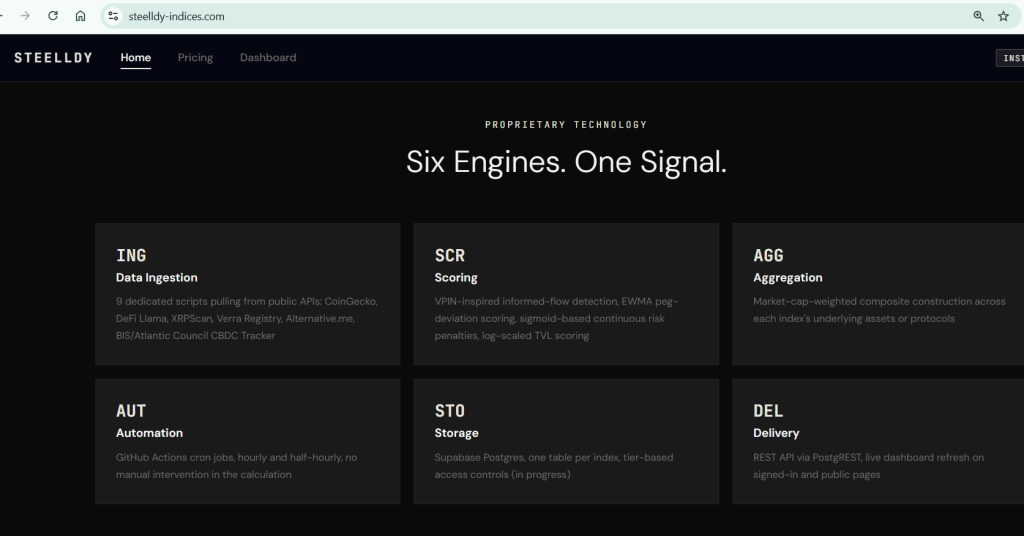
DP / ATS and HFT: Stealth accumulation of blocks over $10M on ASML and equipment peers post-drawdown (institutional buy/sell ratio >1.8 per Bloomberg/ATS feeds). CTAs liquidated part of Korean memory longs. Alphascope/Polybro v.3.2 detected liquidity clusters around ASML technical supports. Sentiment (Steelldy Behavioral Matrix 2.1 + NLP): OCEAN shift: Fear became dominant on X/Reddit/Telegram (“China catches up”), followed by a correction.
Polymarket Oracle: high probabilities for “China DUV commercial success 2027” but low liquidity, so a liquidity correction was applied.
Real progress and ahead of the 2030 consensus, but negligible volume (3-4% of ASML immersion production).
It accelerates the dualization of the supply chain (mature nodes China-sovereign vs leading-edge EUV Western).
Material impact horizon on ASML margins: 2028-2030.
The production of 5 machines does not change the technological ceiling. SMIC is already producing 7nm on imported ASML DUV equipment (Lithography Loophole). True sovereignty requires: yields >70-80%, uptime, a 100% domestic supply chain, and most importantly, EUV. Chinese investments remain massive (hundreds of billions of CNY). Xi’s strategy: gradual node-by-node independence.
The projection, using TVP-VAR and HMM regimes, indicates a dominant “Decoupling Acceleration” regime from 2026-2028. A quantum-classical hybrid optimization under regime constraints maximizes the Sharpe ratio, with exposure limits on ChinaTech and semiconductor equipment. The suggested allocation is short-term underweight on ASML (due to a possible rebound), overweight on Chinese non-litho equipment or Japanese peers like Tokyo Electron, and hedged via ASML puts or inverse semiconductors.
The risks of exporting components currently represent the main structural vulnerability of Chinese DUV production. They do not completely block the start-up (5 machines in 2026), but they significantly limit scalability, yields, and the credibility of medium-term independence. Residual Japanese dependence transforms a technological breakthrough into a conditional and geopolitically fragile advancement.