Recent news headlines have shifted as frequently as gold prices, leaving investors questioning market direction. A disconnect between record demand forecasts and sluggish price action adds to the confusion. Damian White and Joe Elkjer analyze the noise to clarify gold’s dynamics, examining whether the recent price decline is a warning or a pause in a…
Markets
Markets, Markets Data, Private Markets, Equities, Bonds, Stocks, Currencies, Commodities, Crypto, Monetary Policy Radar, Wealth Management, Moral Money, Money, ETF, ETF Hub, Asset Management, Private Equity.
The Bank of Japan (BoJ) raised its key interest rate to 1.00% on June 16, 2026, the highest since 1995. This move, widely anticipated with an over 98% probability priced in by markets, had a limited immediate impact on the USD/JPY exchange rate, which remained around 160. This is primarily because the market perceives the…
The technical analysis posits a bullish outlook for gold, targeting $17,250/oz, underpinned by structural US fiscal dominance, accelerated de-dollarization, and a monetary re-evaluation of gold as an alternative reserve asset.
As of June 13, 2026, US gross public debt stands at approximately $39.2 trillion, with debt held by the public at around $31.6 trillion,…
Executive Summary
SpaceX (SPCX) closed its first week of trading on June 13, 2026, at $158.40 (+17.3% since the IPO at $135), after a peak of $176.52 on day 1.
Market capitalization: ~$2.18 trillion. Exceptional cumulative volume (>2.8 billion shares). The stock shows an implied annualized volatility of 68-82%, with strong retail participation…
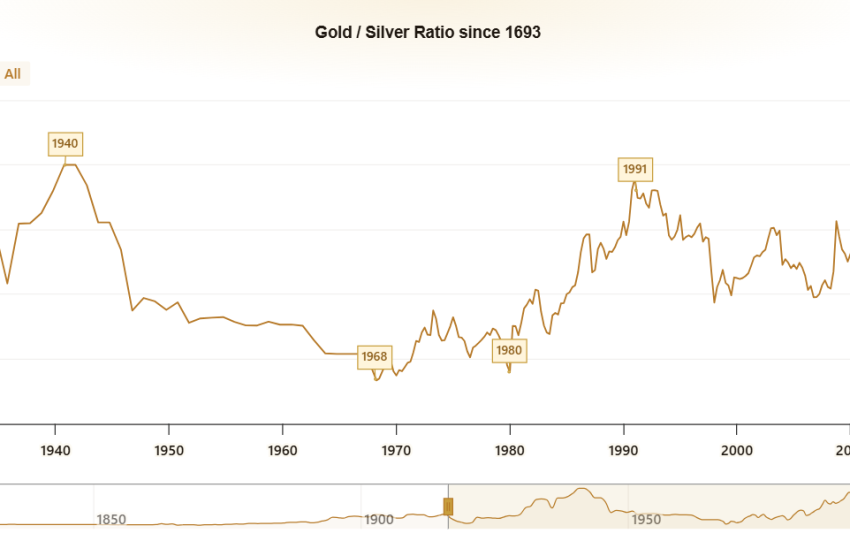
Gold prices have seen aggressive growth in recent years, reaching a historic high in January before stabilizing. Many market veterans, like mining legend Pierre Lassonde, view this as a temporary consolidation before a multi-year bull cycle, predicting gold could reach $17,250. This optimistic forecast is primarily driven by the surge in US government debt. Analyzing…
SpaceX's historic June 12, 2026 IPO, priced at $135/share, raised $75 billion, valuing the company at $1.77 trillion. The stock opened at $150 (+11.1%), hit $176.52 intraday, and closed between $160-$173 (+19-28%), pushing its market cap above $2.1 trillion. The central thesis highlights severe negative convexity, typical of hyper-valued tech IPOs, with a 2025 revenue…
Executive Summary
High retail investor participation in IPOs at stretched valuations generates negative convexity in the broader equity market: initial positive gamma from FOMO-driven buying (short-term momentum) reverses into amplified downside convexity upon sentiment shift, due to herding, low information processing, and liquidity withdrawal. Historical data confirm that elevated retail flows in late-cycle IPO…
The Trans-Saharan Gas Pipeline (TSGP) — a 4,128 km project linking Nigerian gas fields (Warri region) through Niger to Algeria’s Hassi R’Mel hub, with onward connection to European markets via existing Algerian infrastructure — represents a geostrategic diversification play for Europe amid categorical reduction of Russian fossil fuel dependence (oil imports down to <3-5% of…
Executive Summary
Satellite signatures combined with AIS vessel tracking and OSINT currently indicate elevated refinery activity in US/Europe amid global disruptions, but severe anomalies in Middle East tanker flows through the Strait of Hormuz. As of mid-June 2026, Hormuz transits are near-historic lows (often <10 vessels/day, down 70-97% from baseline), with widespread "dark" operations…
Executive Summary
Transition risks under 2°C pathways (IEA NZE/APS equivalents) drive structural demand destruction for refined products, compressing refining margins via volume contraction, utilization drops, and policy/carbon cost overlays. Carbon Tracker’s foundational 2017 “Margin Call” analysis projected >50% EBITDA decline by 2035 for ~94% of global capacity under a 2D scenario (oil demand -23%…