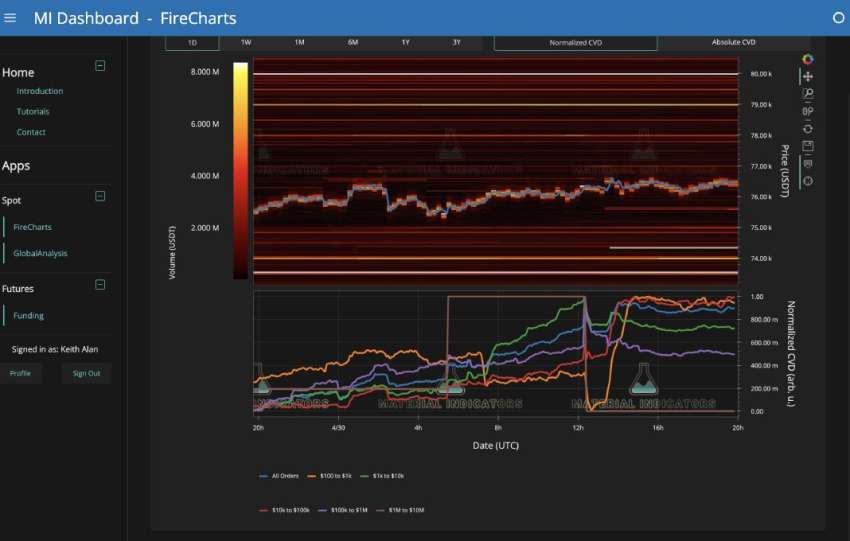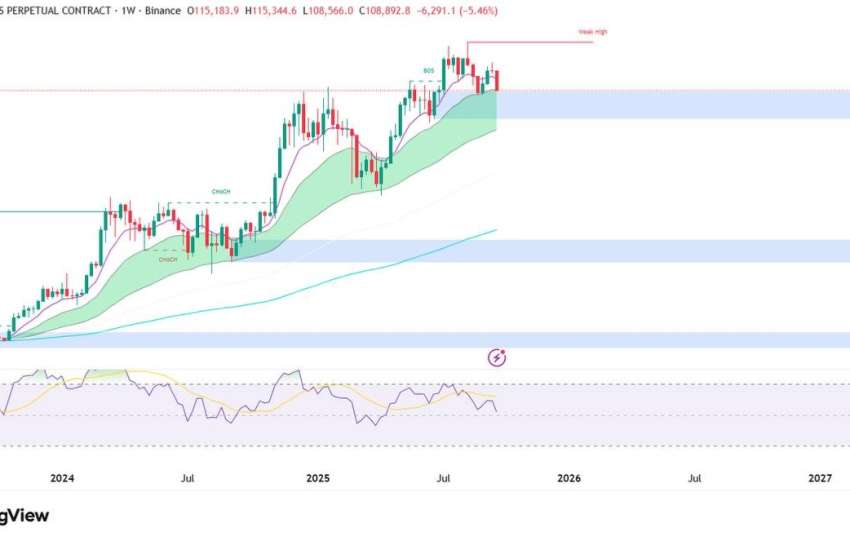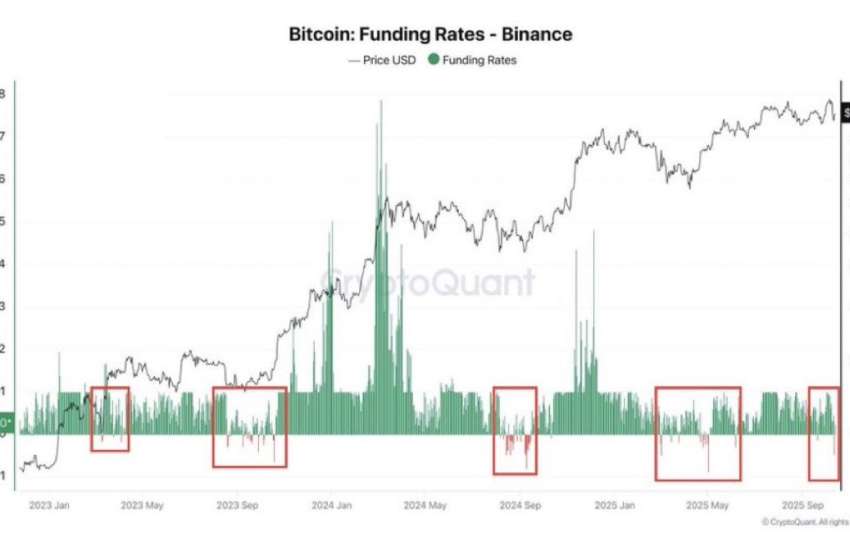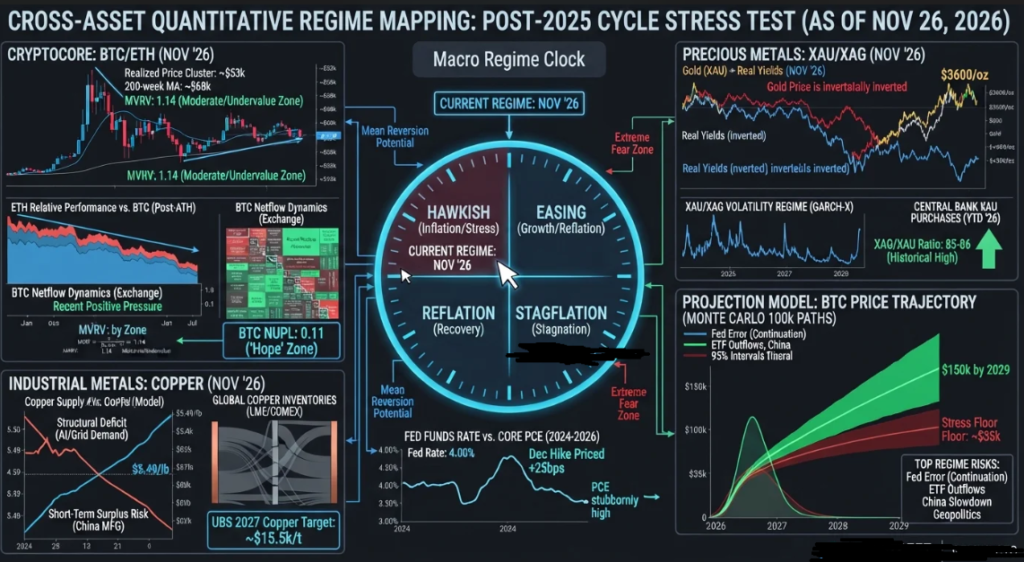
The market snapshot for approximately 26 nov. 2026 shows a broad recovery over 24 hours but substantial losses over 30 days and one year across cryptocurrencies and precious metals. BTC trades around $60 800–61 000, while ETH, XRP and SOL remain significantly below their 2025 ATHs. Total crypto market capitalization is ~$2,11–2,16 T, sentiment is in Extreme Fear, and spot taker CVD remains negative despite slightly positive perpetual funding and recovering open interest. Gold, silver and copper also show mixed short-term performance.
Bitcoin on-chain indicators suggest moderate or relatively undervalued conditions compared with historical cycles: Realized Price is approximately $53,0–53,2k, MVRV is 1,13–1,15, NUPL is 0,11–0,12, and Mayer Multiple is 0,84. However, SOPR below 1 indicates recent selling at a loss, while exchange netflows remain mixed. Bitcoin dominance is elevated, reflecting a preference for relative quality amid risk-off conditions.
CFTC positioning on 17 nov. 2026 indicates reduced speculative exposure to gold, silver and copper, suggesting disengagement without extreme capitulation. The prevailing macroeconomic regime is hawkish and risk-off, with Fed Funds at ~3,75–4,00 %, persistent inflation, DXY around 104 and elevated real yields. These conditions pressure non-yielding assets, although central-bank gold purchases and structural copper demand from AI, data centers and electrification provide longer-term support.
Bitcoin faces resistance from its bearish technical structure despite partial capitulation, with a base-case short-term range of $55–68k and downside risk toward $53k. ETH has weak momentum, while XRP and SOL experience stronger percentage rebounds but lower liquidity. Gold retains structural support, with 2027 targets of $4 650–5 250; silver remains volatile, and copper faces competing structural-demand and near-term-surplus pressures.
The proposed non-advisory frameworks include BTC range trading, conditional accumulation, relative-value positioning between BTC and altcoins, precious-metal mean reversion, and copper dip-buying if structural demand remains confirmed. Risk management emphasizes elevated crypto VaR/CVaR, constrained position sizing and cross-asset correlation monitoring.
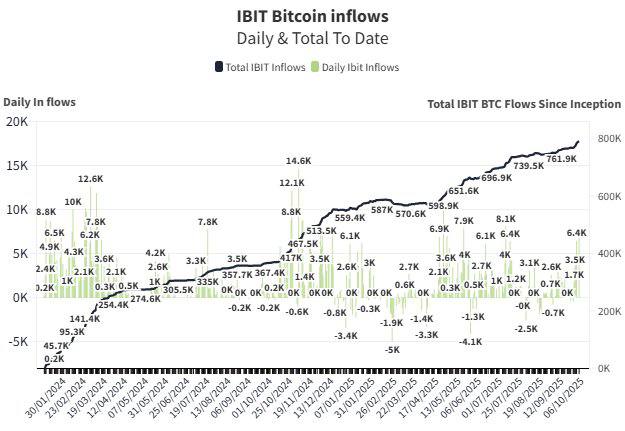
Major risks include continued Fed tightening, dollar strength, residual liquidations, ETF outflows and geopolitical or copper-supply disruptions. Important institutional-flow and alternative datasets are unavailable, and 100k-trajectory Monte Carlo projections were not executed. Overall, markets remain under post-ATH 2025 stress: Bitcoin has historically attractive on-chain indicators but faces macroeconomic pressure, precious metals retain structural support, and copper remains dependent on demand relative to the economic cycle. Technical support failures warrant extreme vigilance.