Skip to content Skip to sidebar Skip to footer

Tag: trading

Why OCBC Cut Its Gold Price Outlook by 15% While Other Banks Stay Bullish

On the last day of June, gold traded at $4,023 per ounce. Oversea-Chinese Banking Corporation (OCBC), a major Southeast Asian bank, lowered its year-end gold forecast from $5,100 to $4,360, citing rising real yields, a stronger U.S. dollar, and a more hawkish Federal Reserve policy. https://www.steelldy-indices.com The bank also reduced its silver forecast by about…

Read more

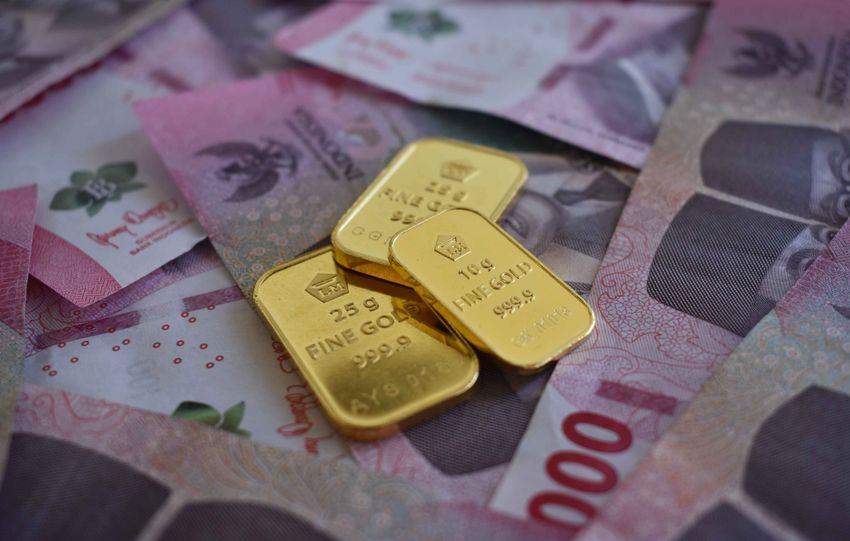
Close-up of gold bars on Thai baht banknotes, symbolizing wealth and prosperity.

Gold vs. Bonds: As Central Banks Hike Rates, Investors Ditch the Yellow Metal for Yield

Gold is currently weakening despite inflation, due to several key factors. In May, Germany’s inflation rate was surprisingly moderate at 2.6% annually, significantly lower than the eurozone’s 3.2%. This deviation from the European trend was primarily driven by a temporary fuel subsidy introduced by the German government, which reduced gasoline and diesel prices. However, this…

Read more

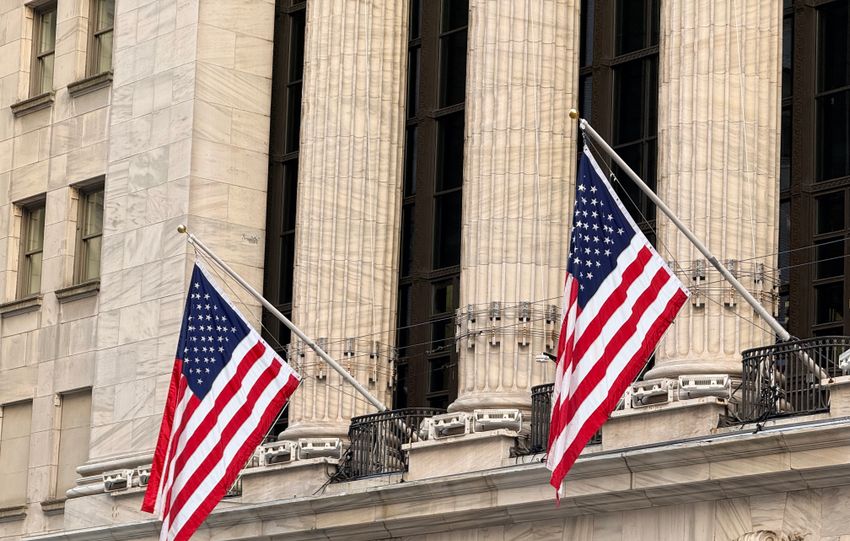
American flags displayed prominently on a historic Wall Street building in New York City.

Why Bank of America Still Sees Gold at $6,000 Despite Rate Hike Risks and Global Turmoil

Bank of America suggests gold could potentially reach $6,000, but not in the near term, due to significant headwinds from the Federal Reserve's tightening monetary policy. The bank was previously optimistic during gold's rally last year, expecting prices to hit $6,000 by spring. However, a recent correction has led its metals research team, led by…

Read more

Detailed view of modern skyscrapers with a pedestrian walkway in an urban cityscape.

Federal Reserve Rate Hikes Fuel Gold Volatility, But SocGen Sees Record Highs by 2027

The tightening of monetary policy by the Federal Reserve continues to negatively impact the gold market, with many analysts expecting prices to retest support around $4,000. However, one bank offers investors simple advice: "buy on the dip." In anticipation of the third quarter, Société Générale's market strategists updated their multi-asset portfolio, recommending investors maintain…

Read more

A dimly lit TotalEnergies gas station at night in Nairobi, Kenya, featuring prominent signage.

Refiner Margin Squeeze and the 3:2:1 Crack Spread Signal: Technical Analysis with Focus on TotalEnergies (as of mid-June 2026)

Executive Summary The 3:2:1 crack spread serves as a primary proxy for gross refining margins, calculated as: 3:2:1 Crack Spread=2×PGasoline (bbl)+1×PDistillate/Heating Oil (bbl)−3×PCrude (bbl)3\text{3:2:1 Crack Spread} = \frac{2 \times P_{\text{Gasoline (bbl)}} + 1 \times P_{\text{Distillate/Heating Oil (bbl)}} - 3 \times P_{\text{Crude (bbl)}}}{3} where prices are typically futures-settled (e.g., WTI/RBOB/NYH HO for USGC benchmarks; Brent equivalents or regional baskets for Europe).…

Read more

Analysis of the paradigmatic transition towards a “Digital Bretton Woods” and quantitative modeling of the risks/returns of Real World Asset (RWA) Tokenization

We are not in a classic crypto cycle; we are witnessing the commoditization of the settlement layer. Bretton Woods I (1944) used a gold-pegged dollar settled via correspondent banks (SWIFT/CHIPS). The current regime (post-1971) relies on the petrodollar and sovereign debt. Bretton Woods 2.0 is based on a Dual Pillar Regime: 1. Physical Pillar…

Read more

Taxonomy and Characterization of Carbon Credit Tokens (CCTs)

1.1 Direct Ownership Tokens 1.1.1 On-chain Representation of Carbon Credits Held in Custody by the Investor Direct ownership tokens constitute the most fundamental form of carbon credit tokenization, representing a digital claim on a physical carbon credit held in custody by an accredited custodian. This structure ensures a one-to-one correspondence between the issued token and…

Read more