Analyse de marché
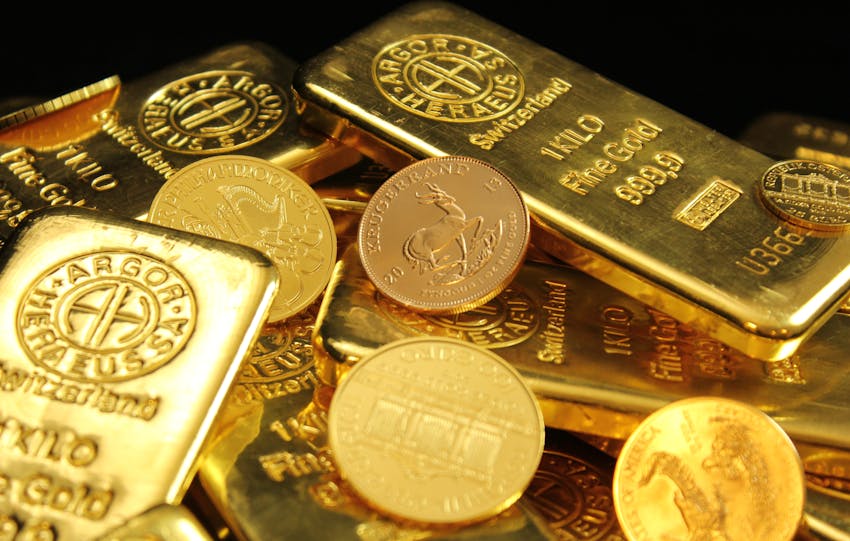
Doug Moglia, a strategist at Rockefeller Global Investment Management, identifies gold as the anchor of a new commodity cycle, projecting its long-term bull market to persist despite recent volatility. Commodities are regaining traction for diversification as structural demand outpaces constrained supply. While broader commodity trends are shaped by electrification, AI, reshoring, energy security, and underinvestment, precious metals are leading the current rally. Gold and silver have seen significant gains, with central bank acquisitions, especially following the 2022 sanctions on Russian reserves, providing strong support for gold. According to Moglia, 2025 marked a turning point with a surge in speculative interest, fueled by a weakening US dollar, which benefited higher-beta assets like silver and platinum. He likens the current gold bull market’s 2022 inception to historical regime shifts, drawing parallels to the early 1970s and the turn of the millennium.
The Russia-Ukraine conflict and the precedent of sanctioning Russian reserves served as catalysts, prompting central banks to re-evaluate the vulnerability of dollar-euro reserves and prioritize gold as a sovereign asset free from issuer or counterparty risk. This global shift is evidenced by sustained central bank purchases, exceeding 1,000 tons annually from 2022 to 2024. Gold’s price behavior has become less correlated with traditional cyclical indicators like global growth, real interest rates, and the dollar. In 2025, Western financial investors amplified official sector demand through retail and ETF inflows. Although central bank purchases decreased to 863 tons in 2025, ETF holdings increased by nearly 20%. However, this influx of faster, momentum-driven participants increases the risk of sharper price corrections.
Moglia anticipates continued central bank demand, potentially leading gold reserves to approach parity with global dollar reserves. While this sustained demand should establish higher price floors and ceilings, financial investors are increasingly driving price dynamics, resulting in amplified short-term volatility, as seen in early 2026 with speculative leverage. Despite this volatility, other factors reinforce the gold bull trend. Concerns about the Federal Reserve’s independence, rising fiscal risks, and geopolitical tensions, including the conflict with Iran, are fueling investor interest.
Moglia views the current gold bull market as nascent, projecting its trajectory and price potential based on historical cycles. He forecasts gold prices to exceed $5,500 per ounce by 2027 and reach $8,000 by 2030, with a potential peak of $10,000. Silver, described as “gold with higher beta,” has also benefited but is now in a more tactical phase after its 2025 surge and subsequent early 2026 pullback. Its price movements are influenced by broader precious metal sentiment, despite a significant industrial demand base (over 50%). The physical silver market faces a structural deficit driven by demand from clean energy and AI technologies. However, price appreciation is moderated by its trading as a monetary asset, susceptible to sentiment and currency fluctuations. Silver’s supply is inelastic, with approximately 70% being a byproduct of other metal mining. The gold-silver ratio, recently normalizing to its long-term average of 50-60 after briefly reaching 100 in May 2025, suggests limited tactical upside for silver relative to gold.
Moglia suggests that gold miners might offer a more compelling opportunity for the next phase of the precious metals bull market, citing their operational leverage and improving shareholder returns. He believes mining stocks have strong fundamental upside, supported by his optimistic long-term gold outlook. Despite a sharp increase in precious metal prices, mining stocks have only modestly outperformed spot prices, as investment has flowed into physical assets and ETFs. This has kept the gold and silver miners-to-spot price ratio around 0.7, near its 2020 peak and substantially below 2000s levels. Mining stocks carry operational risks, which, as emphasized by Moglia, amplify price appreciation, already evident in margins and free cash flow.
Current operating margins for gold and silver miners are approaching 40%, the highest since 2011. The top five miners are projected to generate approximately $20 billion in free cash flow by 2025, with free cash flow margins around 30%, surpassing 2020 and 2011 peaks. Unlike precious metals, which are negative-yielding assets due to storage costs and lack of income, mining companies offer positive cash flow to shareholders while retaining leverage to higher gold prices, providing both yield and downside protection. Mining stocks, with their operational risks and equity-like beta, have historically been traded tactically rather than held for long-term growth, contributing to their volatility. However, periods of weakness are viewed as opportunities to increase gold exposure, given expectations of sustained high gold prices.
Gold remains central to Rockefeller’s commodity portfolio, alongside oil, other metals, and mining stocks. Rockefeller advocates for diversified commodity allocations, strategically investing in areas like industrial metals, platinum, and gold/silver mining stocks. Tactical oil investments also serve as a hedge against geopolitical instability with limited downside risk, given a current bearish stance. Gold is seen as a long-term portfolio anchor.