Skip to content Skip to sidebar Skip to footer

Tag: Europe

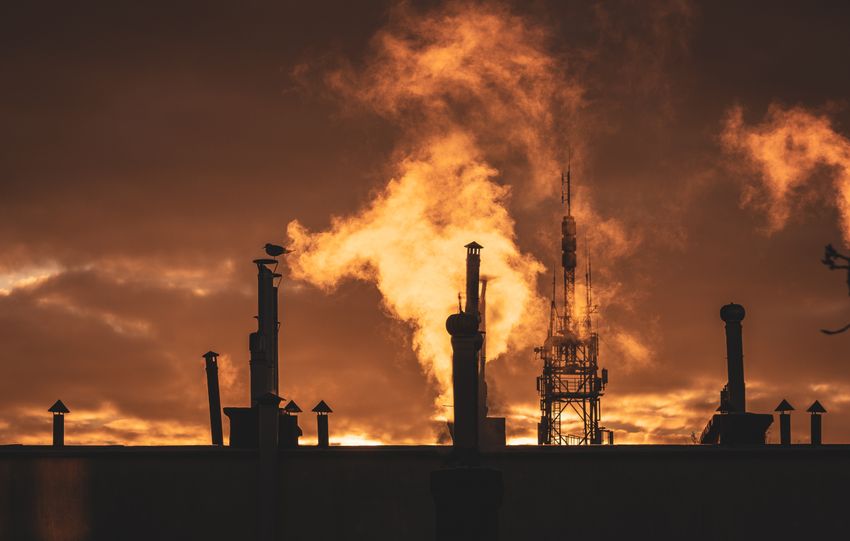
Silhouette of industrial plant smokestacks against a dramatic sunset sky.

The Carbon Quality Gap: Why a $100 Billion Market Still Trades Without a Benchmark

The voluntary carbon market is on a well-documented trajectory: roughly $2 billion today, heading toward $100 billion by 2030. CSRD reporting, net-zero commitments, and the rise of tokenized credits are pulling institutional money into a market that was, until recently, a boutique affair of project developers and well-meaning corporates. There is just one problem, and…
Read more

Long exposure of star trails creating circular patterns over two satellite dishes against a night sky.

Starlink Direct-to-Cell, also called Starlink Mobile or D2C/DTC

Starlink Direct-to-Cell (also called Starlink Mobile or D2C/DTC) is SpaceX’s satellite-to-smartphone service that lets ordinary, unmodified 4G/LTE phones connect directly to Starlink satellites for basic connectivity in areas without terrestrial cell coverage. As of August 2026, the Direct-to-Cell service has been live since July 2025, commercially launched with T-Mobile in the US. Its constellation comprises…

Read more

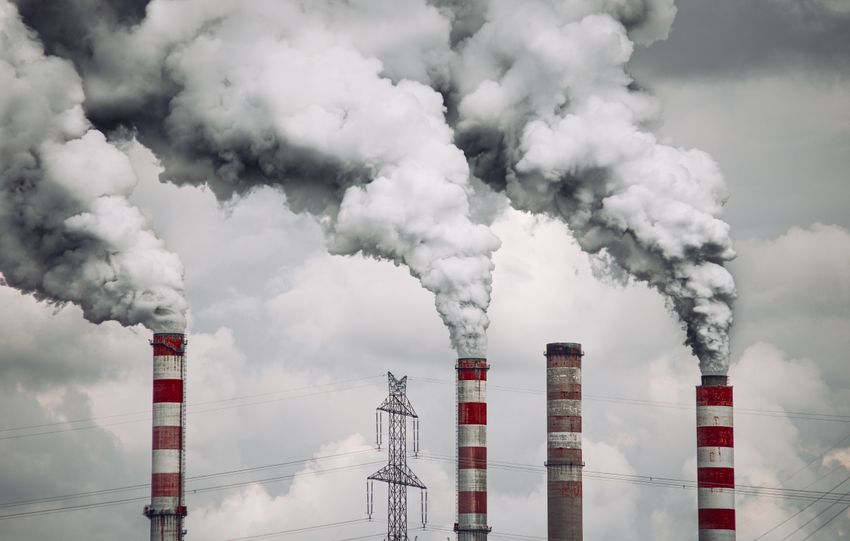
Smoke billows from factory chimneys in Konin, Poland, highlighting pollution and environmental impact.

Navigating the Nuances: Synthetic Carbon Credits and Their Hidden Dangers

Synthetic carbon credit tokens provide derivative exposure to carbon markets (e.g., ICE EUA, voluntary indices) via futures, total return swaps, or oracle-replicated performance, without physical custody or retirement of underlying credits. This delivers operational efficiency (fractionalization, 24/7 liquidity, reduced verification costs) but introduces material counterparty risk (issuer solvency/fulfillment), basis/tracking error risk (deviation from reference index…

Read more

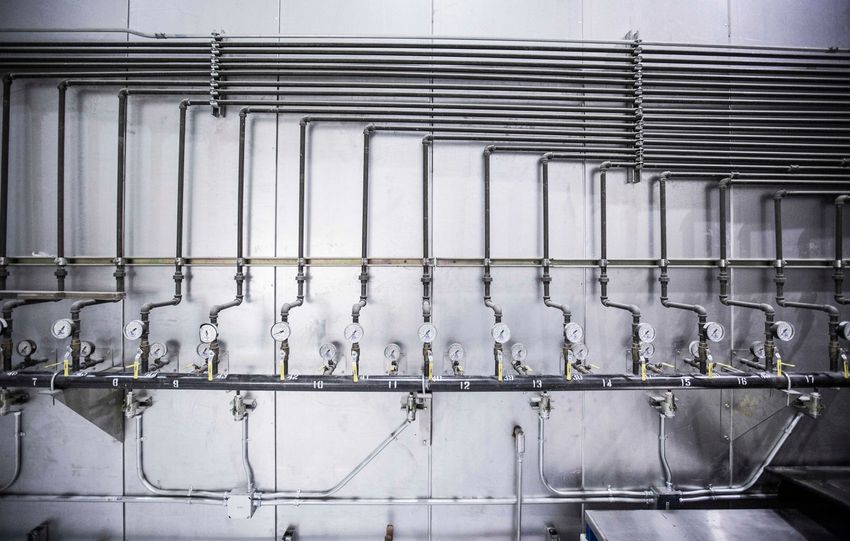
Detailed view of an industrial plumbing system featuring multiple pressure gauges and steel pipes.

Trans-Saharan Gas Pipeline (TSGP) in the Context of European Disengagement from Russian Oil/Gas and Global Oil Demand Reduction: Quantitative Strategic Assessment

The Trans-Saharan Gas Pipeline (TSGP) — a 4,128 km project linking Nigerian gas fields (Warri region) through Niger to Algeria’s Hassi R’Mel hub, with onward connection to European markets via existing Algerian infrastructure — represents a geostrategic diversification play for Europe amid categorical reduction of Russian fossil fuel dependence (oil imports down to <3-5% of…

Read more

Analysis of the paradigmatic transition towards a “Digital Bretton Woods” and quantitative modeling of the risks/returns of Real World Asset (RWA) Tokenization

We are not in a classic crypto cycle; we are witnessing the commoditization of the settlement layer. Bretton Woods I (1944) used a gold-pegged dollar settled via correspondent banks (SWIFT/CHIPS). The current regime (post-1971) relies on the petrodollar and sovereign debt. Bretton Woods 2.0 is based on a Dual Pillar Regime: 1. Physical Pillar…

Read more

The convergence of physical, behavioral, and microstructural signals confirms that Europe, and particularly France, has entered a regime of asynchronous systemic energy shortage

The convergence of physical, behavioral, and microstructural signals confirms that Europe, and particularly France, has entered a regime of asynchronous systemic energy shortage. The three pillars of the breakdown: (a) Physical Pillar. The Strait of Hormuz has been practically blocked since February 28, 2026: more than 20% of global oil traffic and 25% of…

Read more

Premium Shockwave: War-Risk Hikes Trigger Global Food and Fuel Shortages

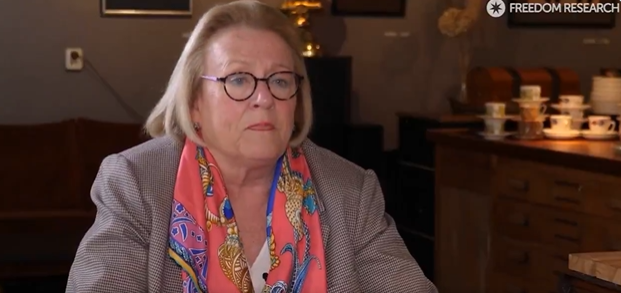
Catherine Austin Fitts, in an interview clip, asserts that Lloyd's of London insurance decisions by the City of London effectively shut down shipping through the Strait of Hormuz, creating global energy shortages and famine conditions rather than direct Iranian blockade. Amid March 2026 Iran conflict escalation, Lloyd's dramatically hiked war-risk premiums for Gulf tankers, causing…

Read more

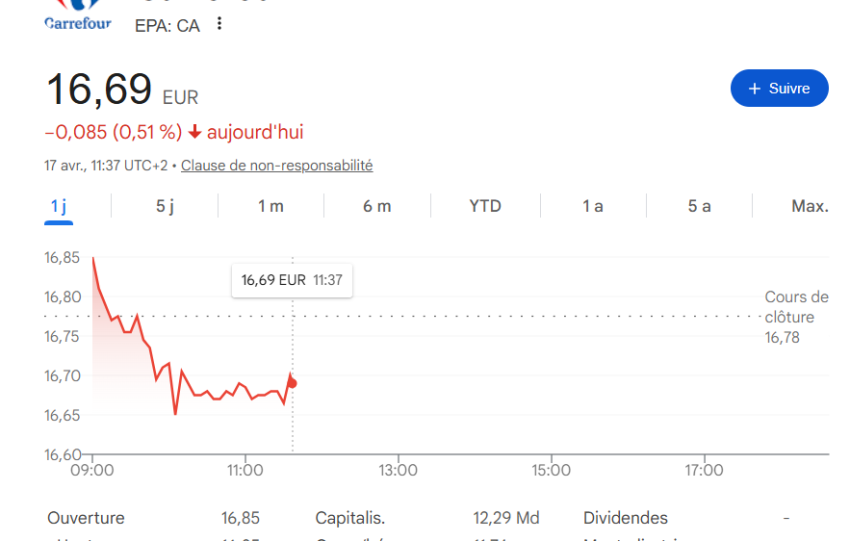
Analyse multi-facteurs de la dynamique des titres Carrefour (CA.PA). Découplage hydrocarbures vs risque systémique de Supply-Chain

Le marché observe une anomalie : le Gasoil baisse, ce qui devrait favoriser les marges des distributeurs, mais Carrefour sous-performe le CAC 40. La thèse centrale est que la baisse de Carrefour n'est pas liée aux prix de l'énergie mais à une discontinuité physique de la supply-chain (ruptures de stock), créant un risque de destruction…

Read more

De Facto Tolls Solidify: Iran Moves to Formalize Strait of Hormuz Fees and Transit Bans

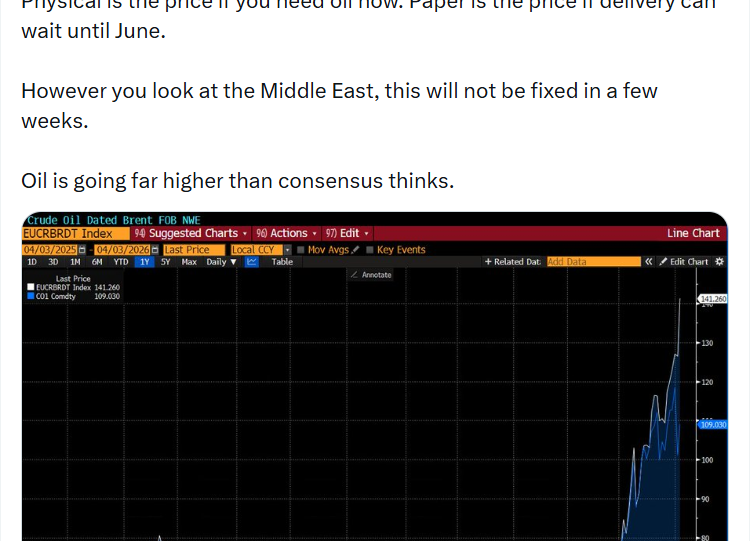
The Brent oil market shows an extreme divergence between the paper price (futures contracts) at $109 and the physical price (spot) at $141, a $32 gap reflecting a strong "backwardation." Normally, future prices are higher than spot prices (contango) due to storage costs; this inversion signals an immediate scarcity of physical oil. The $141 price…

Read more