Skip to content Skip to sidebar Skip to footer

Tag: crypto

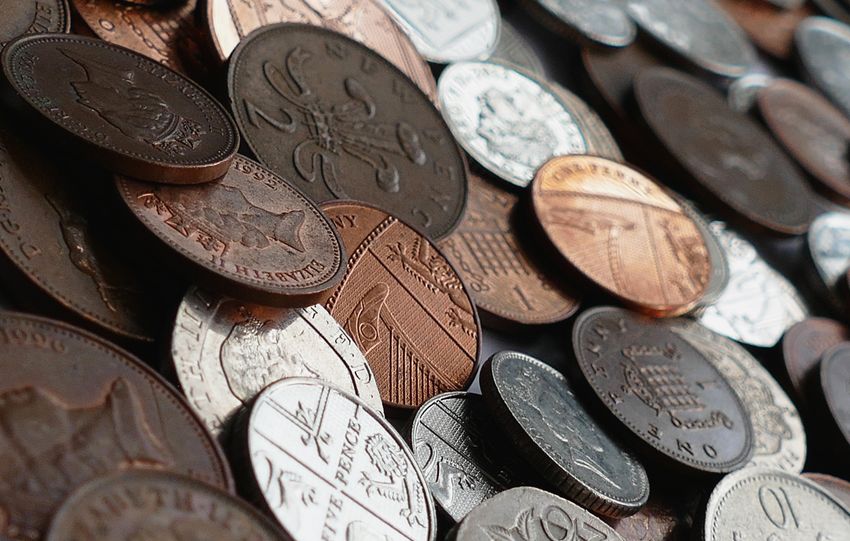
A close-up image of various world coins in a pile, highlighting different currencies.

War, Hidden Inflation, and the Role of Gold and Silver as Monetary Anchors

https://www.steelldy-indices.com/https://www.steelldy-indices.com The persistence of armed conflicts (Ukraine, Iran, tensions in Asia) and disruptions in energy supply, analyzed in our previous articles (ST-0726-IRAN-GOLD, ST-0727-CHINA-GOLD), validate a fundamental premise of quantitative finance: wars are the primary driver of debt monetization and hidden inflation that erodes savers' wealth. Faced with a deficit in traditional financing (tax collection, bond…
Read more

Illuminated Türkiye İş Bankası building in Ankara, Türkiye at night with vehicle motion blur.

Gold Holds Near $4,100 as Geopolitical Pause Eases Sovereign Selling Pressure

https://www.steelldy-indices.com Current gold price is around $4,100-4,103/oz, with a neutral-to-bullish short-term stance but an intact seller regime risk. The divergence alert between the model and Polymarket is not triggered. Semantic NLP shows a "gold distrust" score of 0.48 (down from 0.62), with dominant themes being the Fed decision, US-Iran pause, oil easing, and PBOC purchases.…

Read more

Toy soldiers and Iran flag on a world map symbolizing geopolitical tensions.

How the War with Iran Is Shaking Central Bank Confidence in Gold Reserves

https://www.steelldy-indices.com The Iran-United States war, triggered in Q1 2026, introduced a second-order exogenous shock to the gold market, destabilizing the strongest pillar of the decade-long bull run: central bank demand. The announcement of the suspension of gold sales by the Azerbaijani sovereign wealth fund (SOFAZ), forced sales by Turkey and Russia, and the contraction of…

Read more

Close-up of two golden Bitcoin coins on a tablet screen displaying financial data.

Structural risk of private banking blockchains on Bitcoin and the crypto ecosystem

https://www.steelldy-indices.com JPMorgan's note from July 9, 2026 identifies a structural threat to Bitcoin and public cryptocurrencies: the rapid expansion of private and permissioned blockchains driven by commercial banks (Kinexys, JPM Coin, tokenized deposits, CBDCs). This trend, supported by settlement volumes exceeding $4 trillion on Kinexys, could siphon institutional demand for public digital assets by offering…

Read more

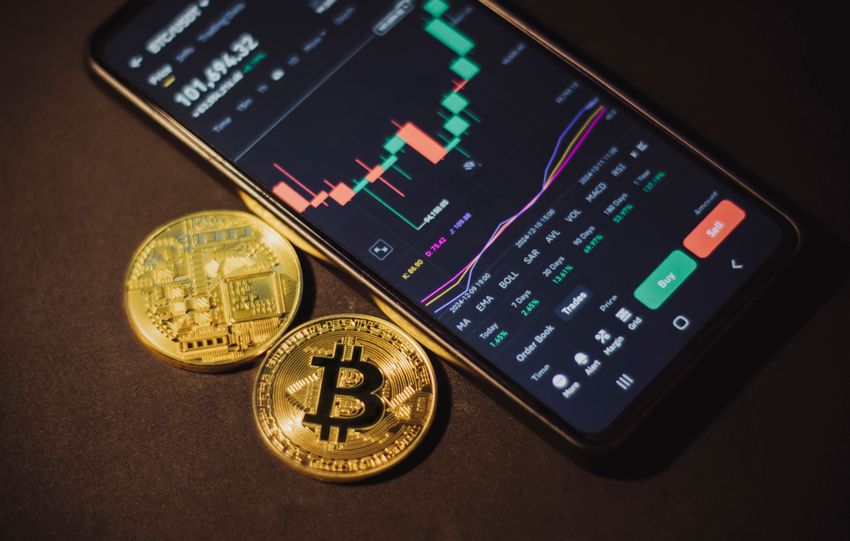
Smartphone displaying trading app with Bitcoin coins on a dark surface.

Bitcoin Struggles Near $66,000 Amidst Extreme Fear: What’s Next?

Bitcoin (BTCUSDT) trades at approximately $65,400–66,000, down ~0.8% in the observed session, within a recent consolidation range post a relief bounce from sub-$60k lows earlier in June 2026. The provided chart confirms a 1H/4H structure with MA5/10/20 clustering near $66,200–66,300, recent rejection at $67,255 highs, and downside probe the Fair Value Gap (FVG) zone around…

Read more

A dynamic image showcasing Bitcoin, credit cards, and financial apps for investment enthusiasts.

Construction of a Conditional Hedge via MNQ Micro E-mini Nasdaq Short. Calibration on BTC Beta=0.45

This study details an advanced quantitative modeling of a conditional hedge for a crypto-exposed portfolio, employing Micro E-mini Nasdaq-100 (MNQ) futures contracts as the hedging instrument. The calibration is based on a dynamic conditional beta of BTC/Nasdaq at 0.45, estimated using a multivariate DCC-GARCH(1,1) model with Markov regime switching. Key Findings: ¤ Minimum Variance Hedge…

Read more

Analysis of the paradigmatic transition towards a “Digital Bretton Woods” and quantitative modeling of the risks/returns of Real World Asset (RWA) Tokenization

We are not in a classic crypto cycle; we are witnessing the commoditization of the settlement layer. Bretton Woods I (1944) used a gold-pegged dollar settled via correspondent banks (SWIFT/CHIPS). The current regime (post-1971) relies on the petrodollar and sovereign debt. Bretton Woods 2.0 is based on a Dual Pillar Regime: 1. Physical Pillar…

Read more