The dominant factor in September is not an endogenous crypto narrative but a regime of real rates and geopolitical energy premiums.
US 10-year yields hit ~4.76-4.78%, the highest since January 2025, while the #DXY traded around 99.45-99.50.
Oil prices (WTI ~$86.5) reacted to US-Iran tensions and the Strait of Hormuz.
The Fed funds target is…
The market has exited the capitulation phase of June 2026, where BTC fell below $60k, driven by ETF creations and short squeezes pushing prices to ~$81.3k, though this does not confirm a sustained bullish cycle. Three simultaneous frictions are identified: a BTC supply wall between $81k-$86k, a potential 25bp hike at the September FOMC meeting…
Bitcoin rallied 6% in the week of August 19, triggered by a yields at their highest since 2007, seen as a fiscal easing signal. CoinShares' James Butterfill noted the rally was driven by macroeconomic factors, not crypto-specific dynamics. T. Rowe Price identified the "debasement trade" as the key driver, where investors shift from cash and…
Executive Summary
With over $315 billion in daily trading volume, stablecoins have become the systemic plumbing of programmable finance. Yet, the Basel Committee (BIS) and the World Economic Forum (WEF) highlight a critical flaw: the lack of quantitative tools capable of measuring counterparty risk in real time. Traditional approaches rely on static snapshots (monthly attestations)…
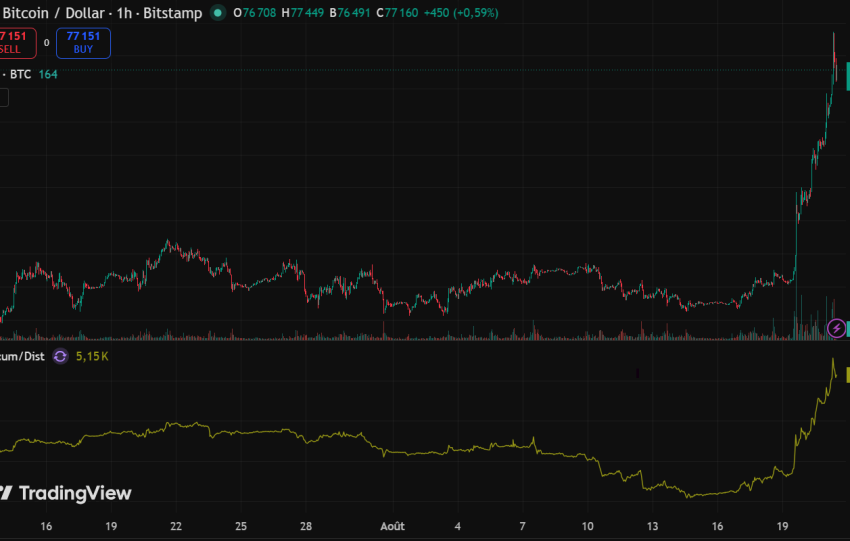
Bitcoin surged to $76,800-$77,600, gaining 6-8% in 24 hours and 20% for the week. The market saw over $4 billion in 24-hour liquidations, marking the most violent short squeeze of 2026. Combined BTC/ETH ETF inflows exceeded $800 million, indicating massive institutional entries. The funding rate shifted from negative to positive, signaling a return of long…
The stablecoin market has crossed a symbolic threshold: a market capitalization of over $315 billion. What was, five years ago, a niche tool for crypto traders has become a cash management infrastructure, for funds, fintechs, corporations, and soon, under the effect of the MiCA regulation, for regulated European institutions. Yet the fundamental question remains unchanged:…
The numbers, first. Tokenized real-world assets crossed $30 billion in early 2026, a 300% year-on-year increase : US Treasury debt ($10.7bn), commodities ($5.1bn), private credit ($2.9bn), institutional alternative funds ($2.2bn) leading the mix. Measured against what is coming, $30bn is a rounding error. The 2030 forecasts, by institution:
Source2030+ forecastScope noteMcKinsey~$2tnExcludes crypto, stablecoins, deposits,…
According to the methodology of Dixit and Pindyck (1994), gold contains an implicit call option on the collapse of the fiat system. The price dynamics St incorporate a Poisson jump process Nt: dSt/St = μdt + σdWt + (J-1)dNt, where Nt∼Poisson(λ) for the arrival of a systemic fiat crisis, and J is the jump amplitude…
RWA Treasuries (Sharpe 1.0-1.3 | Volatility 2-3%). Asset representing the tokenization of U.S. Treasury bills (e.g., BUIDL, OUSG).
The high Sharpe ratio (1.0-1.3) with negligible volatility (2-3%) makes it the ideal foundation for "Cash-and-Carry" strategies and collateral for HFT strategies. On-Chain Infrastructure and Regulation: The integration of the BIS (tokenization on a unified ledger)…
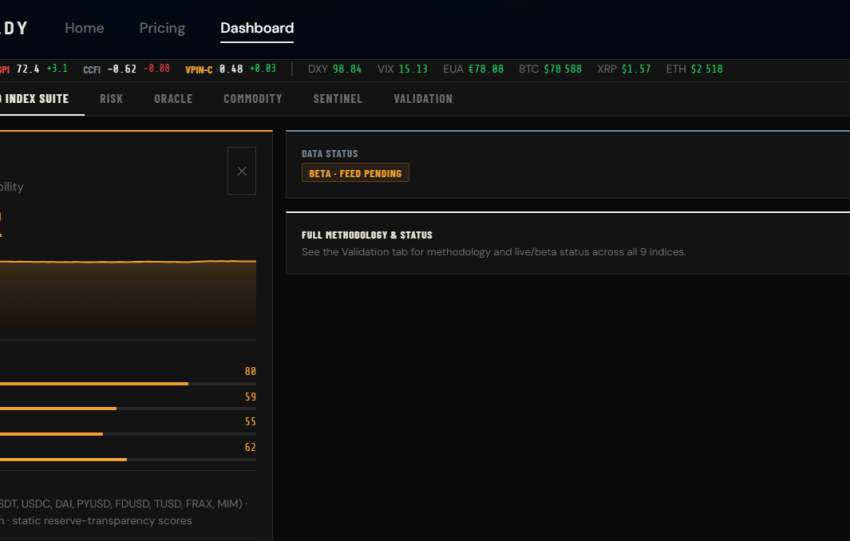
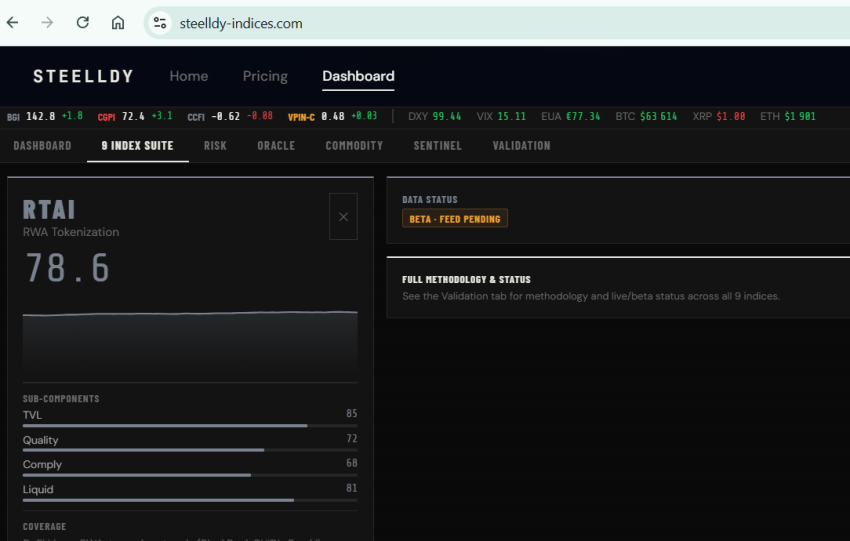
https://www.steelldy-indices.com
SpaceX has a gross margin of 55.3%, but negative operating and net margins (-1.8% and -6.9%). Only Starlink connectivity is profitable (~+$1.66B OI), while Space and AI segments are loss-making. AWS boasts a 39.4% operating margin (+650 bps YoY), generating ~60% of Amazon's consolidated OI from ~21% of revenue. Microsoft Cloud's gross margin is…
Analyse de marché