Executive Summary
Transition risks under 2°C pathways (IEA NZE/APS equivalents) drive structural demand destruction for refined products, compressing refining margins via volume contraction, utilization drops, and policy/carbon cost overlays. Carbon Tracker’s foundational 2017 “Margin Call” analysis projected >50% EBITDA decline by 2035 for ~94% of global capacity under a 2D scenario (oil demand -23%…
Estimated losses in the oil market reached 800 million barrels in March-April, growing to 1 billion barrels by mid-May, according to the IEA. This compares to a cumulative intervention of 400 million barrels, including the US. Before the conflict, global observable reserves in February stood at 8,185 million barrels; however, a significant portion is operational,…
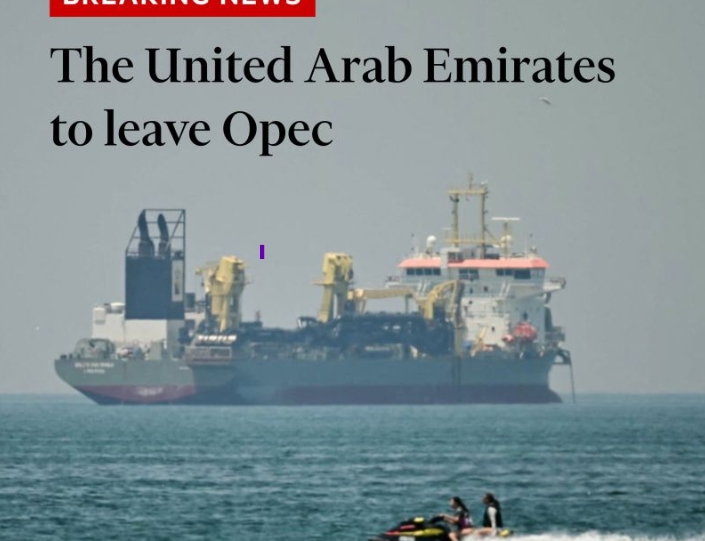
The simultaneous withdrawal declaration of Saudi Arabia and the United Arab Emirates from OPEC and OPEC+ (April 28-29, 2026) constitutes the most severe institutional rupture in the oil market since 1985-1986. This study demonstrates that this exit is not a purely bearish signal but rather the prelude to a two-speed structural dislocation:
…
Le commerce pétrolier russo-indien a connu une évolution spectaculaire. De marginal (0.1-0.3 mb/j en 2019-2021), il a bondi à 0.8 mb/j après l'invasion de 2022, atteignant un pic de 1.9 mb/j en 2023 (40% des exportations russes), se stabilisant à 2.1 mb/j en 2024 avant des réductions prévues (1.8 mb/j en 2025, effondrement à 0.3-0.5…
1. SYNOPSIS EXÉCUTIF. ÉTAT D'URGENCE ÉNERGÉTIQUE
Au 4 janvier 2026, une urgence énergétique se profile suite à la convergence de trois chocs : un choc géopolitique (capture de Maduro) menaçant plus de 300 kb/j de brut lourd, un choc technique (WTI testant un support critique à 55-57 USD avec risque de cassure), et un choc…
Analyse de marché