https://www.steelldy-indices.com/https://www.steelldy-indices.com
The persistence of armed conflicts (Ukraine, Iran, tensions in Asia) and disruptions in energy supply, analyzed in our previous articles (ST-0726-IRAN-GOLD, ST-0727-CHINA-GOLD), validate a fundamental premise of quantitative finance: wars are the primary driver of debt monetization and hidden inflation that erodes savers' wealth. Faced with a deficit in traditional financing (tax collection, bond…
https://www.steelldy-indices.com
The decision of several major Chinese banks (ICBC, Ping An, China Guangfa) to suspend precious metals trading services linked to the Shanghai Gold Exchange (SGE) for individuals, by drastically raising margin requirements to 140%, is not a simple prudential adjustment.
Analyzed through M. Theory 4.2 and the Steelldy 3.8 graph engine, this measure…
https://www.steelldy-indices.com
Current gold price is around $4,100-4,103/oz, with a neutral-to-bullish short-term stance but an intact seller regime risk. The divergence alert between the model and Polymarket is not triggered. Semantic NLP shows a "gold distrust" score of 0.48 (down from 0.62), with dominant themes being the Fed decision, US-Iran pause, oil easing, and PBOC purchases.…
https://www.steelldy-indices.com
The Iran-United States war, triggered in Q1 2026, introduced a second-order exogenous shock to the gold market, destabilizing the strongest pillar of the decade-long bull run: central bank demand. The announcement of the suspension of gold sales by the Azerbaijani sovereign wealth fund (SOFAZ), forced sales by Turkey and Russia, and the contraction of…
https://www.steelldy-indices.com
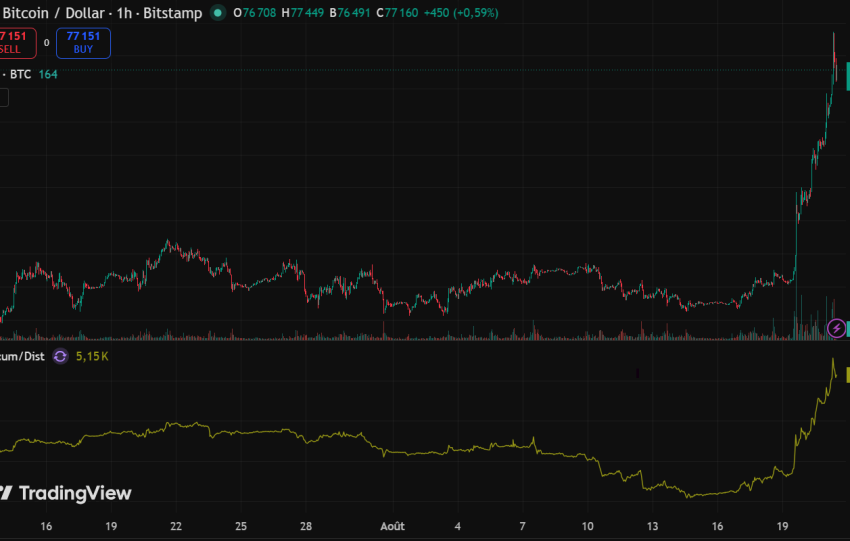
JPMorgan's note from July 9, 2026 identifies a structural threat to Bitcoin and public cryptocurrencies: the rapid expansion of private and permissioned blockchains driven by commercial banks (Kinexys, JPM Coin, tokenized deposits, CBDCs). This trend, supported by settlement volumes exceeding $4 trillion on Kinexys, could siphon institutional demand for public digital assets by offering…
1.1 Tripartite Classification Framework for Carbon Credit Tokens
The taxonomy of Carbon Credit Tokens (CCTs) proposed by STEELLDY is structured around three fundamental categories, each presenting a distinct tax risk profile under the Pillar Two framework. This tripartite classification | direct possession tokens, pool tokens, and synthetic tokens | constitutes an essential analytical framework for…
1.1 Economic and Legal Basis for the Exclusion of Intangible Assets
The concept of the "substance trap," formalized by STEELDY in their research on the interaction between Pillar Two and environmental tokenization, refers to a situation where an investment vehicle holding highly intangible assets is structurally unable to reduce its tax base through the SBIE…
Genesis and Legal Foundations of Pillar Two in the OECD/G20
Framework Pillar Two, the product of the OECD/G20 work on base erosion and profit shifting (BEPS 2.0), constitutes the most ambitious reform of international taxation since the OECD and UN model conventions. Its stated objective is to establish a minimum effective tax rate of 15%…
Executive Summary
The 3:2:1 crack spread serves as a primary proxy for gross refining margins, calculated as:
3:2:1 Crack Spread=2×PGasoline (bbl)+1×PDistillate/Heating Oil (bbl)−3×PCrude (bbl)3\text{3:2:1 Crack Spread} = \frac{2 \times P_{\text{Gasoline (bbl)}} + 1 \times P_{\text{Distillate/Heating Oil (bbl)}} - 3 \times P_{\text{Crude (bbl)}}}{3}
where prices are typically futures-settled (e.g., WTI/RBOB/NYH HO for USGC benchmarks; Brent equivalents or regional baskets for Europe).…
1.1 Minimum Effective Tax Rate of 15% and calculation of the top-up tax
Pillar Two of the OECD framework on international tax reform introduces a minimum effective tax rate of 15% applicable to the profits of multinational enterprises (MNEs) with consolidated revenue exceeding 750 million euros. This mechanism, formalized in the GloBE (Global Anti-Base Erosion)…
Analyse de marché
Climate