Skip to content Skip to sidebar Skip to footer

Tag: NLP

SpaceX (SPCX). Probable Correction vs. Long-Term Trajectory

SpaceX (SPCX) faces a probable short-term correction of ≥30% (62-78% probability) from current levels (~$141-146), driven by negative convexity, retail unwind, and liquidity spirals, while long-term (3-10 years) appreciation remains significant. The company is transitioning from a launch and constellation firm to a multi-planetary spatial infrastructure, data, and AI platform with increasing returns and…

Read more

Vector image representing online money transfer going in circles among people on green background

Tokenized Municipal Micro-Bonds

Tokenized Municipal Micro-Bonds. We use the XRPL infrastructure to issue tokenized bonds funded by urban tolls… and local property taxes from specific neighborhoods. Steelldy provides the Risk Engine to rate these micro-bonds in real time via local OSINT. The shift from appreciation tokens to yield structures represents the true institutional inflection point for RWAs. It…

Read more

Gold coins scattered with a stock market graph and a percentage symbol on an orange background.

Why Gold’s Low Sharpe Ratio Masks Its True Value as a Strategic Tail-Risk Hedge

Gold (Sharpe 0.4-0.7, Volatility 12-15%) acts as a reserve asset, inversely correlated with the DXY. Its low Sharpe ratio is due to no carry yield and custody costs, but it offers absolute decorrelation during systemic geopolitical shocks. Physical gold is now central to monetary influence wars (BIS Basel 2024-2025). Steelldy Engine 3.8 and Planet Labs…

Read more

Bitcoin coin standing on a chessboard with silver and brass chess pieces. Concept of strategic digital currency investment.

Beyond the Sharpe Ratio: Why Tail-Risk Hedging Is Essential in Bitcoin’s Fat-Tailed Markets

A long-only Bitcoin strategy with a target Sharpe ratio of 0.8–1.2 and 60–70% volatility is an inherently risky proposition. The asset is high-beta with extreme negative skew and fat tails. While the elevated Sharpe suggests a high risk premium, this masks a pathological risk of ruin during retail capitulation events. The market's inefficiency stems…

Read more

From above ten dollar banknote with inscription and United States treasury building placed on table

Foreign state and institutional holdings of US Treasuries since the escalation of the Iranian conflict

We use exclusively verifiable public data, collected and processed by our Steelldy Risk Engine 3.4 infrastructure and Bloomberg Intelligence modules: - Treasury International Capital (TIC): Monthly and annual reports, raw and adjusted data for valuation and hedging effects, broken down by country and maturity (source: Treasury.gov). - Official reserve flows: IMF COFER (Currency…

Read more

Aerial landscape shot of a coastal oil refinery with storage silos under cloudy skies.

BIS/WEF Context on Transition Risks Compressing Long-Term Refining Margins: Carbon Tracker-Style Analysis and Quantitative Projections for TotalEnergies

Executive Summary Transition risks under 2°C pathways (IEA NZE/APS equivalents) drive structural demand destruction for refined products, compressing refining margins via volume contraction, utilization drops, and policy/carbon cost overlays. Carbon Tracker’s foundational 2017 “Margin Call” analysis projected >50% EBITDA decline by 2035 for ~94% of global capacity under a 2D scenario (oil demand -23%…

Read more

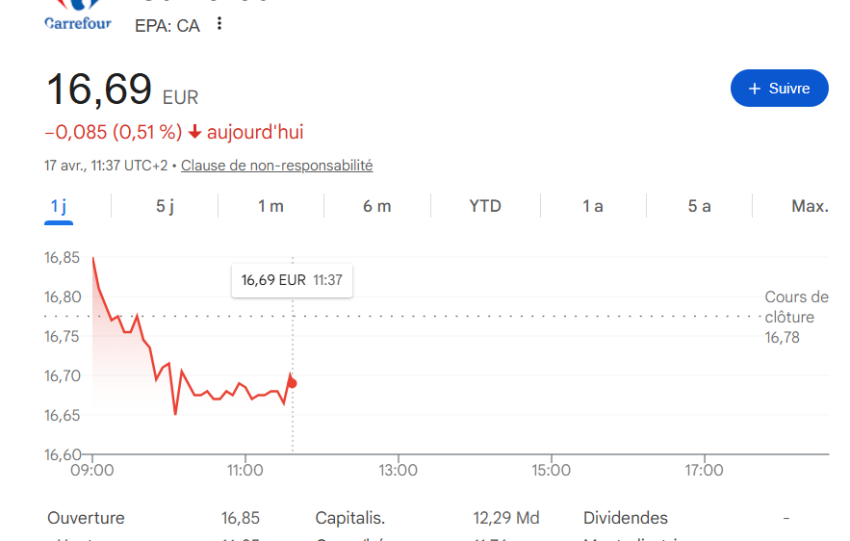
Analyse multi-facteurs de la dynamique des titres Carrefour (CA.PA). Découplage hydrocarbures vs risque systémique de Supply-Chain

Le marché observe une anomalie : le Gasoil baisse, ce qui devrait favoriser les marges des distributeurs, mais Carrefour sous-performe le CAC 40. La thèse centrale est que la baisse de Carrefour n'est pas liée aux prix de l'énergie mais à une discontinuité physique de la supply-chain (ruptures de stock), créant un risque de destruction…

Read more