Digital finance is shifting gears. For ten years, the value of a digital asset rested on a promise of appreciation. Since 2024, a new paradigm has taken hold: the value of a tokenized asset is read in its cash flows, rent, interest, coupons—generated by the underlying asset and automatically distributed by smart contracts. RWAs are…
Thesis. Tokenization of real-world assets has fundamentally changed by 2026: it is no longer a speculative resale market but a market of automated cash flows. The value of a RWA is now reflected in its distributions (interest, rents) mechanically analogous to private credit and traditional fixed income, with an added layer of programmability.
Key…
RWA Treasuries (Sharpe 1.0-1.3 | Volatility 2-3%). Asset representing the tokenization of U.S. Treasury bills (e.g., BUIDL, OUSG).
The high Sharpe ratio (1.0-1.3) with negligible volatility (2-3%) makes it the ideal foundation for "Cash-and-Carry" strategies and collateral for HFT strategies. On-Chain Infrastructure and Regulation: The integration of the BIS (tokenization on a unified ledger)…
Hedge funds are increasingly adopting new digital currencies, primarily stablecoins, due to enhanced capital efficiency, regulatory clarity, and new yield-generating strategies. 1| Capital Efficiency Unlike traditional prime brokerage where collateral is largely immobilized, stablecoins acting as collateral can simultaneously secure derivative positions (perpetuals, options, futures) and generate yield from underlying assets like T-bills. This "working…
The GENIUS Act mandates stablecoin issuers to hold 100% reserves in cash or T-bills with maturity ≤ 93 days. This creates a mechanical demand for T-bills, making them the collateral commodity for the new system.
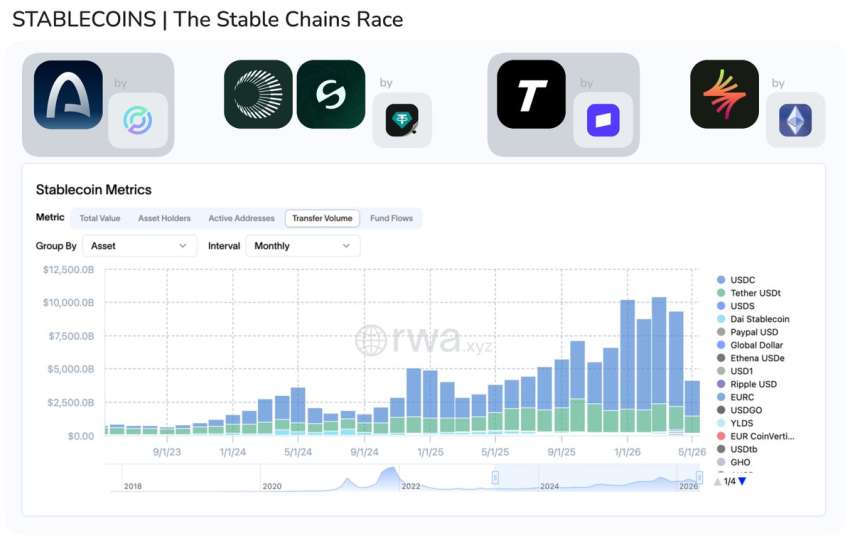
By mid-2025, Tether and Circle held $160 billion in T-bills, exceeding most sovereign nations' holdings, which mechanically compresses short-term…
1. Cadre conceptuel. L’interopérabilité stablecoins-RWA comme condition sine qua non du scaling de la finance parallèle
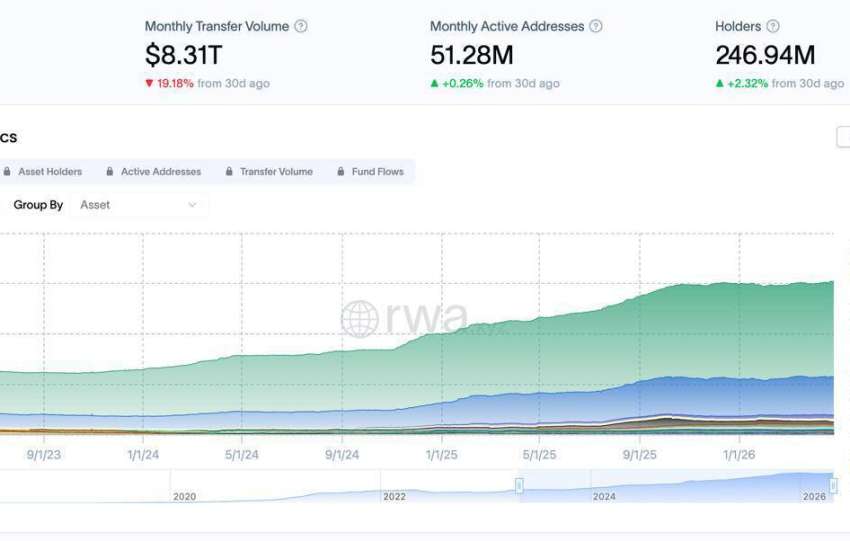
L’interopérabilité entre stablecoins (USDT/USDC dominance >85 % du marché, MC ~300 Md$ au 27/03/2026) et RWA tokenisés (TVL distribuée ~26,63 Md$ ex-stablecoins, rwa.xyz) constitue le pont programmable entre liquidité fiat-native et actifs réels fractionnables. Elle transforme les stablecoins…
VanEck Treasury Fund (VBILL), un fonds tokenisé de bons du Trésor américain à court terme, disponible sur les blockchains Ethereum, Solana, BNB Chain et Avalanche
Il est désormais possible d'acheter des bons du Trésor via une interface DeFi.
VanEck, un acteur majeur de la gestion d'investissements à l'échelle mondiale, a déclaré, en partenariat avec la…
1. BlackRock BUIDL, le fonds du marché monétaire institutionnel tokenisé
Le USD Institutional Digital Liquidity Fund de BlackRock, commercialisé sous le nom BUIDL, a été lancé sur Ethereum en mars 2024 et s'est depuis diversifié vers sept blockchains y compris Solana, Polygon, Aptos, Arbitrum et Optimism, dans le but d'optimiser l'accessibilité et la performance. D'après…
Authors who work with cameras need to know cons and pros of some…
Dans l'univers des cryptomonnaies, les actifs tokenisés (RWA) représentent l'un des domaines qui connaissent la plus forte expansion. Les RWA offrent aux institutions la possibilité d'intégrer une variété d'actifs financiers classiques (TradFi) dans l'univers de la blockchain. Cela englobe les matières premières, les actions, les obligations, les équivalents de trésorerie et bien d'autres encore. D'après…