Analyse de marché
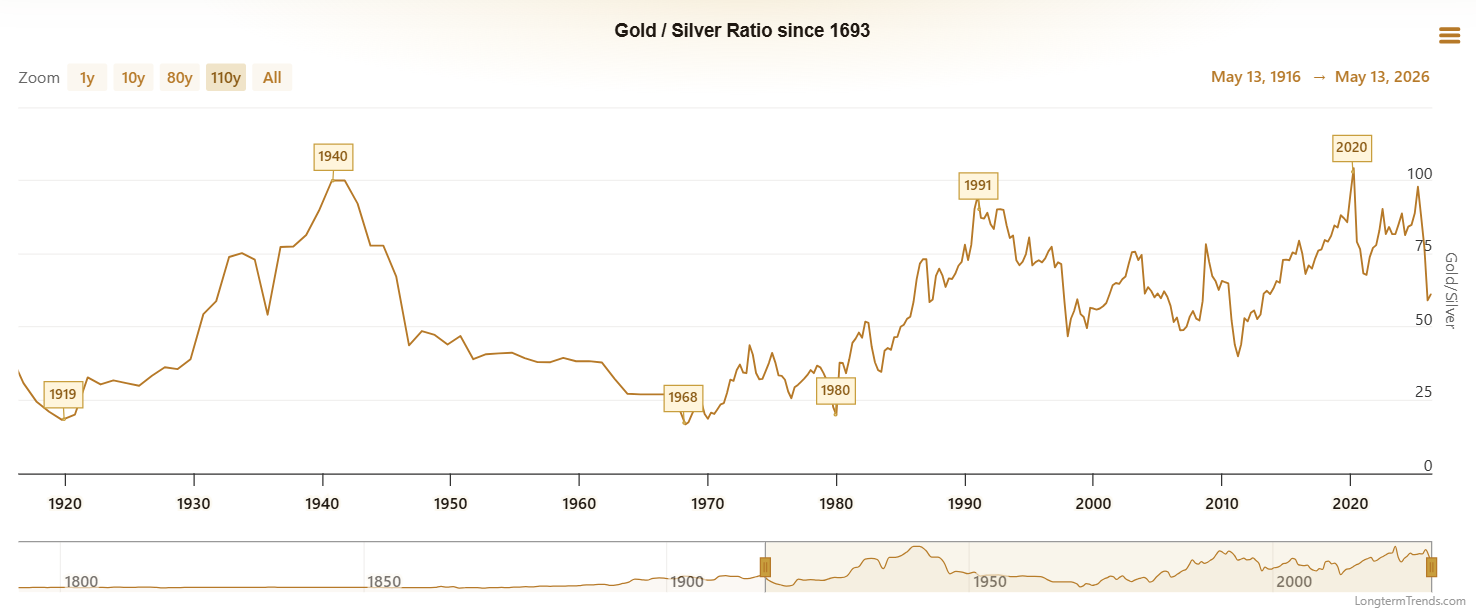
The ratio of the price of gold to silver, which indicates how many ounces of silver are needed to buy one ounce of gold, is rapidly decreasing, moving from 62.05 to 54.94 in a week. This drop signals that silver is outperforming gold. Such a fast decline is unusual and typically occurs when a metal is primed for a move, and a catalyst appears. Silver was indeed prepared, evidenced by six consecutive years of deficit according to the Silver Institute, meaning consumption has outpaced production.
The current ratio of approximately 55 means one ounce of gold buys about 55 ounces of silver, placing the ratio near the lower end of its historical range (typically 40-80). At the start of 2024, the ratio was 88, indicating silver was relatively cheap compared to gold. A lower ratio signifies a stronger position for silver. Two main factors are driving silver’s current outperformance.
First, the recent 90-day tariff truce between the US and China significantly boosted sentiment for silver demand. About 60% of annual silver consumption is industrial (used in solar panels, EV batteries, and semiconductors), with much of that supply chain passing through China. The tariff reduction immediately prompted traders to revise demand forecasts upward, leading to a 7% price spike in one session. Underpinning this trade catalyst is the structural shortage of silver. The market has faced a supply deficit for six straight years, with projections showing the deficit widening to 46.3 million ounces by 2026. Ground inventories have already fallen substantially since 2021.
The trade truce acted as a match, igniting a rally based on this existing fuel of supply shortage. Historically, low ratios have preceded significant silver price increases. A parallel can be drawn to 2020, when pandemic panic pushed the ratio to an extreme high of 125 in March; once the immediate shock passed, silver rose about 45%, and the ratio dropped below 70 by August. While the starting point this time is lower, the direction and speed of the move are similar.
However, the current truce is not a final trade deal. If negotiations collapse before the 90 days expire, industrial demand could weaken, causing the ratio to rebound quickly. Yet, the six-year supply deficit is a persistent structural factor that will remain regardless of the negotiation outcome. For long-term precious metal holders, the current ratio highlights silver’s dual nature: it functions partly as a monetary metal and partly as an industrial commodity. Silver tends to gain momentum rapidly when industrial activity rises, a condition currently present alongside falling real yields (which typically favor gold). The ratio’s decline from 88 at the start of the year shows silver is catching up with gold’s performance within the context of depreciating fiat currency purchasing power. This movement reflects the system working as expected, with silver closing the valuation gap.