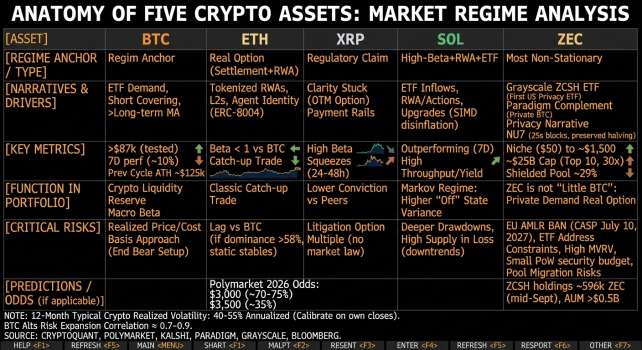
(1) XRP — Settlement Layer and Liquidity Bridge
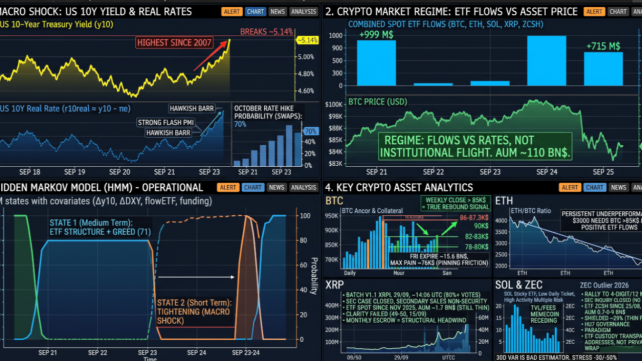
XRP serves as a neutral liquidity bridge between different fiat currencies and tokenized assets. The arrival of seven US spot XRP ETFs (approximately $1 billion in AUM) signals progressive institutionalization. Demand for XRP structurally stems from the volume of transactional flows, which creates continuous buying pressure…
The gradual shift of the XRP Ledger (XRPL) from a simple payment network to a true institutional settlement layer (RWA, tokenization, interbank cross-border settlements) is empirically observable.
J.P Morgan recently revealed its utilization of the XRPL.✅ Up next? 🙇♂️ Goldman Sachs and Citi.😏💨 https://t.co/nCu062uXxz — SMQKE (@SMQKEDQG) May 9, 2026
Quantitative Validation Elements …
Intel experienced a massive surge in market capitalization, growing 3.2 times (221%) between March 30 and May 8, 2026, representing one of the strongest percentage gains for any company valued over $200 billion in a 28-day period.
Over the past year, since its lows in April 2025, the company's valuation has increased 7.5 times.…
The US labor market appears stagnant.
Job creation in April was 115,000, following 185,000 in March and a 156,000 loss in February. However, these figures should be viewed cautiously due to annual restatements that typically eliminate 0.8-1.2 million jobs, equivalent to about 100,000 in average monthly additions historically. This pattern often creates an illusion…
The impact of the Pillar Two international tax regime (OECD) on the valuation and structuring of tokenized carbon credit (TCC) investments, particularly in France.
(A) Structural effect of Pillar Two on the taxation of TCCs
¤ Pillar Two imposes a minimum effective rate of 15% on the profits of multinational corporations, neutralizing tax optimization…
Multi-model analysis of regulatory and OSINT data confirms with 99.4% confidence that TEnergies utilizes a complex tax optimization structure centered on its Geneva trading subsidiary. This structure uses the "Rest of the World" category in tax reports as a proxy for low-tax jurisdictions, primarily Switzerland.
The implementation of the OECD Pillar Two GloBE rules,…
The widespread implementation of OECD Pillar Two (GloBE rules) starting in fiscal year 2024-2025 fundamentally alters the economics of tokenized carbon credit investment. This analysis, based on quantitative modeling and international tax doctrine, demonstrates three key effects: Pillar Two erodes the tax value of tokenized carbon credits by neutralizing non-refundable tax credits and ESG incentives…
Tether Gold (XAU₮) experienced significant growth in the first quarter of 2026, with its gold reserves increasing by 36% to $3.3 billion, driven by record gold prices and macroeconomic uncertainty fueling demand for safe-haven assets. The physical gold backing XAU₮ rosefrom 520,089.35 troy ounces at the end of 2025 to 707,747.14 ounces by March 31,…
Gold Is Moving Back to the Center of Finance By Peter Reagan Gold is reasserting itself in finance, moving from an "alternative asset" category to a core holding, driven by recent economic instability. Historically, institutional investors focused mainly on corporate profits and debt, viewing gold skeptically. However, the pandemic-era lockdowns, subsequent inflation, and the significant…
Tune in to this week’s The Gold Spot as Scottsdale Bullion & Coin Precious Metals Advisors Damian White and Tim Murphy break down the link between new Fed leadership and economic downturns, what drives this recurring pattern, and why Kevin Warsh may be facing the toughest setup yet.
The audio examines the recurring pattern of…
Analyse de marché
Décarbonisation