The hypothesis is that crypto flows become a significant channel for High Net Worth Individuals (HNWI) leaving the UAE. The core issue is that direct capital flow data is unobservable, and all available proxies (e.g., exchange volume, on-chain data, stablecoin supply, real estate sales, surveys, suspicious activity reports) suffer from significant biases. These proxies measure…

Thesis. 2026 marks the global doctrinal shift. Private-regulated dollar (GENIUS Act), public-regulated euro (ECB), public-interest-bearing yuan (PBOC). Stablecoins become a treasury instrument; CBDCs become a sovereignty instrument.
Key Data. Stablecoin market: ~$290–321B (USDT ~$184–190B; USDC ~$73B). MiCA: fully applicable since 30/12/2024, transition period ends 01/07/2026; approximately twenty licensed EMTs (USDC, USDG, EURC, EURCV, EURI,…
Thesis. Tokenization of real-world assets has fundamentally changed by 2026: it is no longer a speculative resale market but a market of automated cash flows. The value of a RWA is now reflected in its distributions (interest, rents) mechanically analogous to private credit and traditional fixed income, with an added layer of programmability.
Key…
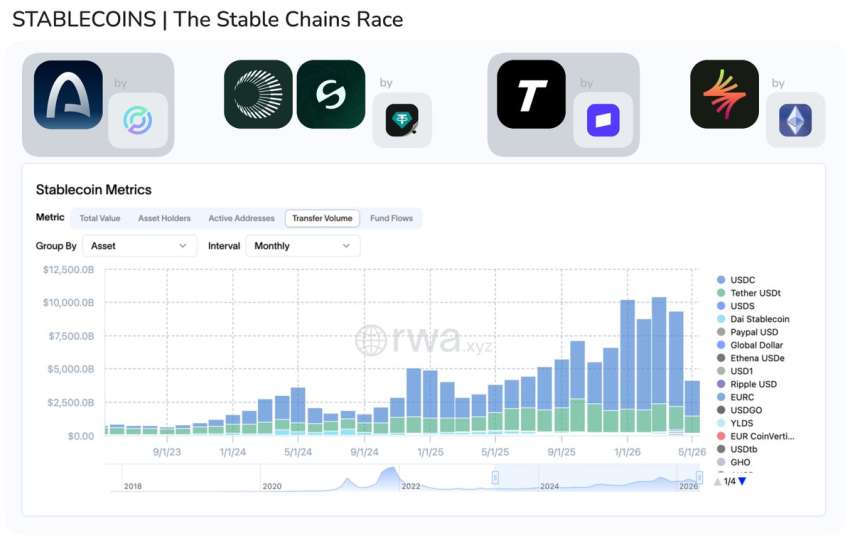
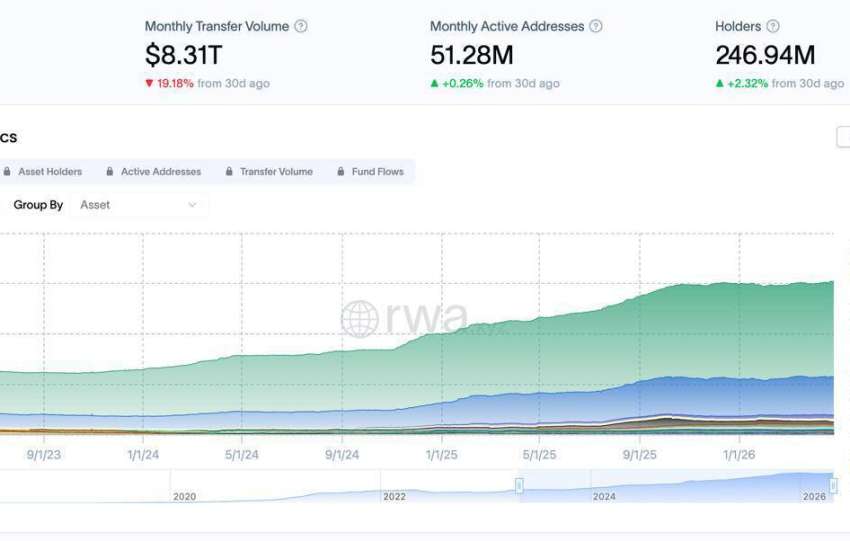
The stablecoin market has crossed a symbolic threshold: a market capitalization of over $315 billion. What was, five years ago, a niche tool for crypto traders has become a cash management infrastructure, for funds, fintechs, corporations, and soon, under the effect of the MiCA regulation, for regulated European institutions. Yet the fundamental question remains unchanged:…
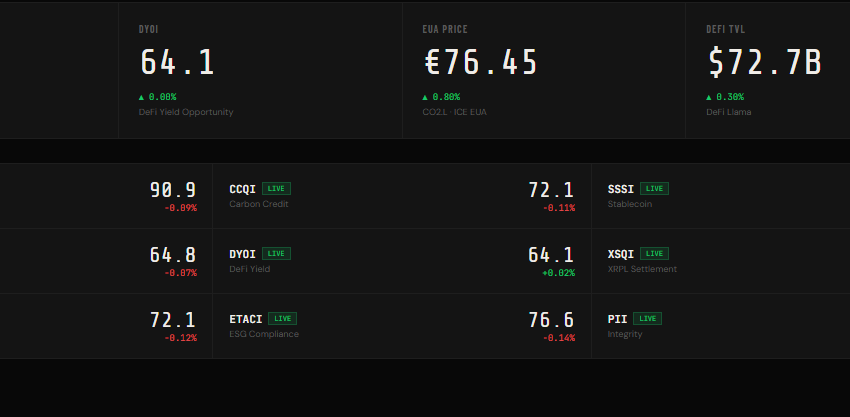
The press release from the Bank for International Settlements (BIS) acknowledges that the transparency of stablecoin ledgers exposes bank positions to the entire market, dismantling the historical information asymmetry. To quantify this phenomenon and guide investment decisions as well as technological deployment, we have constructed the Proprietary Integrity Index 1.0 (PII 1.0), a normalized composite…
Hedge funds are increasingly adopting new digital currencies, primarily stablecoins, due to enhanced capital efficiency, regulatory clarity, and new yield-generating strategies. 1| Capital Efficiency Unlike traditional prime brokerage where collateral is largely immobilized, stablecoins acting as collateral can simultaneously secure derivative positions (perpetuals, options, futures) and generate yield from underlying assets like T-bills. This "working…
The GENIUS Act mandates stablecoin issuers to hold 100% reserves in cash or T-bills with maturity ≤ 93 days. This creates a mechanical demand for T-bills, making them the collateral commodity for the new system.
By mid-2025, Tether and Circle held $160 billion in T-bills, exceeding most sovereign nations' holdings, which mechanically compresses short-term…
We are not in a classic crypto cycle; we are witnessing the commoditization of the settlement layer. Bretton Woods I (1944) used a gold-pegged dollar settled via correspondent banks (SWIFT/CHIPS). The current regime (post-1971) relies on the petrodollar and sovereign debt. Bretton Woods 2.0 is based on a Dual Pillar Regime:
1. Physical Pillar…
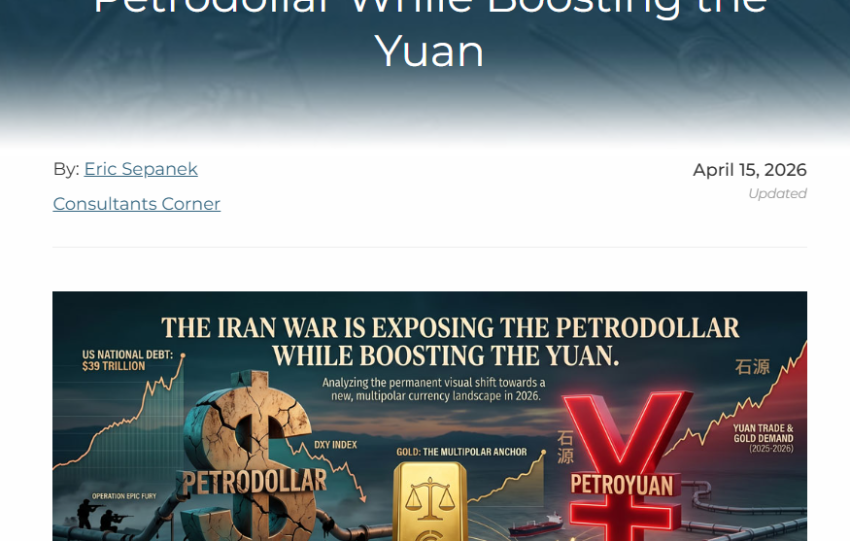
Analysis and summary based on the article "The Iran War Is Exposing the Petrodollar While Boosting the Yuan" by Eric Sepanek
The conflict involving Iran is challenging the U.S. dollar's dominance in the global financial system, despite an initial spike in the dollar's value (DXY) following the outbreak of war, which primarily reflects immediate…
1. Cadre conceptuel. L’interopérabilité stablecoins-RWA comme condition sine qua non du scaling de la finance parallèle
L’interopérabilité entre stablecoins (USDT/USDC dominance >85 % du marché, MC ~300 Md$ au 27/03/2026) et RWA tokenisés (TVL distribuée ~26,63 Md$ ex-stablecoins, rwa.xyz) constitue le pont programmable entre liquidité fiat-native et actifs réels fractionnables. Elle transforme les stablecoins…
Analyse de marché