The European ESG taxonomy (CSRD + Green Taxonomy) is transforming investment flows into constrained flows: a poorly scored asset loses its place in the investable universe. On the carbon front: the voluntary market currently stands at ~$2 billion, with a trajectory toward ~$100 billion by 2030 (market consensus cited on your homepage); commodity tokenization is…

For two decades, digital finance sold a promise of appreciation: buy an asset today to resell it for more tomorrow. In 2026, a quieter but structural transformation is underway: the value of an asset is no longer defined by its expected future price, but by the cash flow it generates and distributes automatically.
The…
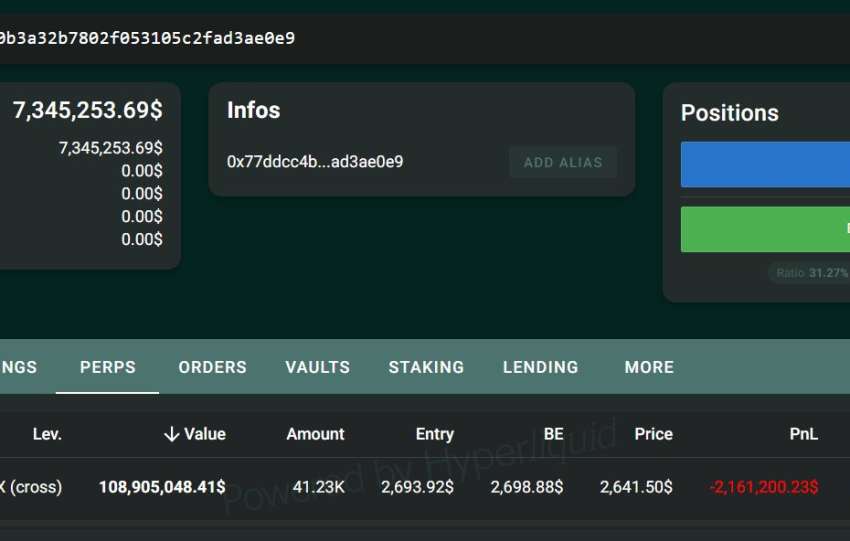
The position is a long ETH-USD perpetual swap: 41,230 ETH at 10x cross leverage, entry price $2,693.92, mark $2,641.50, break-even $2,698.88. Notional is $108.91 million, with unrealized PnL of -$2.16 million and cumulative funding of -$137,658. Liquidation price is $2,514.72, implying 4.80% from mark and 6.65% from entry. Implicit equity is $8.81 million (the $7.35…
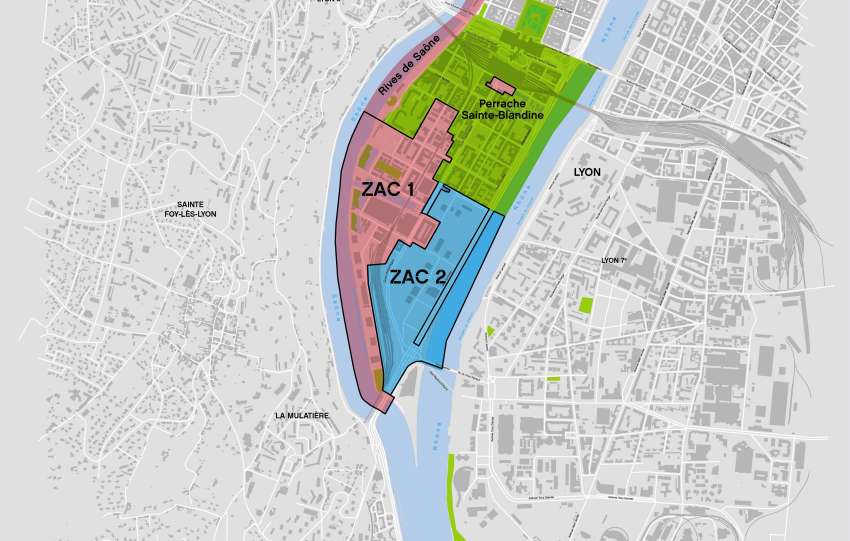
Le quartier de Lyon Confluence est un choix stratégique car il est déjà un laboratoire vivant pour les services urbains innovants. Depuis 2016, un consortium y teste des solutions de ville efficiente, notamment la blockchain énergie, les navettes autonomes et la mobilité augmentée. C'est le terrain idéal pour notre module de règlement (SCSM).
1.1. Objectifs…
L'analyse financière pour la structuration d'investissements en Smart Cities identifie trois instruments clés. |a| L'iShares Smart City Infrastructure UCITS ETF de BlackRock affiche une performance de 57,35 % sur 5 ans avec une volatilité de 14,48 % et un TER de 0,40 %. |b| Le Fonds infrastructure smart city de Vanguard et |c| Blackstone Infrastructure…
Positionnement théorique Une smart city est modélisée comme un système cyber-physique urbain, reposant sur la théorie des systèmes complexes adaptatifs. La théorie mosaïque postule que la valeur informationnelle totale du système excède celle de ses composants isolés, avec des effets de synergie représentant 30 à 45 % de la valeur totale. Cette synergie justifie une…
Facts and structure. The European ESG taxonomy (CSRD + Green Taxonomy) is transforming investment flows into constrained flows: a poorly scored asset loses its place in the investable universe. On the carbon side: the voluntary market is currently ~$2 billion, with a trajectory toward ~$100 billion by 2030 (market consensus referenced on your homepage); tokenization…
Beyond the Controversy: How Schmidt’s 2024 Forecasts on AI Agents and NVIDIA Are Playing Out in 2026
Eric Schmidt’s August 2024 appearance at Stanford was an informal classroom conversation with economist Erik Brynjolfsson in the course “The Age of AI” (ECON295/CS323). Stanford posted the video, it circulated quickly, then was set to private after Schmidt asked for its removal. The episode became famous less for its technical content than for two unfiltered…
Two invisible infrastructures converge in 2026: MiCA's licensed perimeter for crypto-assets, and the ISO 20022 migration of payment messaging. One regulates assets, the other the messages that carry them. What boards need to understand before November.
Since 1 July 2026, a MiCA license is mandatory for crypto-asset service providers across all 27 EU member states,…
For a decade, the value of a digital asset depended on the promise of a higher resale price. The tokenization of real-world assets (RWA) reverses this logic: value is now read in cash flows, rents, coupons, interest—generated by the underlying asset and distributed automatically. Analysis of a paradigm shift that brings crypto closer to private…
ESG Data Services