The 2026 cycle has made its decision clear: value is migrating from protocol tokens toward (a) settlement and compliance infrastructure, and (b) real assets transiting through the rails. DAOs only survive when they back their treasuries with real cash flows.
Blockchains: consolidation of rails. The industry is concentrating on a few settlement rails (1:1 migrations…
2026-2027 is the window in which the digital currency architecture will lock in for a decade. Three rails will coexist — regulated private stablecoins, CBDC (especially wholesale), ISO 20022 banking rails, and value will concentrate in the interoperability and proof layer (reserves, compliance, settlement quality).
Stablecoins: from experimentation to regulated instrument. Market cap…
No more "speculative NFTs": tokenized assets are becoming income generating instruments , rents, interest, coupons distributed via smart contracts.
Analysis of a paradigm shift that brings RWA closer to private credit and fixed income. Tokenization was first framed as a story of appreciation: buy a token, wait for it to rise. The story of…
AI capex has become an infrastructure cycle of utility-like scale , comparable to railroads or the electrical grid , with a readable value chain: semiconductors (the cluster of megacaps that the market now groups under acronyms like "MANBRIC": Microsoft, Apple, Nvidia, Broadcom, and others), data centers, energy, and now physical robotics. Biotech remains the pocket…
Thesis ESG enters its accounting phase: the European taxonomy, CSRD and carbon markets are transforming extra,financial data into quantifiable data , and therefore into allocation signals. Smart cities represent the physical application ground: sensor-driven buildings, mobility, energy and water, whose flows (and savings) become financeable assets.
Facts. Voluntary carbon market: ~$2 billion today, commonly…
The European ESG taxonomy (CSRD + Green Taxonomy) is transforming investment flows into constrained flows: a poorly scored asset loses its place in the investable universe. On the carbon front: the voluntary market currently stands at ~$2 billion, with a trajectory toward ~$100 billion by 2030 (market consensus cited on your homepage); commodity tokenization is…
For two decades, digital finance sold a promise of appreciation: buy an asset today to resell it for more tomorrow. In 2026, a quieter but structural transformation is underway: the value of an asset is no longer defined by its expected future price, but by the cash flow it generates and distributes automatically.
The…
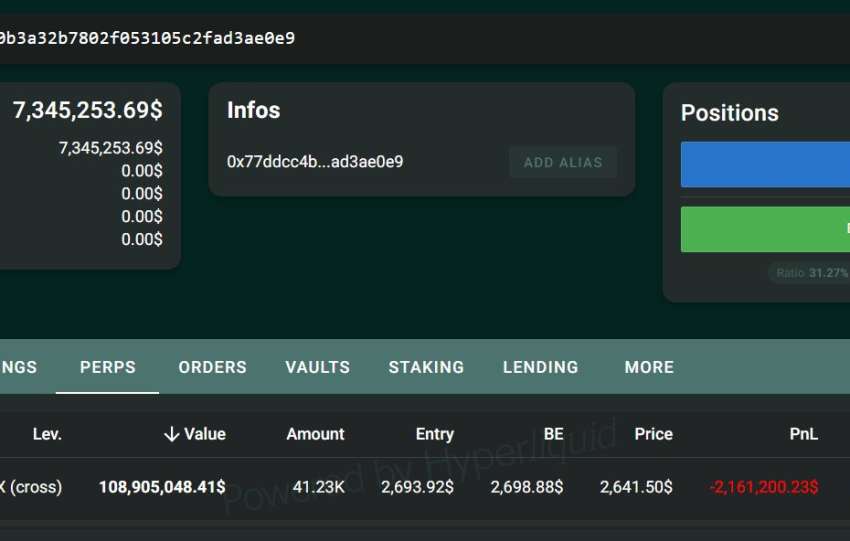
The position is a long ETH-USD perpetual swap: 41,230 ETH at 10x cross leverage, entry price $2,693.92, mark $2,641.50, break-even $2,698.88. Notional is $108.91 million, with unrealized PnL of -$2.16 million and cumulative funding of -$137,658. Liquidation price is $2,514.72, implying 4.80% from mark and 6.65% from entry. Implicit equity is $8.81 million (the $7.35…
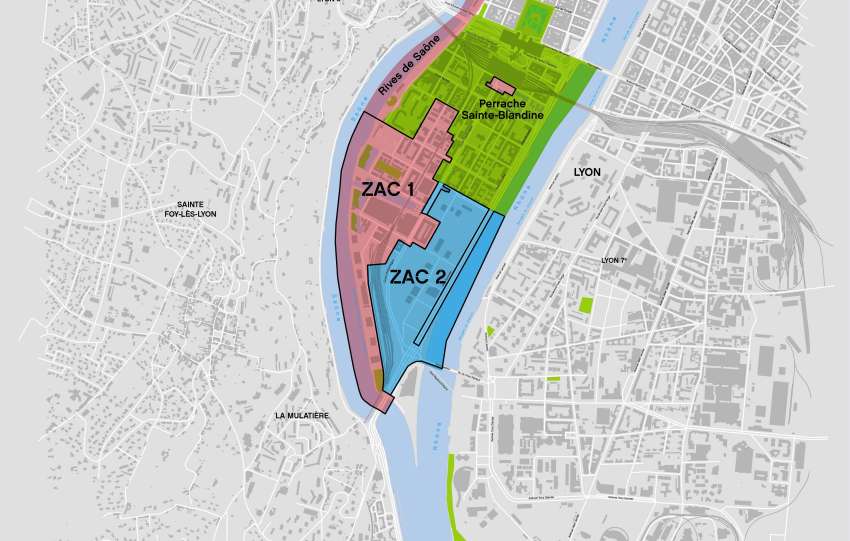
Le quartier de Lyon Confluence est un choix stratégique car il est déjà un laboratoire vivant pour les services urbains innovants. Depuis 2016, un consortium y teste des solutions de ville efficiente, notamment la blockchain énergie, les navettes autonomes et la mobilité augmentée. C'est le terrain idéal pour notre module de règlement (SCSM).
1.1. Objectifs…
L'analyse financière pour la structuration d'investissements en Smart Cities identifie trois instruments clés. |a| L'iShares Smart City Infrastructure UCITS ETF de BlackRock affiche une performance de 57,35 % sur 5 ans avec une volatilité de 14,48 % et un TER de 0,40 %. |b| Le Fonds infrastructure smart city de Vanguard et |c| Blackstone Infrastructure…
ESG Data Services