No more "speculative NFTs": tokenized assets are becoming income generating instruments , rents, interest, coupons distributed via smart contracts.
Analysis of a paradigm shift that brings RWA closer to private credit and fixed income. Tokenization was first framed as a story of appreciation: buy a token, wait for it to rise. The story of…

AI capex has become an infrastructure cycle of utility-like scale , comparable to railroads or the electrical grid , with a readable value chain: semiconductors (the cluster of megacaps that the market now groups under acronyms like "MANBRIC": Microsoft, Apple, Nvidia, Broadcom, and others), data centers, energy, and now physical robotics. Biotech remains the pocket…
Thesis ESG enters its accounting phase: the European taxonomy, CSRD and carbon markets are transforming extra,financial data into quantifiable data , and therefore into allocation signals. Smart cities represent the physical application ground: sensor-driven buildings, mobility, energy and water, whose flows (and savings) become financeable assets.
Facts. Voluntary carbon market: ~$2 billion today, commonly…
For two decades, digital finance sold a promise of appreciation: buy an asset today to resell it for more tomorrow. In 2026, a quieter but structural transformation is underway: the value of an asset is no longer defined by its expected future price, but by the cash flow it generates and distributes automatically.
The…
L'analyse financière pour la structuration d'investissements en Smart Cities identifie trois instruments clés. |a| L'iShares Smart City Infrastructure UCITS ETF de BlackRock affiche une performance de 57,35 % sur 5 ans avec une volatilité de 14,48 % et un TER de 0,40 %. |b| Le Fonds infrastructure smart city de Vanguard et |c| Blackstone Infrastructure…
Facts and structure. The European ESG taxonomy (CSRD + Green Taxonomy) is transforming investment flows into constrained flows: a poorly scored asset loses its place in the investable universe. On the carbon side: the voluntary market is currently ~$2 billion, with a trajectory toward ~$100 billion by 2030 (market consensus referenced on your homepage); tokenization…
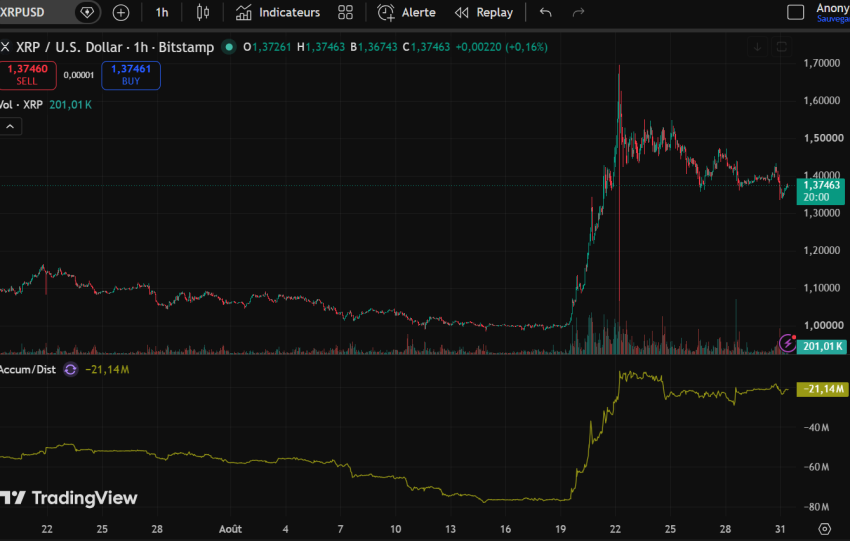
As of September 11, 2026, the crypto market presents a mixed macro regime. Bitcoin trades near $77,200–77,400, showing a -4.7% weekly decline as it digests levels below $80,000–82,000. ETF outflows have been observed for three days. Ethereum is around $2,470–2,480 with slight daily stability but a weekly -2%, while XRP at $1.35 drops -6.6% weekly…
The Financial Times reports a marked shift among wealthy investors toward direct ownership of physical gold and secure, individually allocated storage. In 2026, purchases by this group have surged to record levels, signaling a retreat from electronic exposure in favor of tangible assets.
Industry observers highlight capacity constraints across premier vault facilities. London dealer Sharps…
The defining shift in digital assets this decade is not a price level. It is a change in structure: from instruments whose value rests on uncertain future appreciation to instruments whose value is delivered through continuous, automated cash flows, rent, interest, coupons, distributed by code. The RWA market has quietly completed this migration in 2026,…
The market has exited the capitulation phase of June 2026, where BTC fell below $60k, driven by ETF creations and short squeezes pushing prices to ~$81.3k, though this does not confirm a sustained bullish cycle. Three simultaneous frictions are identified: a BTC supply wall between $81k-$86k, a potential 25bp hike at the September FOMC meeting…
ESG Data Services
Analyse de marché