Intel 18A is not a new x86 processor architecture, but rather a 2nm-class manufacturing process node where Intel will fabricate future CPUs, SoCs, and potentially chips for external clients. This process technology is highly anticipated, as it is central to Intel's strategy to overcome nearly five years of problems, aiming to mark a significant "before…
ETH/BTC est le prix relatif de deux systèmes distribués en concurrence. Ses déterminants principaux sont :
Prime de contrat intelligent : capitalisation sur l’écosystème DeFi et les dApps.
Concurrence des "ETH Killers" : Solana, Avalanche, Sui, Aptos, etc., qui érodent la part de marché d’Ethereum.
Mécanisme de destruction EIP‑1559 et frais de gaz : l’activité réseau alimente l’accumulation…
1.1 Adaptation of the Merton Model: Adjustment of the Probability of Default (PD) using the CCQI Index
The integration of the CCQI Index into credit risk models relies on adapting the structural framework of Merton (1974), where a borrower's Probability of Default (PD) is determined by the distance between the value of their assets and…
CCQI index and characterization of TCMs: Tracking Tokenization of RWAs and Carbon Credits
1.1 Methodology for the STEELLDY CCQI (Climate Credit Quality Index)
1.1.1 Definition and Objectives of the Index: Carbon Credit Quality Benchmark for the Voluntary Market
The Climate Credit Quality Index (CCQI), developed by STEELLDY, is a proprietary benchmark for the quality of…
(1) XRP — Settlement Layer and Liquidity Bridge
XRP serves as a neutral liquidity bridge between different fiat currencies and tokenized assets. The arrival of seven US spot XRP ETFs (approximately $1 billion in AUM) signals progressive institutionalization. Demand for XRP structurally stems from the volume of transactional flows, which creates continuous buying pressure…
The gradual shift of the XRP Ledger (XRPL) from a simple payment network to a true institutional settlement layer (RWA, tokenization, interbank cross-border settlements) is empirically observable.
J.P Morgan recently revealed its utilization of the XRPL.✅ Up next? 🙇♂️ Goldman Sachs and Citi.😏💨 https://t.co/nCu062uXxz — SMQKE (@SMQKEDQG) May 9, 2026
Quantitative Validation Elements …
The impact of the Pillar Two international tax regime (OECD) on the valuation and structuring of tokenized carbon credit (TCC) investments, particularly in France.
(A) Structural effect of Pillar Two on the taxation of TCCs
¤ Pillar Two imposes a minimum effective rate of 15% on the profits of multinational corporations, neutralizing tax optimization…
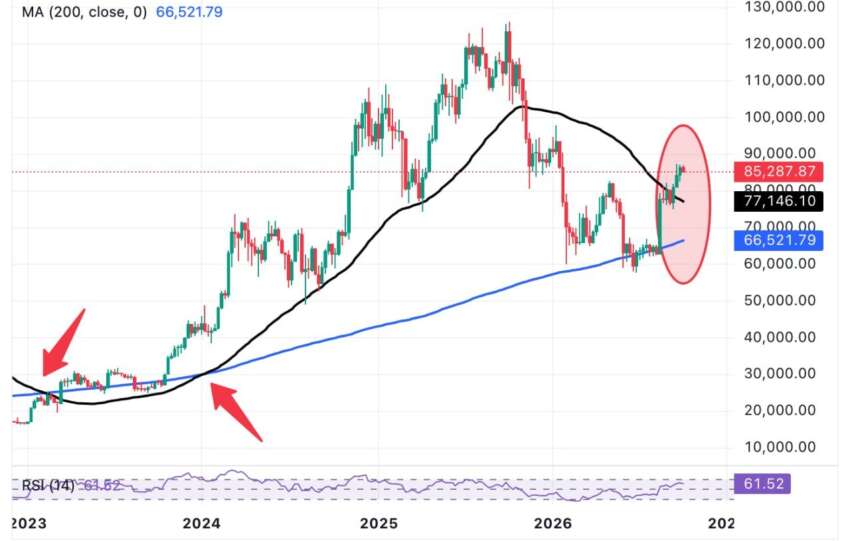
The Glassnode "Expansion, Breakdown, Stabilization" framework identifies a mature stabilization phase with volatility-adjusted support built around ~$74,000 and confluent resistance at $80,000–$83,000. This $78K–$83K zone constitutes the "Breakeven Battlefield" where the following overlap: (i) the STH Cost Basis at $78,700 (v5.0), (ii) the True Market Mean Price at ~$81,500 (v3.0), and (iii) the ETF Cost…
Analysis of Glassnode data as of April 30, 2026, reveals an unprecedented structural compression: Bitcoin is "trapped below market mean," trading at approximately $76,000, below the True Market Mean (around $81,500) and the STH Cost Basis (around $83,000), in a "Cooled" zone (-1σ). The Spot Volume Delta (7-day MA) indicates a stabilization of net selling…
Les ETFs thématiques "Infrastructures vertes" (ou green infrastructure) investissent dans les entreprises impliquées dans la production, le transport, le stockage et la distribution d’énergies renouvelables (éolien, solaire, hydro, bioénergie), les réseaux intelligents, les infrastructures de transition énergétique et les utilities durables. Ils profitent de la transition écologique mondiale, des objectifs de neutralité carbone et des…
Analyse de marché