https://www.steelldy-indices.com
Aakash Doshi (State Street) predicts that gold's next $1,000 move will be upward, with consolidation around $4,000 before expanding to $4,750–$5,500. This forecast aligns perfectly with our proprietary quantitative models. By integrating market data, institutional flows, and geopolitical signals through M. Theory 4.2 and leveraging Steelldy Risk Engine 12.4 and Quantum-Classical Hybrid 1.0 on…
https://www.steelldy-indices.com/https://www.steelldy-indices.com
The persistence of armed conflicts (Ukraine, Iran, tensions in Asia) and disruptions in energy supply, analyzed in our previous articles (ST-0726-IRAN-GOLD, ST-0727-CHINA-GOLD), validate a fundamental premise of quantitative finance: wars are the primary driver of debt monetization and hidden inflation that erodes savers' wealth. Faced with a deficit in traditional financing (tax collection, bond…
https://www.steelldy-indices.com
The decision of several major Chinese banks (ICBC, Ping An, China Guangfa) to suspend precious metals trading services linked to the Shanghai Gold Exchange (SGE) for individuals, by drastically raising margin requirements to 140%, is not a simple prudential adjustment.
Analyzed through M. Theory 4.2 and the Steelldy 3.8 graph engine, this measure…
https://www.steelldy-indices.com
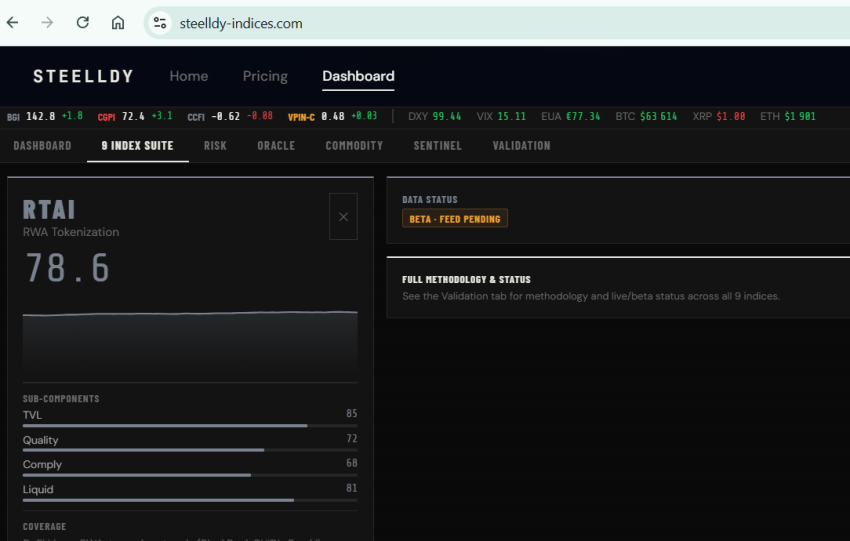
Current gold price is around $4,100-4,103/oz, with a neutral-to-bullish short-term stance but an intact seller regime risk. The divergence alert between the model and Polymarket is not triggered. Semantic NLP shows a "gold distrust" score of 0.48 (down from 0.62), with dominant themes being the Fed decision, US-Iran pause, oil easing, and PBOC purchases.…
https://www.steelldy-indices.com
The Iran-United States war, triggered in Q1 2026, introduced a second-order exogenous shock to the gold market, destabilizing the strongest pillar of the decade-long bull run: central bank demand. The announcement of the suspension of gold sales by the Azerbaijani sovereign wealth fund (SOFAZ), forced sales by Turkey and Russia, and the contraction of…
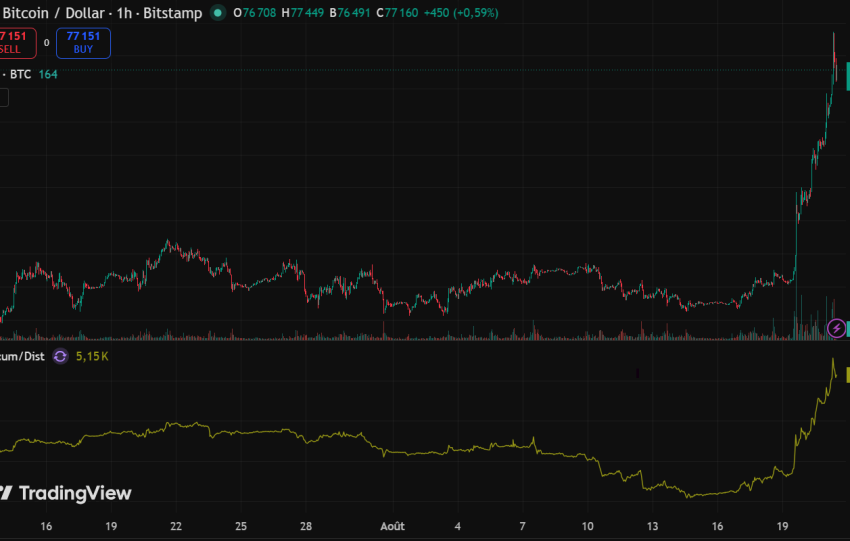
Bitcoin (BTCUSDT) trades at approximately $65,400–66,000, down ~0.8% in the observed session, within a recent consolidation range post a relief bounce from sub-$60k lows earlier in June 2026. The provided chart confirms a 1H/4H structure with MA5/10/20 clustering near $66,200–66,300, recent rejection at $67,255 highs, and downside probe the Fair Value Gap (FVG) zone around…
Executive Summary
Satellite signatures combined with AIS vessel tracking and OSINT currently indicate elevated refinery activity in US/Europe amid global disruptions, but severe anomalies in Middle East tanker flows through the Strait of Hormuz. As of mid-June 2026, Hormuz transits are near-historic lows (often <10 vessels/day, down 70-97% from baseline), with widespread "dark" operations…
Our multi-model analysis confirms a structural break in Private Credit (PC). The increase in rates on bank credit lines (warehouse lines) and downward revaluations of collateral by institutions like JPMorgan signal the end of the positive leverage multiplier effect ("Back Leverage"). This shift forces PC funds to face margin calls and liquidity dilution. The direct…
Bloomberg Terminal couvre bien le pricing spot XRP et certains stablecoins (via exchanges centralisés et partenaires), ainsi que les actualités RLUSD, mais n’expose pas directement les données on-chain XRPL comme book_offers, amm_info, depth pools AMM ou slippage en temps réel. Les desks institutionnels et risk teams réalisent cette capture via développement custom en combinant les…
Current microstructural analysis reveals a terminal disconnection between "Lit" markets (transparent/ETF) and dark pools (ATS). While massive outflows from ETFs (such as SLV/GLD) create visible downward pressure, our Steelldy SLV algorithms identify aggressive accumulation by Asian sovereign wealth funds (SWFs) via iceberg order blocks in alternative trading systems. This is not a simple price correction…
Analyse de marché