Steelldy examines three trajectories in computing infrastructure: physical colocation, cloud CPUs, and GPUs, highlighting how scarcity, commoditization, and energy constraints affect pricing and asset values.
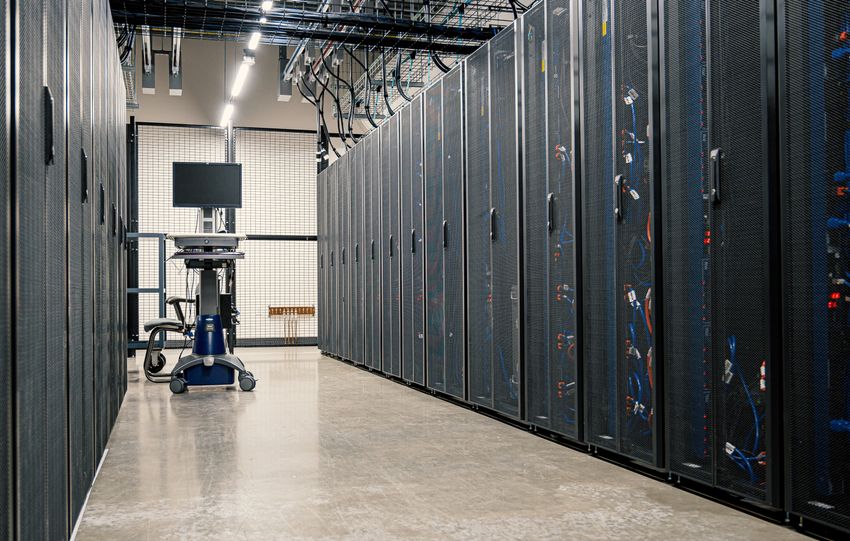
In physical infrastructure, US wholesale colocation rates increased almost linearly from 2021 to the first half of 2026. Small blocks (250–500 kW) rose from 120,36 to 204,69/kW/month (+70,1 %), while large blocks (10+ MW) increased from 117,19 to 165,31/kW/month (+41,1 %). The volume discount narrowed from -28,3 % in 2023 to -19,2 % in 2026, indicating greater scarcity for large blocks, consistent with hyperscaler demand concentration. Equinix and Digital Realty capture this scarcity premium: Equinix increased its rack rate from 2 527 to 2694 (+6,6 %), while Digital Realty achieved renewal spreads of +11,8 %, rising to +26,3 % for leases above 1 MW. Its construction yield of 11,6 % exceeds its cost of capital. Colocation assets can be valued through discounted cash flow (DCF), with scarcity-driven rental price growth above inflation supporting a premium multiple over traditional real estate.
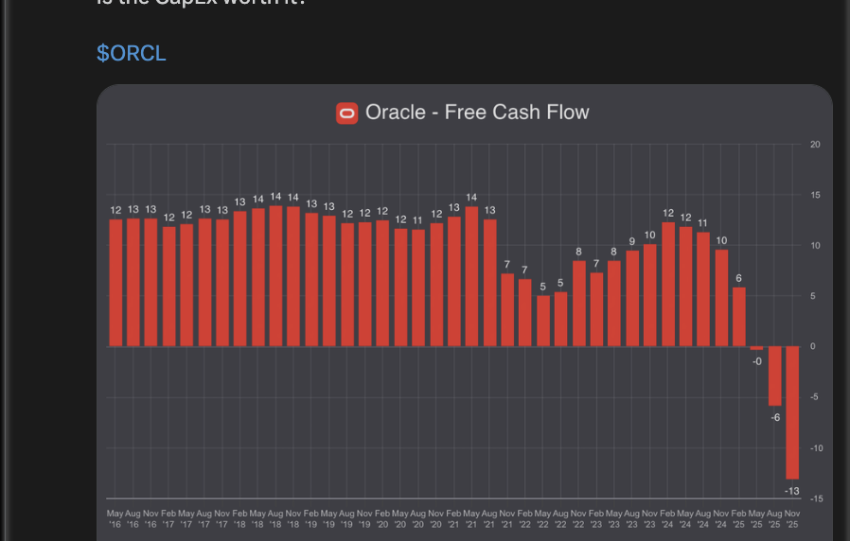
Cloud CPU pricing illustrates commoditization: AWS m7i x86 On-Demand instances remained at 0,0504 $/vCPU-hour between 2023 and 2026. This nominal stability reflects limited differentiation and low margins, prompting hyperscalers to redirect capital expenditure toward GPUs and proprietary chips. Schumpeter’s creative destruction explains how GPU and TPU innovation erodes traditional CPU value while creating new rents. Oracle, which depends on NVIDIA, is structurally disadvantaged compared with AWS, Google and Microsoft, which develop their own ASICs.
GPU rental prices experienced extreme volatility. H100 rates fell from 8,81/hour in October 2023 to 2,07/hour in the third quarter of 2025, then recovered to 3,08 $/hour in November 2026. B200 rose from 4,06/hour at introduction in the first quarter of 2026 to 6,99/hour in November 2026, while B300 reached 7,72 $/hour, +51,9 % from launch. This reflects a shift from relative supply abundance in 2023–2025 to energy scarcity in 2026, when GPU and electricity prices became positively correlated, unlike in 2024. GPU value is modeled as a real option on grid interconnection capacity, depending on electricity access timing and uncertain prices. NYMEX H100/B200 GPU futures, introduced in October 2026, provide price-risk hedging and forward-price discovery.