Skip to content Skip to sidebar Skip to footer

Tech

Tech

Artificial intelligence, Semiconductors, Cyber Security, Social Media

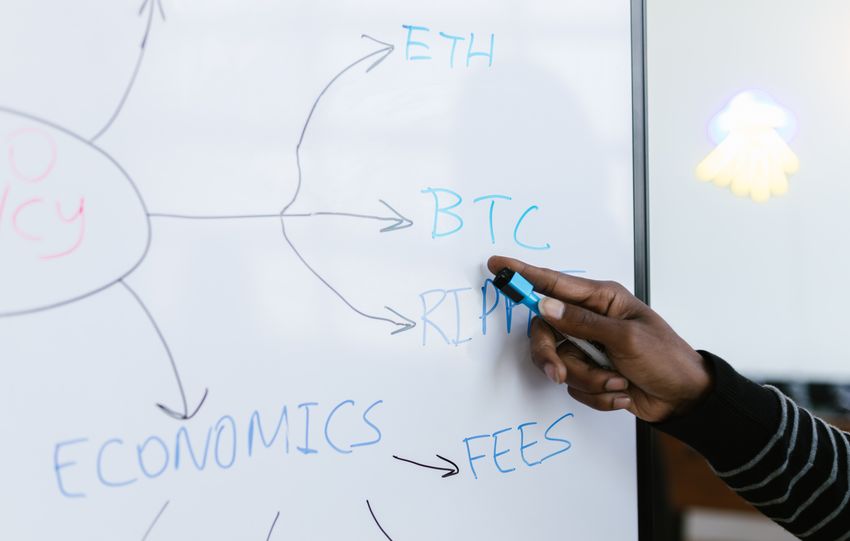
Close-up of hand writing cryptocurrency related words on a whiteboard, featuring BTC, ETH, and economics.

Blockchains, DAO & MiCA Compliance: regulatory costs are becoming a barrier to entry

Thesis. The 2024/2026 cycle has transformed compliance from a cost center into a competitive moat. In Europe, the crypto market has become license only (the end of MiCA grandfathering on July 1, 2026); in the United States, the securities/commodities boundary is being established by the CLARITY Act (§10505, Senate vote on September 15, 2026). For…
Read more

A robotic hand reaching into a digital network on a blue background, symbolizing AI technology.

AI, Converging Technologies (MANBRIC/BIOTECH) & Robotics: The Capex Supercycle Faces the ROI Wall

Thesis. The 2024/2026 AI cycle is the largest fixed capital investment cycle in modern economic history. The market question is no longer Will AI transform the economy? but “Who bears the capex risk, and at what rate of return?” Humanoid robotics and converging technologies (MANBRIC: Metaverse AI Nano Bio Robotics Info Cognition the extended NBIC…

Read more

Two professionals in a high-tech environment working with cash and computers, analyzing complex data.

ВОЗНАГРАЖДЕНИЕ БУДУЩЕГО СТАНЕТ ПРАВОМ СОБСТВЕННОСТИ

I. Нормативная и позитивная рамки: UBI и UBC, различие по природе, а не по степени. Итог: В мире, преобразованном ИИ, UBC представляется структурно более эффективной моделью, чем UBI, для устойчивого увеличения медианного благосостояния и сокращения неравенства, поскольку вознаграждение основывается на владении производительными активами, а не на налоговых трансфертах. Ключевые положения (1) UBI (Universal Basic Income,…

Read more

Detailed close-up of Polish grosz coins shining with a golden hue symbolizing wealth and finance.

RWA & TOKENIZATION × COMMODITIES: The Structural Migration of the Balance Sheet to Programmable Rails

The tokenization of real-world assets has moved beyond the experimental stage and entered its mass-distribution phase. The market is no longer managed by TVL but by holders: growth now comes from access (distribution), not just scale (AUM). The tokenized asset has become a programmable fixed-income instrument, not a speculative vehicle. Key data (August 21–27,…

Read more

Close-up of a modern humanoid robot with glowing blue lights and futuristic design.

AI, Robotics, Biotech (MANBRIC), Smart Cities Convergence: The 2026–2035 Supercycle of Capital Allocation

Technological revolutions are not equal as investment themes; they are equal as cost curves. Three curves are collapsing simultaneously in 2026-2030, the cost of AI inference, the cost of physical action (humanoid robotics and logistics), and the cost of biological reading/writing (sequencing, synthesis), and their intersection is creating the markets of the decade: instrumented smart…

Read more

Stunning aerial view of Jakarta's unique architecture with high-rise buildings and lush surroundings.

Why Traditional Property Valuations Fail in the Age of Tokenized Real Estate

Traditional real estate valuation methods, including hedonic OLS regression and aggregated spatial medians, suffer from structural methodological weaknesses when applied to tokenized real-world assets (RWA) and Yield Trusts. Under Shapiro-Varian's Information Rules theory, reproducible raw transaction data available at zero marginal cost, such as France's DVF database, converges toward zero market value. Moreover, raw DVF…

Read more

The AI Funding Race: How Global Savings Are Powering America’s Tech Boom

The restructuring of the global economy to finance the AI capital shortfall rests on recycling Asian savings, mobilizing new investors, and transforming cash flows into investable assets. First, the AI boom generates liquidity in South Korea and Taiwan, part of which flows into dollar-denominated assets and indirectly supports investment by US hyperscalers. Taiwan’s current…

Read more