The 2026 cycle has made its decision: value is migrating from protocol tokens toward (a) settlement and compliance infrastructure, and (b) real assets flowing through these rails. DAOs survive only when they back their treasuries with real cash flows.
Blockchains: rail consolidation. The industry is concentrating on a few settlement rails (1:1 migrations to…
The European Omnibus did not kill ESG: it transformed it from a mass legal obligation into a competitive market advantage. The demand for reliable ESG data is shifting from regulators to investors, banks, and buyers, and ESG ratings themselves are now under supervision.
The new regime (Directive (EU) 2026/470, in force since 18/03/2026). CSRD:…
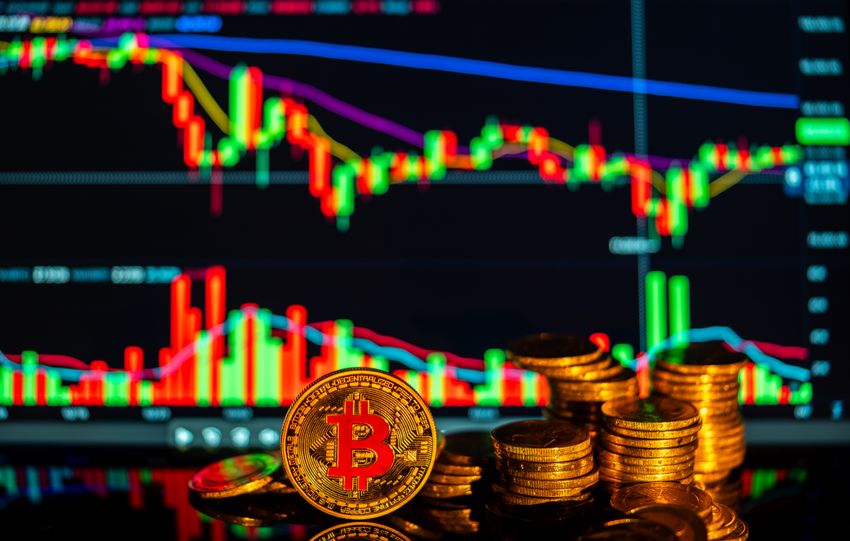
BTC . The last notable closing high occurred above $81.3k, with a close near $86.6k on September 21. Current compression is below $85.2-85.4k.
A bullish moving average stack is present (7-day SMA ~$84.3k, 20-day SMA ~$82.8k, 50-day SMA ~$79k, 200-day SMA ~$71.5k).
The distance from the October 2025 all-time high is approximately -33%. For the…
The "AI bubble" debate is secondary; what is observable is the largest private investment cycle in modern history, whose spillover effects ripple across energy, industrial real estate, semiconductors, robotics, and cities. The supercycle figures. The five major hyperscalers (Microsoft, Alphabet, Amazon, Meta, Oracle) will commit $660-725 billion in capex by 2026, nearly double that of…
The 2026 cycle has made its decision clear: value is migrating from protocol tokens toward (a) settlement and compliance infrastructure, and (b) real assets transiting through the rails. DAOs only survive when they back their treasuries with real cash flows.
Blockchains: consolidation of rails. The industry is concentrating on a few settlement rails (1:1 migrations…
2026-2027 is the window in which the digital currency architecture will lock in for a decade. Three rails will coexist — regulated private stablecoins, CBDC (especially wholesale), ISO 20022 banking rails, and value will concentrate in the interoperability and proof layer (reserves, compliance, settlement quality).
Stablecoins: from experimentation to regulated instrument. Market cap…
Tokenization crossed the "pilot → product line" tipping point in 2026. The market reached $38.17B on August 9, 2026 (~1.7M holders, +56% in 30 days), compared to ~$12B a year earlier, nearly tripling annually. Growth is now concentrated in cash-flow categories (Treasuries ~$16.2B across 87 products; private credit >$18.9B), not speculation. Market structure. Three layers…
Enough with "speculative NFTs": tokenized assets are becoming income instruments, rents, interest, coupons distributed via smart contracts. Analysis of a paradigm shift bringing RWA closer to private credit and fixed income. Tokenization was initially framed as a story of appreciation: buy a token, wait for it to rise. The 2026 narrative is entirely different. What…
Technical Architecture: Oracles, IoT and Smart Contracts
1. The Oracle Problem
The connection between the physical world (IoT sensors) and the digital world (blockchain) relies on oracles, services that transmit external data to a smart contract. The fundamental problem, known as the "oracle problem," lies in the difficulty of ensuring the reliability and integrity of…
ESG Data Services