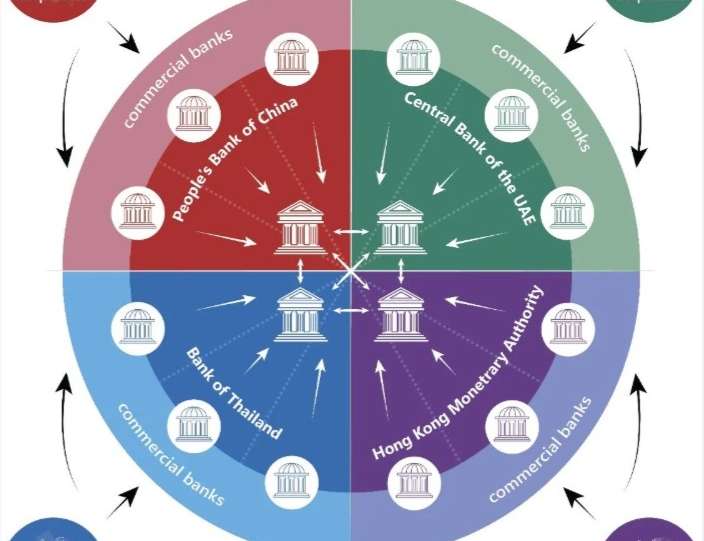
Blockchains, consolidation toward regulated infrastructure. The event of 2026 is not a new L1 but the migration of value toward layers serving regulated assets: on-chain registered transfer agents (Securitize, first registered digital agent on the NYSE tokenized securities platform¹⁴), neutral token standards (ERC-7943⁸), banking rails (BNY Mellon custodizing stablecoin reserves and tokenized treasuries¹⁴), and central bank DLT solutions (T3 bridges 2026, Appia longer-term²⁷). The winning model is hybrid: BUIDL removed no intermediaries, BlackRock manages, BNY holds, Securitize keeps the register, Circle provides the USDC off-ramp, it reconnected them via a programmable settlement layer¹³. Lesson for every builder: value is not captured against regulated intermediaries but in rewiring them.
DAOs, from governance experiment to usable legal structure. The maturation in 2026 is legal rather than technical: legal wrappers (foundations, LLCs), professionalized delegated governance, treasuries managed in yield-bearing assets (DAO treasuries buying tokenized treasuries, a paradigm loop). For a tax/structuring advisor, the DAO in 2026 is a programmable governance vehicle backed by legal personality, useful for cash-flow asset pools: on-chain votes on distribution policy, automated waterfall, real-time treasury transparency. Persistent risks: liability of governance token holders, taxation of distributions, jurisdictional conflicts, all points where your “Web3 Law & Taxation” offering has solvent demand. Smart cities, the monetary and energy layer becomes programmable.
The smart city in 2026 is no longer a sensor concept: it is the measurable intersection of three infrastructures covered by your indices, (i) payments: e-CNY in 26 pilot cities, public salaries paid in CBDC in certain areas²⁸; digital euro with mandatory merchant acceptance considered²⁴; (ii) energy/carbon: compliance carbon markets (CBAM, ETS, India/Brazil schemes²⁰) and satellite/AI verification (-40 to -60% costs²⁰) enabling fine-grained carbon pricing at urban scale; (iii) real estate: continuous AVM valuation (ScoreGEX demonstrates this at a cross-border basin scale²) and real estate tokenization (Dubai Land Department targets $16B by 2033⁸). The bankable smart city is one whose flows (rents, energy, carbon, mobility) are measured, rated, and automatically distributable, yet another expression of the income paradigm.
Allocation implication: favor the “toll roads” of programmable finance (custody, transfer agency, standards, quality oracles, indices) over application protocols; for DAOs, only intervene with legal wrapper + treasury in yield-bearing assets; for smart cities, read projects through their contractual flows (PPPs, concessions) and not through their tokens. Risks: political reversibility (BIS’s withdrawal from mBridge shows monetary infrastructure is geopolitical²⁸), platform concentration, stack obsolescence.
SOURCES
- Stobox,The State of RWA Tokenization, 2026 Mid-Year Report (juillet 2026) : 33,5Md on-chain RWA ex-stablecoins, +400 % depuis début 2025, ~995 k détenteurs, 167 plateformes, standard ERC-7943.
- rwa.xyz / DeFiLlama (données reprises dans guides sectoriels 2026) : Treasuries tokenisés ~15 Md,creˊditpriveˊ 10−12Md , commodités ~1,5 Md$ ; BUIDL ~2,4-2,6 Md$ ; USYC ~2,9 Md$ ; BENJI ~2,1 Md$.
- Altrady / Defi-Intel / eco.com (2026) : BUIDL ~4,5-5 % APY, min. 5 M,structureBlackRock/Securitize/BNYMellon;deˊpo^tSECdu8mai2026(deuxnouveauxfondstokeniseˊs+parton−chaind′unmoneˊtairede7Md ) ; USDtb adossé à >90 % à BUIDL ; collatéral marge chez FalconX.
- J.P. Morgan Payments, ISO 20022 Migration Guidance (4 août 2026) : adresses structurées/hybrides obligatoires dès le 14 novembre 2026 (CBPR+), retrait des adresses non structurées.
- OasisPro / pain001.com / Cambridge Currencies (2026) : fin de coexistence MT/MX le 22 novembre 2025 ; 65 % de messages non conformes, 44 % de banques en retard (été 2026) ; SEPA le 15 novembre 2026 ; E&I camt.110/111 en novembre 2027 ; retraite MT9xx en 2028 ; coût d’exception 25-75 $/transaction.
- Blockcritics / FII Institute / 120btc (2026) : BCE, phase suivante de l’euro numérique décidée le 30 octobre 2025, vote du Parlement européen en février 2026, coût de construction ~1,3 Md€, Pontes (règlement DLT monnaie centrale) au T3 2026, pilote possible mi-2027, émission 2029 ; EURAU (AllUnity : DWS/Galaxy/Flow Traders) émis en Allemagne ; consortium Qivalis (BNP Paribas et 9-10 banques) stablecoin euro 2026 ; doctrine US anti-MNBC / GENIUS Act.
- Informed Clearly (2026) : vague MNBC 2026, 24 pays, ~73 % du PIB mondial ; DCJPY/Japan Post Bank (~190 000 Md¥ de dépôts) ; e-CNY ~890 Md$ de transactions, 260 M d’utilisateurs ; e₹ offline et programmable ; 68 % des banques centrales citent la vie privée comme défi n°1.
- CryptoVerse Lawyers (déc. 2025) : marché tokenisé EU projeté à 2 000 Md€ d’ici 2028 ; coût licence CASP 500 k€-1 M€.
- Prévisions 2030 : McKinsey (2 000 Md),Citi(5000Md ), BCG/Ripple (16 000 Md$ scénario haut), Keyrock/Securitize (400 Md$ distributed).
- Sites audités : steelldy-indices.com (accueil, pricing, methodology, lecture directe) ; scoregex.streamlit.app (747 transactions, 8 communes, 92 k frontaliers, différentiel ×2,1) ; steelldy.com (archives Economic studies).