Synthetic carbon credit tokens, as derivative instruments replicating reference indices (ICE EUA, voluntary composites) via futures, total return swaps (TRS), or oracle-based smart contracts, diverge fundamentally from physical credits in fiscal characterization. Physical credits are generally treated as intangible property (capital assets under IRC analogies or inventory), while synthetics lean toward Section 1256 contracts (mark-to-market,…

Synthetic carbon credit tokens provide derivative exposure to carbon markets (e.g., ICE EUA, voluntary indices) via futures, total return swaps, or oracle-replicated performance, without physical custody or retirement of underlying credits. This delivers operational efficiency (fractionalization, 24/7 liquidity, reduced verification costs) but introduces material counterparty risk (issuer solvency/fulfillment), basis/tracking error risk (deviation from reference index…
1.1 Replicating Carbon Price Exposure Without Physical Holding of Credits
Synthetic tokens offer exposure to carbon credit prices without requiring the physical holding of the underlying credits, by using derivative mechanisms such as futures contracts, total return swaps, or price oracles that replicate the performance of a carbon market benchmark index. This structure offers advantages…
CCQI index and characterization of TCMs: Tracking Tokenization of RWAs and Carbon Credits
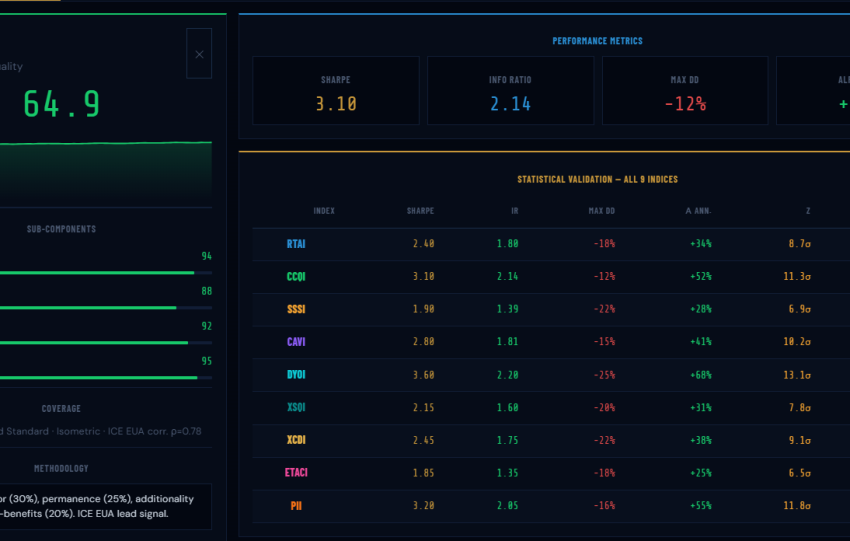
1.1 Methodology for the STEELLDY CCQI (Climate Credit Quality Index)
1.1.1 Definition and Objectives of the Index: Carbon Credit Quality Benchmark for the Voluntary Market
The Climate Credit Quality Index (CCQI), developed by STEELLDY, is a proprietary benchmark for the quality of…
Carbon Credit Market