Analyse de marché

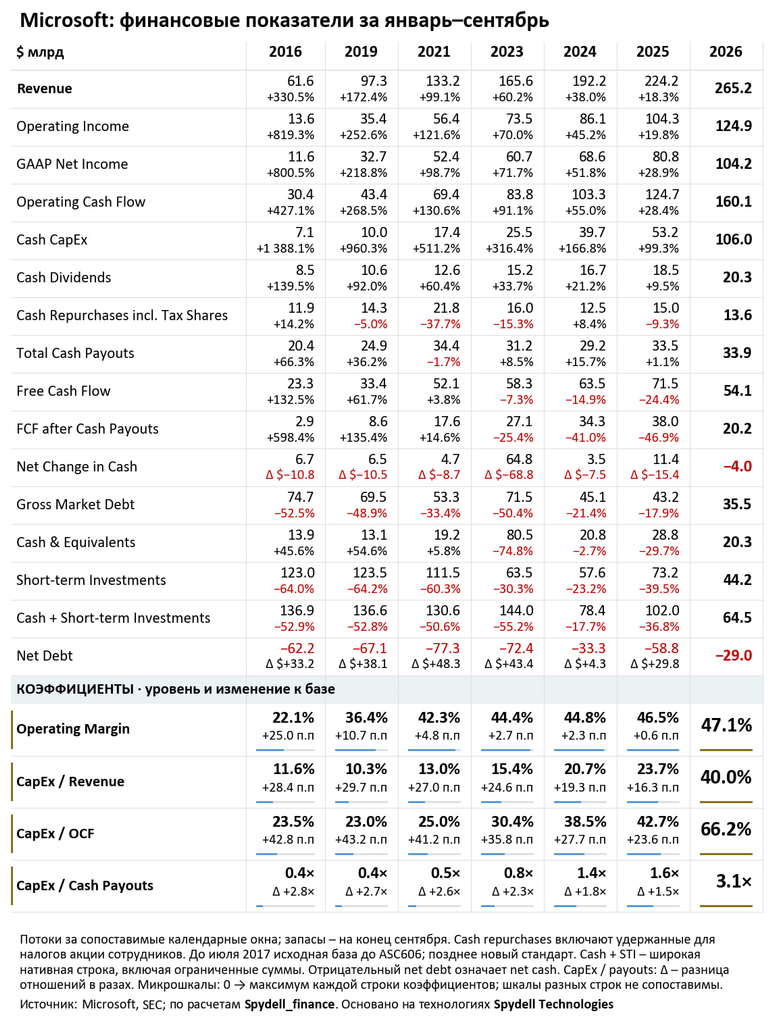
Microsoft’s FY2026 Q3 results reveal a structural shift in the economics of hyperscalers: despite revenue growth of +19% year over year to 92,3 Mds and Azure growth of +48%, supported by a 677 Mds $ backlog, rising capital intensity is temporarily eroding shareholder value. CapEx is projected to reach 42,7 % of revenue in FY2026, compared with 10,3 % in 2019. Microsoft nevertheless remains the only hyperscaler generating positive free cash flow (FCF), at 18,6 Mds in Q3 and 54,1 Mds over nine months, supported by diversification across Azure, M365 Copilot and OpenAI. However, return on invested capital (ROIC) has declined from 29,3 % in FY2024 to 25,5 % in FY2026, while OpenAI contributes 10,0 Mds $ in quarterly revenue, approximately 11 % of total revenue. A stochastic discounted cash flow (DCF) valuation incorporating concentration and excess-capacity risks estimates intrinsic value at 325 to 400 per share, below the approximately 499 $ market price on 1 September 2026 and the adjusted earnings multiple of 26,9x.
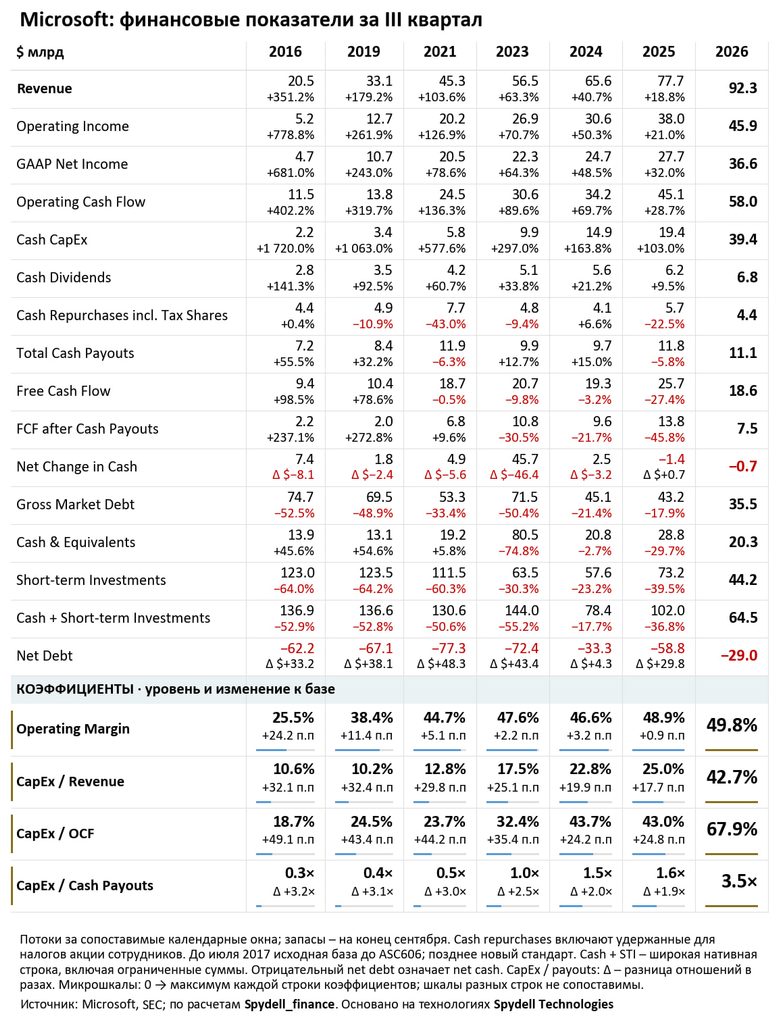
Azure generated 33,17 Mds $, growing 48 %, above the 44 % consensus expectation. However, this headline growth conceals substantial dependence on OpenAI. Excluding its 10,0 Mds $ contribution, underlying enterprise growth is estimated at approximately 25,8 %, using a model that attributes 30,1 % of Azure revenue to OpenAI and assumes 100 % growth in that contribution. Organic Azure growth is therefore approximately 26 %, 22 percentage points below the reported rate, meaning that around 30 % of cloud growth depends on one customer.
Microsoft is increasingly monetizing Copilot through consumption-based billing rather than subscriptions alone. The number of customers consuming credits increased by more than 75 % during the quarter, while paid seats exceeded 30 million in T2 FY2026. Nevertheless, the Productivity and Business Processes gross margin fell from 69,05 % to 67,20 % over three quarters because of increased Copilot consumption. The analysis suggests that inference costs currently outweigh the incremental revenue benefits, weakening operating margins.
OpenAI represents a significant counterparty concentration risk, generating 10,0 Mds in quarterly revenue for Microsoft, approximately 11 %, compared with 6,0 Mds $ in the previous quarter. Its cash consumption reportedly exceeds its payments, creating balance-sheet exposure. Applying the Merton (1974) credit-risk model, the analysis estimates that OpenAI’s implied probability of default justifies a 150 to 250 basis-point risk premium on related receivables, which is not reflected in Microsoft’s financial statements.